Recent Posts

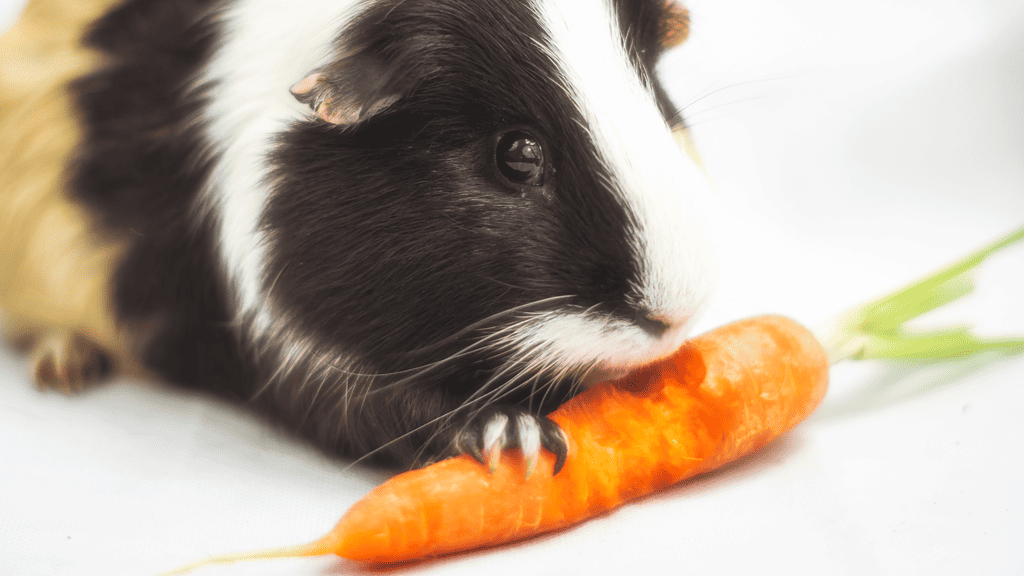
Can Guinea Pigs Eat Carrots?

Guinea pigs do best when their diet consists mostly of fresh vegetables. Despite this, there are a few types of vegetables that guinea pigs should not eat. You might wonder if guinea pigs can eat carrots and, if so, how much they should eat.

Let’s discuss all that in detail.
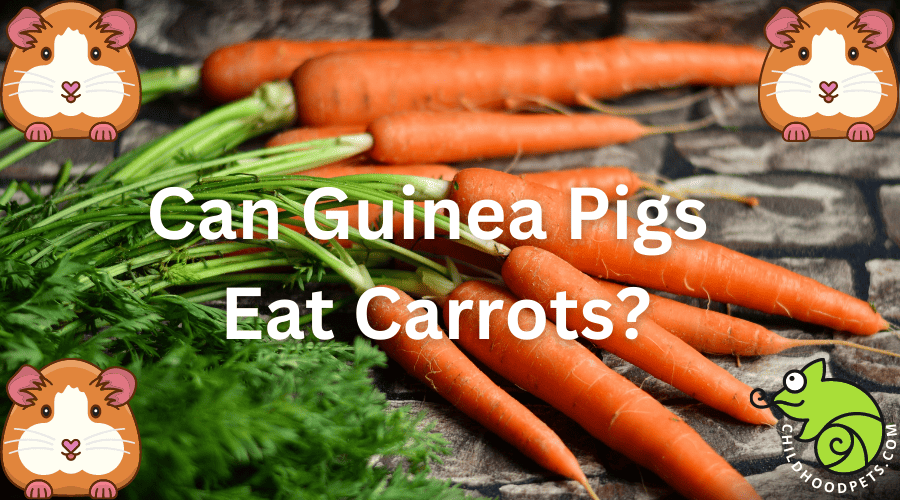
As a whole, carrots are considered a healthy component of a guinea pig’s diet, but they must be given in moderation. They’re nutritious for guinea pigs as carrots’ vitamin A benefits pets, but their high sugar content means they shouldn’t be their primary food source.

Tip: Before giving a carrot to your guinea pig, you must always ensure it has been completely washed, and you should never give them carrots that are wilted or spoilt in any way.

Keep reading, and you’ll know everything about feeding guinea pigs carrots.

More About Carrots

Guinea pigs can have 2-3 baby carrots in their diet weekly. It’s a rare treat that your little furry buddy loves.

As we know, guinea pigs require Vitamin C, Vitamin A, Fiber, and Minerals to grow properly, and carrots are an excellent source of all these nutrients.

But, you should only give them in little amounts because they contain a significant quantity of sugar, which can cause dental decay and digestive disorders in guinea pigs if given in large amounts.

What Are health benefits of Carrots for Guinea Pigs?

The following is a list of some of the plus points of carrots to cavies health:

Improved Immunity

Carrots contain many antioxidants, which are known to strengthen the cavies’ immunity. They will be able to avoid several infections as a result of this.

Weight Loss

Your little furry friend can benefit from eating carrots as a weight-loss diet. Carrots can help your pet lose weight if they are too fat. Carrots have been shown to aid in weight loss by inducing appetite, which is one of the ways they do this. Carrot’s fiber makes the cavies feel full, decreasing the food consumed. So, it doesn’t take in too many calories, which can cause an increase in weight.

Lowers Cholesterol

When there is too much cholesterol in a guinea pig’s body, it can get heart diseases that may shorten its life. You can lower your guinea pigs’ cholesterol by giving them carrots.

Eye Health

One of the key benefits of carrots, which has been known for a long time, is that they are good for the eyes. Carrots can help one’s eyesight. This will ensure that your guinea pig eyes remain healthy. Vitamin A may be found in significant quantities in carrots.

Strengthen Bones

Due to their high calcium content, carrots are beneficial to healthy bone formation and growth. It is really beneficial for young guinea pigs in particular. The weak bones in your guinea pigs can be very dangerous. Carrots are good for piglets and adults.

Health Benefit of Carrots for Guinea pigsDescription
Vitamin CCarrots are an excellent source of vitamin C, which is essential for guinea pigs as they cannot produce their own. Vitamin C helps to maintain a healthy immune system, prevent scurvy, and aid in the absorption of iron.
FiberCarrots are a good source of fiber, which is important for maintaining digestive health in guinea pigs. Fiber helps to prevent gastrointestinal problems such as constipation and diarrhea.
Beta-CaroteneCarrots contain beta-carotene, which is converted into vitamin A in the body. Vitamin A is important for maintaining healthy skin, vision, and immune function.
Low in SugarCarrots are relatively low in sugar compared to other fruits and vegetables, making them a healthy treat option for guinea pigs. Excessive sugar consumption can lead to obesity and other health problems in guinea pigs.
Dental HealthChewing on carrots can help to keep guinea pigs’ teeth healthy and trim. Guinea pigs’ teeth grow continuously throughout their lives, and chewing on tough, fibrous foods like carrots helps to wear them down naturally.
Health Benefit of Carrots for Guinea pigs
Can Guinea Pigs Eat Carrots?

What Are Possible Risks of Carrots for Guinea Pigs?

A few potential risks are associated with giving excessive carrots to your guinea pigs. The following are some of these possible risks:

Allergy

Some guinea pigs are genetically allergic to carrots. The allergic reaction symptoms include a burning or itchy sensation in the mouth. If the issue gets bad enough, you must get it checked out by a qualified veterinarian.

Contamination

This is dependent on location in which the carrots were planted. Carrots can become poisonous if they are grown in soil or water that has been tainted with contaminants or toxic fertilizers.

Natural Sugars

Sugar is necessary for your guinea pig’s diet, but giving it too much at once might be harmful. Diabetes can be caused by eating an excessive amount of carrots. Because of this, you ought to try to limit the quantity of carrots that your guinea pig consumes.

Bladder and Kidney Stones

Carrots are high in calcium, and having excessive calcium in the guinea pig’s body can cause the production of stones. Hence, if you want to give your guinea pig a good treat for its health, you should limit the amount of carrots it eats.

Diarrhea

Guinea pigs often get diarrhea from new diets. If you give your furry friend carrots for the first time, there is a chance that they will become ill with diarrhea. If this takes place, you shouldn’t give them any more carrots.

How Much Carrots Can Be Given To Guinea Pigs?

Carrots can be a nutritious and delicious treat for guinea pigs, but they should only be given in small amounts because they are high in sugar. You should give your guinea pig a tiny piece of carrot twice or thrice a week as part of a diet that includes hay, fresh vegetables, and a high-quality pellet designed specifically for guinea pigs.

Can Guinea Pigs Eat Carrot Tops?

As a general rule, guinea pigs can eat carrot tops. You may start by providing your guinea pig with a bit of carrot top, and then you can gradually increase the amount until they receive three or four carrot tops weekly. Remember to watch for any signs of gastrointestinal distress or diarrhea; if you observe either of these symptoms, reduce the amount of carrot top you give your guinea pig.

Can Guinea Pigs Have Dried Carrots?

As a whole, guinea pigs shouldn’t eat dried carrots. Dried carrots aren’t good for guinea pigs. When carrots get dried, their nutritional profile drops.

Carrots should always be given to your little cavies in their fresh and juicy state.

Can Guinea Pigs Eat Cooked Carrots?

Well, guinea pigs can never be allowed to eat cooked carrots. Cooked carrots have a very low nutritional level. Heating the carrot changes its texture, making it more difficult for your guinea pigs to digest. Their digestive systems were not developed to break down foods that had been cooked easily.

Cooking sometimes requires adding ingredients like oils, salts, or spices that guinea pigs should not consume. So, you should consistently feed your furry pal raw food.

Can Guinea Pigs Have Carrots Everyday?

Carrots are not a staple diet for guinea pigs, so they can not have them daily. Although carrots include vitamins that benefit guinea pigs’ vision and immune systems, they also have an unhealthy quantity of sugar in them. If you provide carrots to your guinea pigs daily, you run the danger of your pets becoming overweight.

Carrots should be offered to your guinea pig no more than three times a week at the most. Your four-legged pals won’t be able to consume as much sugar in this manner.

Can Guinea Pigs Drink Carrot Juice?

Guinea pigs should not consume carrot juice. Water is the best beverage option for guinea pigs because it is both sugar-free and helpful to their health. Guinea pigs should only be given water to drink.  Giving cavies carrot juice seems like a good idea because it is full of healthy things. The only issue that occurs is the amount of sugar that is there.

Because of its high sugar content, carrot juice might negatively impact your guinea pig’s stomach. Carrot juice should not be given to your pet since it contains excessive sugar, which is one of the reasons why giving it carrot juice is not a good idea.

Conclusion

Carrots are generally considered a good food option for guinea pigs, but remember that guinea pigs are very small creatures, and carrots have a lot of sugar content. Hence, just give your pet a small number of carrots to protect them from any potential hazard.

It is also essential to ensure that the carrot is sliced into little pieces to prevent your guinea pig from choking on it.
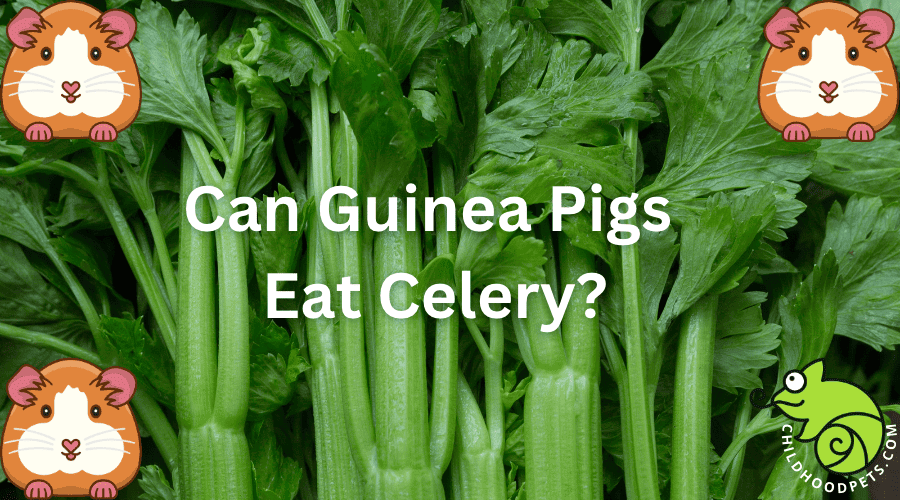
Can Guinea Pigs Eat Celery?

Celery is a long, beautiful vegetable that is packed with water, strings, nutrients, minerals, and fiber. Many people who keep Guinea pigs/Cavies are worried about their pet’s diet, and they often think about whether Celery is good for their little pets or not. Let’s discuss whether guinea pigs can eat Celery? If yes, how much Celery is permissible?

As a whole, guinea pigs can have Celery in their diet. But, because Celery has a significant amount of oxalates, they should consume it in moderation. Celery’s fiber, vitamins, and minerals (particularly calcium) may help your guinea pig’s teeth and bones.

Can Guinea Pigs Eat Celery Safely?

As a general rule, it is perfectly safe for guinea pigs to consume fresh Celery. They won’t become sick from it, and there’s very little chance it will hurt them immediately.  But they should eat Celery in moderate amounts.  Eventually, excessive amounts of a delicious thing can be bad. Including fruit and green veggies, especially Celery!

Oxalates found in Celery can be harmful to your guinea pigs if they consume too much of it, despite the fact that it contains a wealth of vitamins and other necessary minerals.

Why Guinea Pigs Should Eat Celery?

The fiber content of Celery is relatively high, which benefits guinea pigs. In addition, it is full of vitamins A, K, and C, as well as potassium and folate. Unfortunately, not all types of Celery are equally tasty. Some are small and very fibrous, while others are bigger and crunchier. The larger and crunchier variety are the ones that the guinea pigs enjoy the most; thus, we most frequently purchase for them.

What are the Health Benefits of Celery?

Guinea pigs are unable to synthesize their own vitamin C; as a result, they rely on fresh food and pellets to provide them with the necessary quantity of the nutrient daily. Celery has a trace amount of vitamin C, which is a positive thing, and it also has an appropriate balance of calcium and phosphorus in its composition. Celery also has other vitamins, such as vitamin B-complex, as well as vitamins A, D, E, and K.

Because of this, Celery is a healthy snack you can eat once or twice a week, but only in small amounts because it has oxalic acids.

NutrientAmount per 100gHealth Benefit
Vitamin C3.1 mgBoosts the immune system and helps prevent scurvy
Fiber1.6 gPromotes healthy digestion and prevents constipation
Vitamin K29.3 mcgHelps with blood clotting and maintains healthy bones
Potassium260 mgHelps maintain healthy blood pressure and heart function
Folate36 mcgEssential for cell growth and development
Calcium40 mgHelps maintain healthy bones and teeth
Magnesium11 mgHelps with energy production and muscle function
Health Value of Celery for Guinea Pigs

What Are the Dangers of Feeding Guinea Pig Celery?

In moderation, feeding guinea pigs celery is harmless and beneficial to their health. Yet, there are a few dangers that should be kept in mind if given in excessive amounts:

High Water Content

As Celery contains a high proportion of water, feeding it excessively to guinea pigs might result in diarrhea and other digestive issues.

High in Oxalates

Moreover, Celery has a significant amount of oxalates, which are known to prevent the body from properly absorbing calcium. A lack of calcium and issues with the urinary tract might result from consuming excessive amounts of Celery over a prolonged period.

Choking Hazard

Guinea pigs can choke on celery stalks, especially if they are not cut into small pieces that are easy to chew.

Pesticides

Celery that is not organic may include pesticides or other dangerous substances that are potentially hazardous to your guinea pig’s health. When giving Celery to your guinea pig, you should always clean it.

How Much Celery is Good for a guinea pig?

Because of its high water and oxalate content, Celery should only be given to guinea pigs in small amounts. Your guinea pig’s diet shouldn’t include more than 10 percent celery, and even then, it should be treated more like a treat than a basic source of nutrition/diet.

Provide your guinea pig with a piece of Celery approximately 1/3 inch twice or thrice weekly. This can help prevent your guinea pig from becoming sick from eating too much Celery or consuming too many oxalates. In addition, before giving Celery to your guinea pig, you should always be sure to wash it carefully to eliminate any dust or pesticides on it.

Can Guinea Pigs Eat Celery Tops?

As a whole, guinea pigs can eat celery tops in moderate amounts. The tops of Celery are an excellent source of vitamin C, fiber, and a variety of other key elements that contribute to the overall health of guinea pigs. Like any other treat, Celery tops should be provided in moderation to avoid stomach problems resulting from eating too much of anything.  It’s best to give new diets slowly and keep an eye out for any bad reactions.

Can Guinea Pigs Eat Celery Stalks?

As a general rule, guinea pigs can eat celery stalks, and doing so in moderation is safe for them. Because guinea pigs are unable to manufacture vitamin C on their own, consuming foods rich in this nutrient is critical for their health. Vitamin C may be found in plenty of Celery. Moreover, it has fiber, which is beneficial to digestion and helps to maintain a healthy digestive system.

However, it is crucial to remember that celery stalks have a high percentage of water. Because of this, excessive consumption of celery stalks can cause diarrhea and other digestive issues, so it is important to avoid feeding them in large quantities. Consequently, guinea pigs should be fed celery stalks in tiny portions, sometimes as a treat. 

Is Cooked Celery Safe for Guinea Pigs?

Generally, it is not advisable to feed cooked Celery to guinea pigs since this type of Celery can be difficult for your furry friend to digest and may create stomach issues. Due to the fact that guinea pigs have delicate digestive systems, the majority of their food should be comprised of fresh vegetables, hay, and pellets. When Celery is cooked, part of its nutritional content is lost, including vitamin C, which is an important nutrient for guinea pigs to consume.

Additionally, the process of boiling Celery can cause a rise in the amount of water it contains, which might result in diarrhea or other digestive issues. Guinea pigs should get raw Celery that has been cleaned and then broken up into bits suitable for chewing.

How to Get the Best Celery for Guinea Pigs?

When choosing Celery for guinea pigs, it’s important to pick clean, fresh, organic Celery that isn’t spoiled, discolored, or wilting. The following are some pointers to consider while purchasing Celery for guinea pigs:

  • Choose Fresh Celery: The stalks of fresh Celery are crisp, firm, and vibrant green. Avoid purchasing Celery that is mushy, rubbery, or has brown stains on it.
  • Choose Organic Celery: since it does not include any of the potentially toxic chemicals or pesticides that might affect your guinea pig’s health.
  • Wash the Celery: To eliminate any traces of dirt or pesticides from the Celery, thoroughly wash it under running water.
  • Avoid Yellow or Wilted Celery: If the celery leaves are yellow or wilted, this may indicate that the Celery is not fresh and should not be fed to your guinea pig.
  • Consider the Size: Due to the fact that guinea pigs have such small mouths, it is in their best interest to consume Celery that is soft. Before offering the Celery to your guinea pig, you might want to consider slicing it up into bits that are easily chewable.

Celery is generally good for Guinea pigs and includes many beneficial nutrients. But, it must be given in moderation.

While some owners provide their pets with celery stalks and roots on a weak basis, others do so only once every 15 days. Many pet owners are concerned about the high levels of calcium found in celery leaves. So, Celery is a good option for younger/developing Guinea pigs since it contains higher calcium that is good for bone growth, but it must be given to adult guinea pigs in very restricted amounts (2-3 times a week).

Can Guinea Pigs Eat Tomatoes?

Your guinea pigs/cavies require a variety of fruits to increase their nutritional intake and give them something fresh to chew on. You may have thought of feeding your guinea pigs tomatoes. It’s frequently wondered whether guinea pigs can eat tomatoes because they taste delicious and harmless.

Guinea pigs, also known as cavies, can enjoy tomatoes as a tasty and nutritious treat. However, it’s important to note that the leaves and stems of the tomato plant are not safe for guinea pigs to consume and should be avoided. Stick to feeding your pets only the ripe tomato fruit as a snack.

You still need to understand some crucial information about giving tomatoes to your guinea pigs.

This post will discuss the benefits of tomatoes, how often you give these fruits to your cavies, the potential hazards to avoid, and much more. 

Health Facts for Guinea Pigs Eating Tomatoes
Tomatoes are safe for guinea pigs to eat
Guinea pigs can eat the seeds of the tomato
The leaves and stems of the tomato plant are not safe for guinea pigs
Tomatoes are high in Vitamin C, which is important for guinea pigs
Tomatoes are high in calcium and oxalates, which can contribute to bladder stones in some guinea pigs
Tomatoes are relatively high in natural sugars, which can contribute to weight gain in overweight or obese guinea pigs
The acidity in tomatoes can exacerbate diarrhea in guinea pigs

Can Guinea Pigs eat Tomatoes?

Guinea pigs can eat tomatoes, including the seeds. Tomato seeds are not toxic to guinea pigs and can be safely consumed. However, it’s important to note that the seeds are small and hard, which can pose a choking hazard for some guinea pigs. To prevent this, it’s best to cut the tomato into small pieces and remove any large or hard seeds before feeding it to your guinea pig. As with any new food, it’s important to introduce tomatoes gradually and in small amounts to prevent digestive upset.

When Should You Not Feed Guinea Pigs Tomatoes?

While tomatoes are generally safe for guinea pigs to eat, there are some situations when it’s best to avoid feeding them this fruit. Here are some examples:

  1. If your guinea pig has a history of bladder stones or calcium oxalate crystals, it’s best to avoid feeding them tomatoes as they are high in calcium and oxalates, which can contribute to the formation of bladder stones.
  2. If your guinea pig is overweight or obese, it’s best to limit or avoid feeding them tomatoes as they are relatively high in natural sugars and can contribute to weight gain.
  3. If your guinea pig is experiencing digestive problems such as diarrhea, it’s best to avoid feeding them tomatoes as the acidity in tomatoes can make diarrhea worse.
  4. If the tomatoes are not ripe and are still green, it’s best to avoid feeding them to your guinea pig as they can be harder to digest and may cause digestive upset.

Always remember to introduce new foods to your guinea pig’s diet gradually and in small amounts, and if you have any concerns, consult with a veterinarian.

Health Benefits of Tomatoes for Guinea Pigs

Vitamin C is essential for the health of guinea pigs, and tomatoes are an excellent source of this nutrient. Guinea pigs cannot make their own vitamin C; thus, they need to consume it in their food to acquire enough of it. Because of this, vitamin C is considered an essential nutrient for guinea pigs. Scurvy, caused by a lack of vitamin C, is potentially lethal since it hinders the immune system’s ability to fight infections.

Tomatoes are beneficial to guinea pigs because they also include a variety of other vitamins and minerals in addition to vitamin C. Folate, vitamin K, and potassium are some of these. Both vitamin K and potassium are necessary for healthy blood coagulation and strong bones, although vitamin K is especially crucial for bone health. Potassium is necessary for a healthy heart and muscle function. Folate is an essential nutrient for the optimal development of cells.

NutrientAmount per 100g
Calories18
Protein0.9g
Fat0.2g
Carbohydrates3.9g
Fiber1.2g
Vitamin C13.7mg
Vitamin A149IU
Vitamin K7.9mcg
Folate15mcg
Potassium237mg
Calcium10mg
Phosphorus24mg
Sodium5mg

What are the Possible Dangers of Feeding Tomatoes?

Certain dangers are related to feeding guinea pigs tomatoes, even though they are typically harmless for the animals. There is a possibility that the high acidity of tomatoes, which can induce gastrointestinal distress in some guinea pigs, will be a concern. In addition, tomatoes have a high sugar concentration, which, if consumed excessively, can cause weight gain and other adverse health effects.

There is a possibility that feeding tomatoes to guinea pigs might expose them to the potentially poisonous toxin known as solanine. So, guinea pigs should avoid feeding them in big numbers since it can be toxic to them.

The seeds have more phosphorus than calcium, which makes it easier for urinary stones to form. Consuming an excessive amount of this vegetable can lead to gastrointestinal problems, including diarrhea, stomach discomfort, flatulence, and other similar symptoms. Tomatoes have a high sugar concentration, which, particularly in elderly guinea pigs, might make them more susceptible to disorders such as diabetes and obesity.

What Kind of Tomatoes Can Guinea Pigs Eat?

Ripe tomatoes are considered safe for guinea pigs to eat in tiny amounts.  On the other hand, it is essential to choose the appropriate variety of tomatoes for your guinea pig. Choose tomatoes that have not been treated with pesticides and are not too ripe or moldy.

Smaller types of tomatoes, such as cherry tomatoes, are ideal for your guinea pig since they are simpler to chew and have a milder flavour. Moreover, you must cut off the stem and remove any green bits of the tomato before feeding it to your pet since they might be toxic.

It is essential to remember that guinea pigs should only have tomatoes in the form of a treat and should not make up a large portion of their regular diet. Because they contain a lot of sugar, eating too many might make your digestive system uncomfortable. Little pieces of tomato should be offered to your guinea pig as part of a healthy diet that includes hay, fresh vegetables, and an excellent guinea pig pellet meal.

Can Guinea Pigs Eat Tomato Leaves?

As a whole, Tomato leaves are not suitable for guinea pigs to eat. A poisonous chemical is found in the tomato plant’s leaves, stems, and vines. If guinea pigs ingest high amounts of this chemical, it can be damaging to their health. In severe situations, the ingestion of solanine can lead to gastrointestinal distress, neurological problems, and even death. As a result, it is preferable to refrain from feeding guinea pigs tomato leaves and instead limit their diet to offering them ripe fruit in appropriate quantities.

Can Baby Guinea Pigs Eat Tomatoes?

Tomatoes can be given to a baby or juvenile guinea pigs that are at least one month old, but only in very little amounts. Because of the high quantities of oxalates contained in tomatoes, you must introduce them slowly to your baby cavies.

Both infant and adult guinea pigs can benefit from the vitamins C, B, and other minerals found in tomatoes. In addition, if you begin exposing your baby cavy to a wide range of foods early, they are less likely to develop a picky eating habit as adults.

How Often Can Guinea Pigs Eat Tomatoes?

Tomatoes can be given to guinea pigs as a treat, but they shouldn’t be a regular part of their diet. Because of their high sugar concentration, tomatoes should be consumed in moderation in order to prevent gastric distress.

You should give your guinea pig a tiny slice of tomato once or twice a week as part of a diverse diet consisting of hay, fresh vegetables, and a high-quality pellet designed specifically for guinea pigs.

Remember that each guinea pig is different; some may react differently to certain foods than others. If your guinea pig may safely consume tomatoes or any other food, it is recommended to check with a veterinarian specializing in caring for small animals. This will ensure that your guinea pig receives the best possible treatment.

In Closing

Tomatoes include a wide variety of nutrients that are beneficial to the health and growth of your guinea pigs. But, you should only give them a very tiny bit of the tomato every so often in order to keep them healthy.

The greatest method to protect the health of your cavies is to feed them small, high-quality tomatoes. Never give your guinea pig any part of the tomato plant, including the leaves, stems, or unripe fruit. These things harm them.

Beginners Guide to Pearl Cockatiel Care

As a kid my family had a pearl cockatiel, and caring for her was a lot of fun, she would get excited when she saw us in the morning, she could say several phrases, including hello, goodbye, and she could say her name. She was gentle and easy going, but also had her favorite human, which was my brother. 

Caring for a pearl cockatiel requires attention, dedication, and proper knowledge. These birds are highly social and intelligent creatures that require a well-balanced diet, regular grooming, and socialization to maintain their health and well-being. Providing a spacious living environment, a variety of toys and perches, and medical attention when needed are essential aspects of caring for a pearl cockatiel. In this article, we will explore the key aspects of pearl cockatiel care to help you provide the best possible care for your feathered friend.

Read on to learn more about caring for a pearl cockatiel. 

Pearl Cockatiel 

As a whole the Pearl Cockatiel is a popular bird species known for their unique and striking feather patterns. They are highly social and intelligent creatures that require proper care, including a well-balanced diet, regular grooming, and socialization. With proper care, Pearl Cockatiels can live up to 25 years.

Let’s get into it, with what type of cage setup they will need, their diet needs, their grooming requirements, exercise needs, and health care.

I also write a article about How to tell if your pearl cockatiel is male or female

Housing

Pearl cockatiels require a spacious cage that allows them to move around freely. The cage should be large enough for the bird to spread its wings fully without touching the sides or top of the cage. The ideal size of the cage for one pearl cockatiel is around 20 inches in length, 20 inches in width, and 30 inches in height.

The cage should be made of sturdy materials such as stainless steel or wrought iron, with horizontal bars to allow your bird to climb and play. The spacing between the bars should be no more than 0.5 inches to prevent your bird from getting its head or body stuck.

Provide your pearl cockatiel with plenty of toys and perches to keep them mentally and physically stimulated. Add different types of perches such as wooden dowels, natural branches, and rope perches to prevent foot problems from developing. It’s also important to keep the cage clean, with fresh food and water provided daily.

In addition to their cage, pearl cockatiels require out-of-cage time to fly and exercise. Provide them with a safe and secure area outside of the cage to play and stretch their wings. This can be a play gym or a designated area in your home where they can fly and explore.

Overall, providing a spacious and stimulating living environment is essential for the health and well-being of your pearl cockatiel.

Diet

A well-balanced diet is essential for the health and well-being of your pearl cockatiel. The best diet for a pearl cockatiel should consist of a variety of foods, including a commercial seed mix, pellets, fresh fruits, and vegetables.

Pellets should make up 60% of your pearl cockatiel’s diet, as they contain essential nutrients and are less fatty than seeds. Choose high-quality pellets specifically formulated for cockatiels, and provide them in a separate dish from the seed mix.

The remaining 40% of your bird’s diet should consist of fresh fruits and vegetables. Offer a variety of produce, such as leafy greens, carrots, sweet potatoes, bell peppers, and apples. Wash and chop the fruits and vegetables into small pieces, and provide them in a separate dish from the pellets and seeds.

It’s important to avoid feeding your pearl cockatiel foods that are toxic to birds, including avocado, chocolate, caffeine, and alcohol. These can be harmful or fatal to your bird. Also, limit the amount of high-fat or sugary foods, such as seeds and treats, as they can lead to obesity and other health issues.

In addition to a well-balanced diet, provide your pearl cockatiel with a calcium supplement to prevent calcium deficiencies and related issues like egg-binding. Consult with your veterinarian or an avian nutrition specialist to ensure your bird is receiving a healthy and balanced diet.

Water

Pearl cockatiels require fresh, clean water at all times. Change their water daily, and use a water dispenser that is easy to clean and refill.

Grooming

Pearl cockatiels require regular grooming to maintain their health and well-being. Here are some of the grooming needs of a pearl cockatiel:

  1. Wing clipping: As pearl cockatiels are excellent fliers, it’s important to have their wings clipped regularly to prevent them from flying away or injuring themselves. A professional bird groomer or avian veterinarian can do this for you. Clipping the first ten primary feathers of each wing will help to limit their flying ability while still allowing them to glide safely.
  2. Nail trimming: Pearl cockatiels’ nails will naturally grow long, which can cause discomfort and may lead to injury if they get caught on something. Trim your bird’s nails every six weeks to keep them at a safe length. You can do this at home using bird nail trimmers or seek the help of a professional groomer or veterinarian.
  3. Bathing: Pearl cockatiels enjoy bathing and keeping their feathers clean. Provide your bird with a shallow dish of water or a misting spray bottle to help them bathe. You can also place a bird bath in their cage, which they can use to clean themselves.
  4. Feather trimming: Feather trimming is a last resort, done only if your bird has broken or damaged feathers that need to be removed. Consult with your veterinarian before trimming any feathers to avoid accidentally injuring your bird.
  5. Beak care: A healthy beak is important for a bird’s well-being. Offer your pearl cockatiel cuttlebone, mineral blocks, or calcium supplements to help keep their beak healthy and strong.
  6. Socialization
  7. Pearl cockatiels are highly social birds and thrive on attention and interaction with their owners. Spend time with your bird every day, talking to them, playing with them, and teaching them new tricks. Additionally, consider getting a companion for your pearl cockatiel if you do not have enough time to interact with them daily.

Exercise

Pearl cockatiels are active birds and require regular exercise to maintain their physical and mental health. Here are some exercises that can help keep your bird healthy and happy:

  1. Flight: Allow your pearl cockatiel to fly in a safe and secure area outside of their cage. This can be done in a designated area in your home, such as a bird-safe room, or in an aviary outdoors.
  2. Play: Provide your bird with a variety of toys and perches to play with inside their cage. Offer different types of toys that can stimulate their minds and challenge their physical abilities, such as swings, ladders, and puzzles.
  3. Socialization: Interact with your pearl cockatiel every day, talk to them, and offer them treats. Training your bird to perform tricks is also a great way to provide mental and physical stimulation.
  4. Out-of-cage time: Allow your pearl cockatiel to spend time outside of their cage every day. This can be in the form of supervised playtime or spending time with their owners.

Health care

Regular veterinary care is essential for maintaining the health and well-being of your pearl cockatiel. Here are some health care needs that you should consider for your bird:

  1. Annual check-up: Schedule an annual check-up with an avian veterinarian to ensure your pearl cockatiel is in good health. A routine check-up can help identify potential health issues before they become serious.
  2. Signs of illness: Keep an eye out for any signs of illness, including a lack of appetite, lethargy, feather plucking, and changes in droppings. If you notice any of these symptoms, consult with a veterinarian as soon as possible.
  3. Vaccinations: Vaccinations are not usually necessary for pet birds, but your veterinarian may recommend certain vaccinations based on the bird’s risk factors and medical history.
  4. Parasite control: Parasites such as mites, ticks, and lice can affect your pearl cockatiel’s health. Use bird-safe treatments to control these parasites, and consult with your veterinarian if you suspect your bird has a parasite infestation.
  5. Calcium supplements: Calcium deficiency is a common health issue in pearl cockatiels, which can cause soft bones and muscle weakness. Provide your bird with a calcium supplement or offer cuttlebone or mineral blocks to ensure they are getting enough calcium in their diet.
  6. Respiratory infections: Respiratory infections are a common health issue in birds, including pearl cockatiels. Symptoms include sneezing, nasal discharge, and wheezing. Consult with your veterinarian if you suspect your bird has a respiratory infection.

Some of the Pros and Cons for owning a Pearl Cockatiel 

ProsCons
Beautiful and unique feather patternsRequire daily socialization and attention
Highly social and interactive birdsCan be noisy, especially in the morning and evening
Low-maintenance when it comes to groomingMay develop destructive behaviors if left alone for long periods
Relatively easy to care for and feedCan be prone to obesity if overfed or not given enough exercise
Can learn tricks and enjoy playing with toysMay require wing clipping and nail trimming
Can live up to 25 years with proper careMay be prone to certain health issues, including calcium deficiencies and respiratory infections
Can make good pets for both individuals and familiesMay not be suitable for households with small children or other pets
Pros and Cons of Owning a Pearl Cockatiel

It’s important to carefully consider the pros and cons before deciding to bring a pearl cockatiel into your home. While these birds can be wonderful companions, they do require a significant amount of time and attention to thrive.

In conclusion, pearl cockatiels are beautiful, social, and intelligent birds that make excellent pets. Proper care and attention are necessary to maintain their health and well-being. Providing your pearl cockatiel with a spacious cage, a well-balanced diet, regular grooming, socialization, and medical attention will ensure that they live a happy and healthy life.

The Ultimate Chinchilla bedding guide

Chinchillas are adorable, active, and playful small pets that require proper care and maintenance to live a healthy life. One of the essential aspects of caring for your chinchilla is providing them with suitable bedding. Chinchilla bedding serves multiple purposes, including providing a comfortable and safe place for your pet to rest, keeping their environment clean, and absorbing waste.

However, with numerous options available in the market, choosing the right bedding for your chinchilla can be a daunting task. In this article, we’ll provide you with the ultimate guide to chinchilla bedding, including the different types of bedding, the factors to consider when choosing the right bedding, and some recommended bedding options for your chinchilla.

What is the best bedding for chinchillas?

As a general rule, the best bedding for chinchillas is absorbent, dust-free, safe, and available. Popular options include paper, aspen, and fleece bedding. Recommended brands are Carefresh, Kaytee, and Small Pet Select. Regular cleaning is essential.

Check out Kaytee Bedding on amazon is only around $30, and is less than what we’ve found at any local pet store based on our shopping finds, and it has more than 30,000 reviews. After it from our local pet store because we ran out, we ended up subscribing to it on amazon due to it being 1/2 the price than what we found at the store, and that was only for one bag. It’s important to note that we use this bedding for our guinea pigs.

The best bedding for chinchillas depends on various factors, such as absorbency, dust-free, safety, availability, and cost. Some popular bedding options for chinchillas include paper bedding, aspen bedding, and fleece bedding.

Paper bedding, such as Carefresh Complete Pet Bedding and Small Pet Select Natural Paper Bedding, is made from recycled paper, is soft, absorbent, and dust-free. It’s also an excellent option for chinchillas with allergies or respiratory problems.

Aspen bedding, such as Kaytee Aspen Bedding, is made from pure aspen wood shavings and is absorbent, dust-free, and safe for your chinchilla.

Fleece bedding, such as K&H Pet Products Self-Warming Lounge Sleeper, is made from soft, comfortable fleece and is hypoallergenic. It’s an excellent option for chinchillas that love to snuggle and burrow.

Ultimately, the best bedding for your chinchilla depends on your pet’s needs and preferences. It’s essential to research and chooses bedding suitable for your chinchilla’s health and well-being. Additionally, it’s essential to regularly clean and maintain your chinchilla’s bedding to prevent the buildup of bacteria and other harmful substances. We wrote the following article Bedding for Chinchillas what you need to know. But we feel we have provided a better guide here.

What bedding should not be used for chinchillas?

As a general rule bedding to avoid for chinchillas includes cedar and pine bedding, clay-based clumping cat litter, dusty or scented bedding, and materials that are harmful to chinchilla health. Opt for safer alternatives like paper, aspen, or fleece bedding. Regular cleaning is crucial.

At the bottom of a chinchilla cage, it’s recommended to put a layer of suitable bedding to provide a comfortable and safe place for your chinchilla to rest, as well as absorb their waste and keep their environment clean. Suitable bedding options for chinchillas include paper bedding, aspen bedding, or fleece bedding. It’s important to avoid using unsuitable bedding options such as cedar and pine bedding, clay-based clumping cat litter, or any materials that can be harmful to your chinchilla’s health. Additionally, you can put toys, food bowls, water bottles, and other accessories in the cage to provide your chinchilla with adequate space, enrichment, and resources for their overall well-being.

When it comes to chinchilla bedding, it’s essential to choose options that are safe and suitable for your pet’s health and well-being. As such, it’s equally important to know what bedding options to avoid. Cedar and pine bedding should not be used for chinchillas, as they contain harmful oils that can cause respiratory problems. Clay-based clumping cat litter should also be avoided, as it can cause digestive issues if ingested. Additionally, any bedding that is dusty, scented, or made from materials that can be harmful to your chinchilla’s health should also be avoided.

While it can be tempting to use cheaper or more readily available bedding options, it’s crucial to prioritize your chinchilla’s health and safety. By avoiding these unsuitable bedding options and opting for safer alternatives like paper, aspen, or fleece bedding, you can ensure that your chinchilla has a comfortable and safe living environment. Regular cleaning and maintenance of the bedding are also essential to prevent the buildup of bacteria and other harmful substances. By taking these precautions, you can provide your chinchilla with the best possible care and ensure their happiness and well-being.

Types of chinchilla bedding:

Paper bedding: This type of bedding is made from recycled paper and is soft, absorbent, and dust-free. It’s also an excellent option for chinchillas that have allergies or respiratory problems. Paper bedding is affordable, easy to clean, and widely available in pet stores.

Aspen bedding: Aspen bedding is made from wood shavings and is another popular option for chinchillas. It’s absorbent, dust-free, and has natural oils that repel mites and other parasites. However, it’s important to avoid using pine or cedar bedding as they contain harmful oils that can cause respiratory problems for your chinchilla.

Fleece bedding: Fleece bedding is made from synthetic materials and is soft, comfortable, and reusable. It’s also an excellent option for chinchillas that have sensitive skin as it’s hypoallergenic. Fleece bedding is easy to clean and maintain, and you can easily wash it in your washing machine.

Factors to consider when choosing the right chinchilla bedding:

Absorbency: Chinchillas are active pets that produce a lot of urine and feces. Therefore, it’s essential to choose bedding that’s absorbent enough to keep their environment clean and dry.

Dust-free: Chinchillas have sensitive respiratory systems, and exposure to dusty bedding can cause respiratory problems. Therefore, it’s important to choose bedding that’s dust-free.

Safety: Chinchillas are curious pets that love to nibble on everything. Therefore, it’s important to choose bedding that’s safe and non-toxic for your pet.

Availability and cost: Chinchilla bedding should be readily available and affordable. However, it’s important not to compromise on the quality of the bedding for cost considerations.

Recommended chinchilla bedding options:

Carefresh Complete Pet Bedding: Carefresh Complete Pet Bedding is an excellent option for chinchillas as it’s made from recycled paper, and is soft, absorbent, and dust-free.

Kaytee Aspen Bedding: Kaytee Aspen Bedding is made from pure aspen wood shavings and is absorbent, dust-free, and safe for your chinchilla.

Small Pet Select Natural Paper Bedding: Small Pet Select Natural Paper Bedding is made from unbleached paper and is soft, absorbent, and dust-free. It’s also an excellent option for chinchillas with allergies or respiratory problems.

K&H Pet Products Self-Warming Lounge Sleeper: K&H Pet Products Self-Warming Lounge Sleeper is an excellent option for chinchillas that love to snuggle and burrow. It’s made from soft, comfortable fleece and has a self-warming layer that keeps your pet warm and cozy.

It’s also important to remember that chinchillas are social animals and thrive in pairs or groups. Therefore, it’s essential to provide them with adequate space, toys, and other forms of enrichment to keep them happy and healthy.

Lastly, it’s important to regularly clean and maintain your chinchilla’s bedding to prevent the buildup of bacteria and other harmful substances. You should replace the bedding entirely at least once a week and spot clean as needed.

Are leopard geckos at Petco?

Leopard geckos are popular pets and for a good reason. They are easily produced in captivity and come iLeopard Geckos are one of the most popular pet reptiles in the world, known for their distinctive appearance, docile nature, and ease of care. If you’re interested in getting a Leopard Gecko as a pet, you may be wondering if you can find them at Petco. In this article, we’ll explore the availability of Leopard Geckos at Petco and what you should know if you’re considering getting one from this retailer.

Are leopard geckos at Petco?

On Average Petco may carry Leopard Geckos, but availability can vary by location and time of year. Interested individuals should check the website or contact their local store. It’s important to research proper care and consider other sources like breeders or rescues.

Usually, Petco leopard geckos are from pristine breeders that have been carefully selected and bred for docility in addition to size and coloration. Let’s talk about what to look for in Leopard Gecko while buying them from Petco Leo.

How much does a leopard gecko cost?

On average the cost of a Leopard Gecko can vary depending on factors like age, morph, and overall health, with prices ranging from $20 to $100 or more. It’s important to find a reputable seller, and consider ongoing expenses like food, housing, and vet care.

The cost of a Leopard Gecko can vary depending on a number of factors. Here are some of the main factors that can impact the price of a Leopard Gecko:

  1. Age

Younger Leopard Geckos tend to be less expensive than adults. This is because they have a longer lifespan, and therefore more time to produce offspring. However, if you’re looking for a specific morph or coloration, you may need to pay more for a young gecko with those traits.

  1. Morph

Leopard Geckos come in a variety of morphs, or variations in color and pattern. Some morphs are more common and therefore less expensive, while others are rarer and can cost hundreds or even thousands of dollars. For example, a basic wild-type Leopard Gecko may only cost around $20, while a rare albino or eclipse morph could cost upwards of $500.

  1. Health

The health of a Leopard Gecko can also impact its price. A gecko with health issues or deformities may be less expensive than a healthy gecko, but may also require more care and vet bills in the long run.

  1. Breeder or Retailer

Finally, the breeder or retailer you purchase your Leopard Gecko from can also impact its price. Reputable breeders may charge more for their geckos, but may also provide more information about the gecko’s history and care requirements. Chain pet stores like Petco and PetSmart may offer geckos at lower prices, but may not provide as much information or support.

Where does Petco get their geckos?

On Average Petco sources their Leopard Geckos from a variety of suppliers and breeders who meet strict animal welfare standards. They also have a “Think Adoption First” program. It’s important to research the gecko’s history and care requirements before making a purchase.

Petco has stated that they are committed to ensuring that their suppliers meet strict animal welfare standards and that they work only with reputable breeders and distributors. They also offer a “Think Adoption First” program that encourages customers to consider adopting animals from local shelters and rescue organizations.

If you’re interested in purchasing a Leopard Gecko from Petco, it’s important to ask questions about the gecko’s history, health, and care requirements before making a purchase. Additionally, consider doing your own research into proper care and diet for Leopard Geckos to ensure that you’re able to provide the best possible home for your new pet.

What to look for in a Leopard Gecko while buying?

Take note of the following characteristics while shopping for a healthy leopard gecko:

  • The Leo should not be very slender generally, and there should be no protruding bones visible anywhere on the body.
  • In a healthy leopard gecko, there should not be any toes that are missing. This might indicate that the leopard gecko’s environment is congested, and there is a food shortage. It’s also possible that the breeder or seller didn’t properly address the issue of the dog’s troublesome shedding, which led to the problem.
  • A leopard gecko’s mouth should not be wide open or appear swollen. Its backbone and tail should also be straight and free of bumps.
  • In some cases, this may be an indication of metabolic bone disease as well as substandard treatment.
  • Leo’s tail must be round and broad. A shrunken tail might be an indication of very poor eating or an illness caused by a parasite. The leopard gecko’s tail is where it stores fat as well as other nutrients.
  • Examine the vent and abdomen of the leopard gecko. The abdomen should be clean and full, and the vent should not be unclean or coated in feces smearing.
  • They are most active in the evening and throughout the night; therefore, there is a good probability that a Leo will be dozing off when you arrive to purchase one because of this. However, if your Leo is awake and moving around, you should consider it to be attentive and active.
  • If you can see the leopard gecko’s cage and the excrement that it produces, you should verify its consistency of it. The poop of a healthy leopard gecko should not be watery or slimy, nor should it be a light color. They should be black in color, soft, and in the form of little pellets. Normal stools may also contain some white residue, known as urates.

What are Other Leopard Geckos Suppliers?

The Urban Reptile

The Urban Reptile have a selection of high-quality Leopard Geckos available in several different morphs. Pet owners enjoy how informative their ads are, including information such as sex, age, and chronology in an easy-to-find format. You are possible to make direct purchases through the website; but, in common with many other sites of a similar nature, a significant number of the reptiles that have been sold are still posted on the website, making it more difficult to search through and locate the ones that are still offered.

You may discover some crazy morphs on the Urban Reptile, such as an Electric Tangerine and Tangerine Tornado. The costs are fair, and certain morphs may even be purchased at lower prices than some other breeders.

BHB Reptiles

The process of bringing a new Leopard Gecko into your life is made simple and economical by BHB Reptiles. They provide a wide variety of pets on a website that is, in comparison to the other breeders on this page, among the most straightforward to access. We believe they are the greatest Leo breeder for the money since they have several morphs priced much more inexpensively than their competitors. This is the primary reason why we think they are the best.

You are able to acquire Leos from BHB Reptiles on their website according to the year in which they were born. Due to the fact that new geckos are always being added, there are a wide variety of morphs available in a range of ages and sizes.

Are leopard geckos at Petco?

CB Reptile

CB Reptile is another platform selection for the finest overall Leo breeder since they focus on breeding extremely rare leopard gecko variants. They also have an on-site biologist who can answer any questions you may have regarding the genetics of their geckos and other animals. Geckos are guaranteed to be in excellent health for a period of seven days after delivery, and this assurance is supported by the fact that they are transported overnight. 

The CB Reptile website offers a diverse selection of leopard geckos available for purchase. You won’t have any trouble purchasing them if you do it through the website. Their user-friendly ordering system enables you to select the sex that best suits your needs and even add on other necessities like feeder bugs, heating pads, plates, and more. Unfortunately, it might be tough to identify what reptiles are in stock since you have to put all of your alternatives to find out whether or not a certain gecko is available.

Quality Geckos

Although Quality Geckos sells some respectable geckos, their website is one of the most difficult to navigate of all the breeders whose operations we have examined for the purpose of writing these assessments. There are many pages that lead nowhere. The reptiles on those sites may have simply been sold out, but there’s no way to tell for sure until you’re sent to an empty page with no message. In point of fact, it seems as though more pages are blank than they are offering geckos for purchase.

Many of the geckos we were actually able to discover on the site were priced reasonably, which was especially surprising given the vivid colorations and patterns they had. The fact that these reptiles come with a 1-month warranty assures that your investment won’t turn up dead before its time. You will, however, need to have your camera ready when you open the package; if you forget this step, your reptile will not be replaced. If you neglect this step, your lizard will not be replaced.

Gecko Daddy

When you go to Gecko Daddy’s website, the first thing that will stand out to you is how well organized and simple it is to go about. You’ll discover a good assortment of Leo morphs on the website, many of which are sold at prices that are within your price range. On the other hand, you won’t find as large of a selection on their website as you will on the websites of some other breeders. Also, as you’re browsing through the photographs of individual reptiles for sale, the fact that so many of them indicate “sold out” might be a source of irritation and frustration. If the auctioned lizards could just be deleted from the listings, the overall experience would be much more wonderful.

GeckoBoa Reptiles

GeckoBoa Reptiles is a website that sells many unusual variants of the Leopard Gecko; however, many of their geckos are now unavailable for purchase. Because of the breeder’s stellar reputation, they frequently go out of stock very rapidly. You can tell that GeckoBoa takes the breeding of its geckos very seriously since, in 2013, they were nominated for the best Gecko breeder of the year.

If you get some quality morphs from GeckoBoa Reptiles while they are in stock, you may acquire them for at least $250. On the other hand, the prices for many of their morphs are greater than the ones offered by other breeders in the market.

© 2026 Copyright Childoodpets