Recent Posts

How often do you need to clean a leopard gecko tank?

Leos are one of the most common types of reptiles kept as pets and are highly recommended as first-time pets for young children. However, in order to maintain them in good health and ensure that they continue to be active, they still need a certain degree of care and cleaning. This article will provide instructions on how to clean a tank for a leopard gecko and assist you in achieving a perfect environment for your pet.
How often do you need to clean a leopard gecko tank?

Leopard Geckos’ cages need to be thoroughly cleaned once every two months. Empty the vivarium/cage of all its contents, dispose of the expired substrate, and cleanse and disinfect the vivarium and its contents.  This will help prevent the growth of bacteria and keep your pet healthy.

Why do you need to clean the Leo tank?

To maintain its strength and good health, a leopard gecko must to housed in an environment that is both clean and healthy. Leopard geckos like climbing, exploring, and hiding in their cage so much that they spend around 80% of their time outside of their vivarium.

The consistent climbing and creeping on the smooth glass walls might ultimately track dirt and filth, which can be highly ugly depending on the severity of the marks. As a result, maintaining a regular cleaning schedule for your glass vivarium is essential.

(In a related article, we wrote check out Here is how much water Leo’s need daily)

How to clean Leo’s vivarium/tank?  (Equipment and Procedure)

Equipment

Ensure that you have all of the necessary supplies on hand before beginning the process of cleaning your Leopard Gecko tank. You are going to require a water bucket in addition to a water sealant. You might also use a vacuum cleaner that comes with a hose attachment; however, you need to be sure to adjust the power level to the lowest feasible level. Bedding of some type (newspaper, shavings, etc.) is required for the substrate.

Procedure

Before you get started cleaning the vivarium that your leopard gecko lives in, you need to make sure that it is empty first. After that, you are able to completely clean the interior of the vivarium by making use of a gentle cleaning solution. In addition to this, you will need to remove any loose branches, stems, and food that have become rotten inside the vivarium.

After you have finished cleaning the interior of the tank that your leopard gecko resides in, it is recommended that you spray the inside of the tank with a disinfectant once per week or so. As soon as you have completed the cleaning, You should ensure that you maintain your tank well-oxygenated by utilizing a misting system. This will help avoid any undesired algae development from occurring in your vivarium. In addition to this, you need to ensure that the water is kept clean and that it is not allowed to become stagnant. Take a bite-sized piece of food, such as a piece of lettuce, and regularly put it in your leopard gecko’s tank. It will ingest the water, which will, in turn, provide it with the nutrients it needs to maintain its health.

In order to encourage climbing, it is essential that you empty the tank of any loose rocks and substitute them with small gravel. Only then will the tank be ready for use. There are several things, such as pebbles and plants, that can be purchased at pet supply stores to assist you in maintaining the health and activity level of your leopard gecko.

If you have access to a wider area and would want to construct a larger enclosure for your leopard gecko, you will need to ensure that the structure is durable enough to support its weight. Following these guidelines, you may help ensure the continued well-being of your leopard gecko.

What would happen if you do not maintain a clean environment for your Leo?

Even while it may appear to be mundane and dull, it is really necessary to ensure that your leopard gecko is happy and will live a long life.

When Leos are free to roam the wild, nature will take care of any problems that may arise on its own. Rain, for instance, is going to fall, which will wash the ground, the animals, and other spots that need it. Additionally, there are natural cycles that occur in nature, such as vegetation and then being consumed by other creatures. This is a good illustration of how nature cleans up after itself in its own unique way.

However, a leopard gecko kept in captivity will be unable to accomplish this. They cannot wait for the rain to fall down to clean and wash their tank, which illustrates how dependent they are on you to achieve everything. They cannot rely on the natural processes of the surrounding environment to keep them clean. Therefore, you are the one who needs to be responsible for consistently bringing all of this to fruition.

If you do not maintain the tank in which your pet is housed, you may regrettably experience odors that are really unpleasant to smell. You may also see the development of bacterial illnesses in the tank, which, under the direst of conditions, may result in the untimely demise of your lizard, which is something that you should definitely steer clear of.

It’s possible that over time, an unattractive coating of filth can build up, making it difficult, if not impossible, to see what’s going on within the glass tank that you’re utilizing. This is not an ideal situation.
How often do you need to clean a leopard gecko tank?

FAQs

Where should you keep yourself, Leo, while cleaning its vivarium?

During the cleaning procedure of the vivarium/tank, you will need to take your Leopard gecko out of its tank.

You may use Leo’s travel cage if you already have one available, or you could just use a plastic storage container instead.

If you are keeping your gecko in a container, either make sure the sidewalls are high enough that it cannot possibly climb out or cover the container with a lid that allows air to circulate so you don’t lose track of it.

The complete process of cleaning will only take 12-15 minutes every week, and the thorough cleaning session will take between 40-50 minutes, depending on the number of furniture in your tank as well as the degree of dirtiness.

Even though this procedure won’t take up much of your time, it is still a good idea to lay down some toilet paper on the bottom of the holding tank.

You could also consider keeping an additional hide so that you may use it on days when you need to clean your pet’s house. This will help decrease any stress that your pet may have as a result of being removed from its habitat.

Is it okay to use vinegar to clean Leo’s vivarium/tank?

Yes, cleaning Leo’s tank using white vinegar that has been diluted with water may be risk-free. Due to the antibacterial and antifungal qualities that it possesses, vinegar is an excellent household cleanser. It’s also a natural odor neutralizer. When you’re through cleaning the tank, just be sure to give it a thorough rinse to get rid of any vinegar residue.
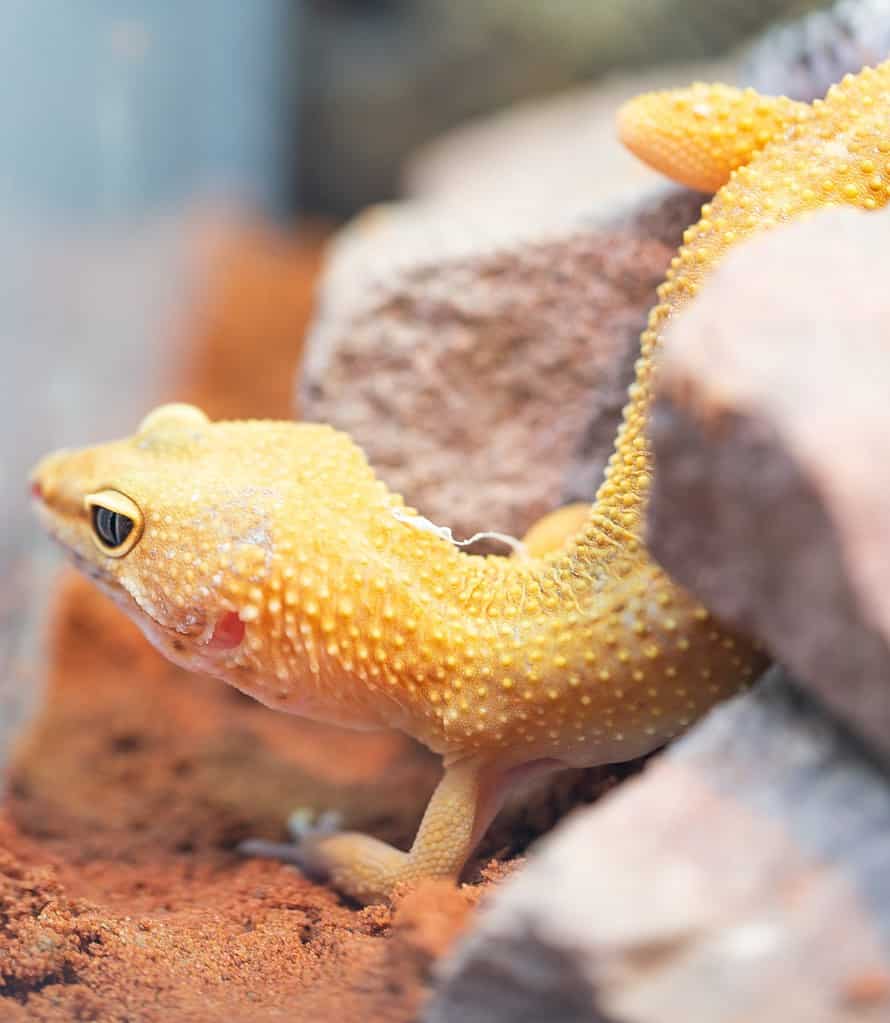
Do Leopard Geckos Have Teeth?

Leopard geckos are some of the most popular reptiles kept as pets. They’re relatively low-maintenance, can be handleable, and make for interesting pets to watch. But one question always seems to come up when it comes to leopard geckos: do they have teeth? The answer is a bit more complicated than a simple yes or no. Keep reading to learn more about leopard gecko teeth and what they can tell us about these unique creatures.

Do Leopard Geckos Have Teeth?

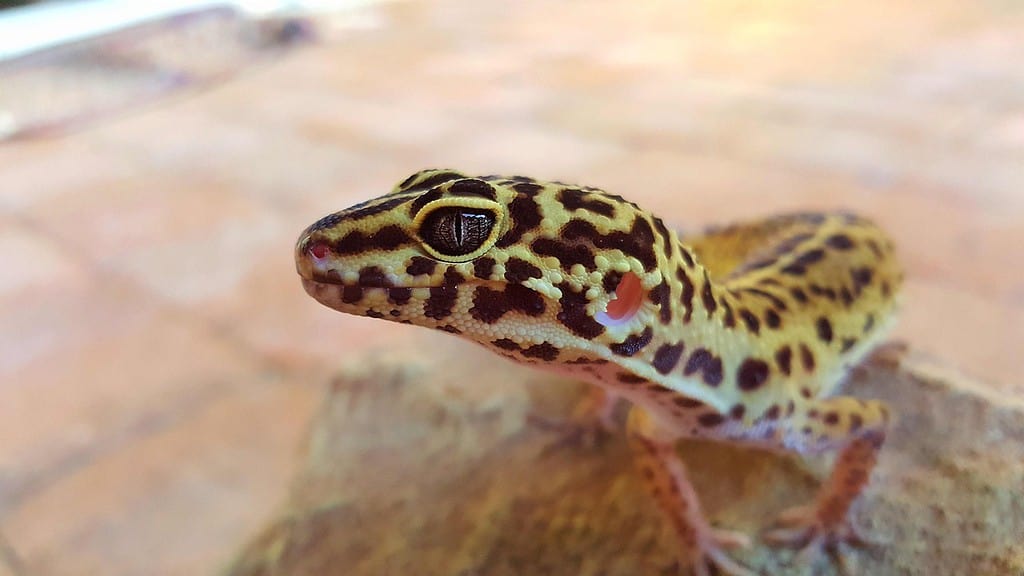
Leopard geckos have rows of small, sharp teeth that they use to grip their prey. Each tooth is attached to a very strong jaw, which allows the gecko to crush its food. An adult leopard gecko has about 100 teeth, which are replaced periodically throughout its life.

Leo’s Teeth Structure

The growth of teeth in leopard geckos often begins at a young age and continues uninterrupted until the gecko passes away. Even before it has hatched, this gecko has already begun to build its teeth.

Geckos’ teeth originate from cells in their ectoderm layer. These cells have developed the ability to thicken and expand inward, which ultimately results in the formation of the dental lamina. After that, the dental lamina will join the teeth of the gecko to the epithelium that lines the oral cavity.

As is the case with the vast majority of geckos, Leos have rows of tiny teeth in the shape of cones that border the dentary bone (found in the lower jaw) and the upper jaw bones. Geckos often have a greater number of teeth on their upper jaws as compared to their lower jaws. It is difficult to ascertain the precise quantity of teeth present because teeth frequently fall out and are also replaced.

The total number of teeth in a healthy leopard gecko should range anywhere from 50 to 100 on average (sometimes as maximum as 300).

What Would Urge a Leopard Gecko to Bite?

When a Leo feels threatened by a person, it will almost always attempt to protect itself by biting the person who is causing it harm.   It is essential that you treat Leo with kindness and avoid doing anything that would make him angry so that you can avoid getting bitten. If you are not cautious, they will bite you.

Their bites are considered to be hardly painful, and they do not even puncture the skin. Even while this shouldn’t be a major cause of concern for you, it is essential to be certain that you are providing the appropriate level of care for your Leos and ensuring they are both comfortable and secure at all times. Let’s go over some of the reasons why leopard geckos could try to bite you, as well as some of the ways you might prevent getting bitten.

  • To begin, Leopard Geckos are pretty possessive of their territory. This not only indicates that they value their privacy but it also indicates that they are sensitive to the odor of other geckos and feel threatened by it. This is especially true for male Leos, especially at the time of year when they are trying to mate.
  • They will have a justification for biting you if they detect the odor of another male Leo on your hands. In order to prevent this from happening, you need to make sure that you clean your hands after handling multiple geckos. Therefore, before you grasp another, you should ensure that your hands are clean so they don’t confuse you with something else.
  • You also run the risk of being misidentified as food by hungry Leopard Geckos. They could try to take a bite off of your finger if they have to move around you immediately before feeding time if you chance to be in the way. Make sure that your reptiles are fed before you pick them up so that you may avoid this problem. If this is not an option, you should provide some kind of diversion for him to focus on so that he does not confuse his finger with food.
  • Leos can also have quite different personalities, and you could have to cope with some that are really hostile. They may be hostile against you during the first few days or the first week you are in a new location, but after that period, they should start to get acclimated to you and calm down. If this does not occur, it is possible that they are just more anxious than other geckos or that they have underlying issues that cause them to be more aggressive.

Do Juvenile/Baby Leos Bite?

As with adults, there are one hundred teeth on the jaws of baby leopard geckos. Additionally, juvenile geckos are more likely to bite than their adult counterparts. If you have juvenile Leopard Geckos, you run a significantly greater risk of being bitten by one of them. Most of the time, this would be due to an interest in new experiences, fun, and learning, but it still happens. Their bites are so small that they do not inflict any excruciating pain. (Here’s how you properly handle a Leopard Gecko)

It’s possible they are merely upset, terrified, or scared, but this seems to be the most typical explanation. They may be provoked into biting you if you grasp them too quickly or make a lot of loud noises. This may cause them to feel the need to defend themselves.

It is best to wait until the gecko has adjusted to its other life conditions, such as a new environment or the fact that it is already a baby gecko, before attempting to get it to acclimatize to you. This also implies that it is essential to domesticate your gecko so that it may develop acclimated to you and the other people who are frequently in its environment. Even though geckos often flee when they are frightened, there is always the possibility that they will attempt to bite you.

Do Leopard Geckos Have Teeth?

What You Should Do If You Get Bitten By A Leopard Gecko?

Geckos are carnivorous animals, and they hunt using their teeth. In contrast to humans, however, they do not chew their food but rather swallow it whole. They propel the insects down their throats using a combination of the power of their flexible tongue and the movement of their muscles. Their teeth are not in the correct alignment for them to be able to bite their food, but this makes it much simpler for them to swallow it. Their minute teeth are hardly likely to cause any pain to the skin of your fingers. The bite of a little gecko will not cause any pain, and even the bite of a normal-sized gecko will only cause minimal discomfort. 

When working with geckos or the habitat in which they live, it is strongly advised that you wash your hands properly beforehand. If your pet bites you, it is essential to sterilize the affected region, which is required if the bite draws blood. In order to eliminate any bacteria from the bite, you will need to apply cleaning alcohol or H2O2 to the affected region. In order to get rid of the bacteria that are on your hands, you need to wash your hands using antiseptic soap. This process may cause you some discomfort; nonetheless, it is essential because it helps protect you from being sick by any germs or filth that may be present in your environment. Following this, you can apply a band-aid to the affected region.

It is a common misconception that getting bitten by an animal would inevitably result in one’s death, although this is not always the case. It is possible for this to occur with other animals, including dogs, but it is highly unusual to occur with leopard geckos. Therefore, all you need to do is wash the area where you were bitten and apply a band-aid. You can seek the reassurance and guidance of your veterinarian if you have any more questions.

How Much Water Do Leopard Geckos Need?

As the owner of a leopard gecko, it’s essential to know what your pet needs. Since leopard geckos live in dry places, you might wonder how much water they need. What kind of water requirements do Leopard Geckos have? Should they get anything to drink?

How much water do leopard geckos need?

Leopard Geckos drink very little water and can go without for several days. They use water to soak and assists in the shedding process. Keep a shallow bowl of fresh water in their vivarium and spray the enclosure once a week will meet their water needs. Frequently change the water to keep it fresh.

A lot of people believe that taking care of reptiles is a challenging and demanding task. Taking care of reptiles like leopard geckos is not difficult in any manner at all. However, the method of care necessary for them is distinct from that required for a pet animal.

Do Leopard Geckos Drink Water?

Although your leopard gecko originates from dry places, it needs water regularly. Your pet gets most of its water from the food it eats. Some insects have a higher water content than others, which helps them meet the water needs they have set for themselves.

They also drink water, but not as much as your other pets. In order to aid your leopard gecko with hydration and shedding, you must supply clean, fresh drinking water in its habitat at all times. Leopard geckos require water to survive.

How Leos Get Water?

Geckos have several fascinating adaptations for acquiring and retaining water in their bodies.

  1. The first method involves taking a drink straight from one of the accessible water sources.
  2. They may also produce water through a process called metabolic water production, which involves extracting water from the food that they consume. The second strategy allows reptiles to fulfil anywhere from 10 to 20 percent of their overall hydration requirements.
  3. The last method, which is also the most intriguing, is called moisture-harvesting, consisting of collecting water via the skin. Using high-powered microscopes, researchers discovered that lizards’ skins contain a network of straw-like structures that, in essence, transport water that has been collected on the skin from the surrounding environment to the animals’ mouths. These structures can be found all over the lizards’ bodies. This strategy is relatively frequent in flora and fauna that have evolved in arid environments.

Water Storing Process In Leos

It’s possible that this won’t be a huge concern for geckos that come from mesic habitats (environments that often have access to water), but for species that have always lived in xeric ecosystems, it might very well be a matter of life and death (where water is scarce).

However, as a result of evolution, geckos and other reptiles that have had to survive dry periods are now able to conserve as much water as possible through a variety of clever means:

  • Leos that are native to regions with temperate temperatures put on weight by consuming foods rich in moisture to be better prepared for the dry seasons, during which access to water may be limited.
  • Others will use their tongues in an effort to extract even the tiniest droplets of water that are lying on plants or the ground;
  • There are additional species of lizards that are able to store water temporarily in their urine bladders, allowing them to live through the two to three months of the summer when it is hot and dry.
  • Some of them try to make up for the water they’ve lost by retreating and burrowing into places that are cold and damp;
  • In general, however, waste ejection is the primary mechanism that helps geckos to save water. This is an ironic twist on the meaning of the phrase.

You may or may not have noticed that gecko feces is extremely dry, but it is. However, this is not the end of the story since, in contrast to people, their urine is also relatively solid. In this context, “white odorless speck” refers to the speck that is frequently found in close proximity to their droppings but does not have any odor.

So, what is their secret to success here? They do this by a mechanism referred to as uricotelism, which enables them to keep more water in their bodies while getting rid of nitrogenous waste in the form of the uric acid rather than urea or ammonia.

Consequences if you Fail to Offer a Water Dish to your Leo

Leos are at risk for various detrimental health issues without access to a dish of water. Dehydration is a predisposing factor in a wide range of other medical conditions. Your pet has a much-increased risk of being very ill and dehydrated if you do not provide easy access to water for it.

Warning signs of dehydration include:

  • Diarrhea or constipation
  • Consuming very little or no water
  • Skin with wrinkles or a wrinkly look
  • The suppleness of the skin is diminished
  • Lethargy and a lack of strength

If you see any of these symptoms, it is quite probable that your pet is suffering from dehydration. In this case, you should ensure that your pet has easy access to extra water and schedule an appointment with a veterinarian as soon as possible.

Why Is It Necessary to Give Them Water?

It is very recommended that a deep bowl or dish with clean water be kept inside the habitat of the Leopard Geckos at all times. You might be wondering why precisely. Even if they don’t drink much water and get moisture from insects, they may want it periodically.

Leopard Geckos drink water when they haven’t eaten enough insects to meet their moisture needs, as when they shed. It is a good idea to maintain a constant water supply within their terrarium at all times.

How Often Do Geckos Drink Water?

Provide fresh water daily in a dish large enough for the gecko to soak its whole body in. Soaking in warm water for 15–20 minutes 2–3 times a week is helpful, particularly during a shed.

What Kind Of Water Is Appropriate For Geckos?

In the natural, the water accessible to all species of animals typically has traces of salts and minerals. Natural water is vital for optimal biological functions. In most cities, though, geckos are kept as pets and do not live in the wild.

Spring Water

Gecko care specialists consider natural spring water the superior option for drinking, bathing, and misting. This is because geckos living in the wild have access to natural spring water. It comes deep underground, where porous rocks like limestone filter, and Mother Nature cleans it.

You can buy bottled spring water at the grocery store; however, it will save you a lot of money to do so. Typically, bottled spring water is treated with UV light to kill bacteria and a fine filter to remove silica and sand.

Tap Water

Using tap water to hydrate your gecko is situational. Some have healthy tap water, while others have badly polluted water.

Some keepers say it’s unfit to drink since chemicals were added to treat water. Because of this, not only does it include salts and minerals, but it also possibly contains fluoride, chlorine, and chloramines.

Filtered Water

You should consider purchasing a filter system if you want to know what is in your water and whether or not it is safe to drink. There are many different kinds of filtration systems on the market. Many eliminate chlorine and bacteria while adding calcium, magnesium, potassium, and salt.

Distilled Water

Experienced gecko keepers use distilled water for their geckos since it lacks flavor and odor and is essentially pure water. Distillation removes impurities from the water.

Some people believe it is the “purest” form of water that can be obtained; hence, many incorrectly assert that it has no health risks whatsoever. On the other hand, this is not the situation.

In recent years, specialists have cautioned against the common practice of providing distilled water as the only source of hydration for geckos. The acidity of the water increases as beneficial minerals are extracted from it. Consumption and exposure over an extended period might prove exceedingly hazardous since the body will be compelled to compensate by extracting minerals from teeth and bones to neutralize the acid.

How Much Water Do Leopard Geckos Need?

How To Supply Water

There are two efficient ways you may use order to provide water for your leopard gecko.

  • You can first put a water bowl in their cage, though not all geckos will drink from it. Water dishes are not only for drinking but also for soaking. So if your gecko likes to soak, get larger dishes to fit in. However, it is crucial to keep in mind that not all reptiles are proficient swimmers and are, as a result, at risk of drowning. Because of this, it is essential to consider the container’s depth.
  • In addition to this, you may mist the cage regularly. The mist creates droplets on the leaves and ornaments, allowing your animal companion to drink from the mini pools of water as they would in the natural environment.

Geckos that live in dry areas can also use this method to get water. However, if you want to spray gecko species native to hot and arid locations, the tank has to have sufficient ventilation and heat so that the humidity may remain at a reasonably low level.

What If I Don’t Give My Gecko Water?

Without access to a water dish, leopard geckos and crested geckos are at risk for various detrimental health issues. Dehydration is a typical reason for a wide range of other medical conditions. Your pet has a much-increased chance of being very ill and dehydrated if you do not provide easy access to water.

Symptoms of dehydration include:

  • Wrinkled skin
  • Skin loses elasticity
  • Lethargy and weakness
  • Trouble Shedding
  • Difficulty passing stool or recurrent constipation.

If you notice any of these symptoms, it is quite probable that your pet is suffering from dehydration. You should ensure that your pet has easy access to extra water and schedule an appointment with a veterinarian as soon as possible.

FAQs

Is Bottled Water Safe for Leos to Drink?

There is no way that geckos could have been born with the mechanisms humans have that would enable them to handle the hard water that is often found in our faucets today. They will have the finest alternatives for drinking water if you provide water from your refrigerator, water in bottles, or water filtered with a filter.

In the event that you have no other choice than to provide them with tap water, leopard geckos have been known to do quite fine with it; nonetheless, it is best to provide them with spring or distilled water whenever possible. They wouldn’t be adversely affected by drinking water from a bottle either. If at all possible, you should steer clear of drinking water from the tap.

Why is my leopard gecko not drinking water?

It’s possible that your Leo isn’t drinking water because they are receiving water from the food they eat. This happens if your Leos are being selective or because they are having trouble adjusting to their new surroundings. In any event, it is usually best to practice patience with your Leo while you are attempting to coax it into drinking more water.

Do Leos Require a Water Dish in Their Vivarium?

Yes”! Your Leo must have access to a water dish in order to drink and stay hydrated. The provision of drinkable water is only one aspect of the function of a water dish.

Leos can benefit from additional hydration or aid during the shedding process, and having a water dish on hand might be a valuable tool if your Leo is experiencing difficulty shedding its skin. The gecko is able to shed its skin more easily with the assistance of water since it helps to loosen it up slightly.

Keeping water in the tank at all times can help increase the humidity, which is essential for our reptile friends who need a certain degree of moisture in the air.

Additionally, there is no standard water dish size for any Leo, but there are some broad recommendations that you may use to determine which Leo would do best in the cage you have provided for it.

Generally, the water dish needs to be deep enough for it to drink from, but it shouldn’t be so deep that it entirely submerges the gecko.

How much water do leopard geckos need?

What Type of Water Dish Is Ideal for a Leopard Gecko?

Leopard geckos may soak in water bowls. They may do this to control their body temperature better. Your gecko’s water bowl should have a depth that is not deep enough to put it at risk of drowning, and it should be easy for your gecko to get into and out of the bowl.

Most of the time, it’s best to put the water bowl on the cool side of the enclosure. This way, the water won’t evaporate as quickly as it would if it were on the hot side.

How Long Can a Leopard Gecko Go Without Drinking?

Reptiles need to be kept adequately hydrated, and leopard geckos are no exception. They require access to potable water and a humid environment within their enclosure. If you will be away from your house for a few days, provide a dish of water for your pet. Adult reptiles can last a few days without water, but your leopard gecko may die after three days.

How Often Should You Hold Your Leopard Gecko?

The leopard geckos (Leos) are interesting species. They are quite adorable and make a great pets. But how often should you hold your Leo?

Leopard geckos should not be handled too frequently. You should not spend more than 20 minutes with them at a time. Your gecko will not experience any anxiety or worry due to this behavior. It is important to remember that long periods of handling might cause your gecko to get stressed.

Leos are nocturnal, meaning they are most active in the evening and early morning. If you’d like to pet a leopard gecko, the best time is early or late in the evening.

The handling of leopard geckos should be started very cautiously. You must gain their trust before managing them. So, let’s talk about how to hold a Leopard gecko and what you should do.

Do Pet Leopard Geckos Like Being Held?

Leos dislike being handled by humans or any other creature. Even if your Leo doesn’t run away or exhibit fear, it hates being handled. To the greatest extent possible, Leos are uninterested in being touched.

Even though it’s sad to find out that your Leo doesn’t like being held, it’s important to remember that Leos are much better for handling than any other gecko specie. It is possible that the leopard gecko will not experience any tension or anxiety throughout the process of being handled if you show patience with it and expose it to your hand in a linear manner.

In other words, Leos can be trained so that they do not dislike being handled, although it is unlikely that they would ever like being handled as much as any feline or canine companion.

Leopard Gecko Handling Tips

Petting your leopard gecko is the most effective approach to building a relationship and interacting with it. As long as your leopard gecko believes in you, it will have a sense of security whenever you hold him or her in your arms. The true challenge is figuring out a way to earn their trust. When it comes to handling your Leopard gecko, here are a few pointers and suggestions that ought to prove useful.

1.     Start Handling Your Gecko as Soon as You Can

You should handle a newborn or young leopard gecko as soon as possible. This helps to create a link with your gecko at an early age, and more significantly, it assures that your leopard gecko will become more obedient and quiet as it matures.

Remember that young are fragile and must be treated carefully. Petting your gecko early can help you learn what your gecko loves and dislikes.

2.     Go Easy on Them

Although leopard geckos don’t mind being handled, you must move gently around them. Forcing the gecko to do something will only scare it away and make it hate you more.

The most effective method is to provide sufficient time for your leopard gecko to acclimate to its new environment. Once they’re settled, you may start engaging with them.

3.     Teach Your Leopard Gecko to Adapt to You

You can only earn their confidence if you teach your leopard geckos to become accustomed to being around you through training. First, ensure your gecko you aren’t a predator. To do this, place your hand inside the cage and leave it there for a few minutes each day.

Your gecko will eventually realize that your hand does not threaten it, and it will begin to adjust to you. Most of the time, it will show appreciation by climbing onto your palm or even licking it in the beginning. When it reaches this point, you’ll be able to increase your efforts gradually, but you shouldn’t push yourself too hard.

4.     Avoid Its Tail

Leopard geckos, like most geckos, can lower their tails as a defense strategy. Therefore, if you want to hold your gecko, you should avoid picking it up by the tail. The more you play with its tail, the more likely your leopard gecko will drop its tail.

Keep in mind that leopard geckos store essential nutrients in their tails and that removing one of their tails will cause the little species more harm than benefit. 

How Often Should They Be Handled?

A leopard gecko should be handled only once a week, at most. You can handle the gecko once every other day for 20 minutes.

The leopard gecko is a naturally solitary species that need time to relax, but some people may argue that an owner should handle their gecko everyday to “tame” it. However, this causes stress for the leopard gecko. Even as young animals, leopard geckos may quickly adjust to their owner’s presence and learn to like being around them without requiring excessive touch.

Baby leopard geckos need more handling than adults, so it’s easy to move them during tank cleaning or a health exam. In this situation, the owner can handle the newborn once a week. The owner should get newborns used to touching but not holding them for a week.

It doesn’t matter how old the leopard gecko is; the pet owner should never handle the lizard when feeling anxious. Clucking, attempting to move away, flapping its tail, and having its ears tightly closed are all signs that the animal is stressed. When a leopard gecko is young, it might do these things.

How Often Should You Hold Your Leopard Gecko?

How to Pet a Leopard Gecko?

A leopard gecko should only be petted on its back and sometimes on its head. Rubbing the leopard gecko’s belly or tail creates stress and may cause its tail to droop.

Before touching the leopard gecko, the owner should ensure it’s comfortable and not in danger if disturbed. If the leopard gecko appears anxious, the owner should refrain from handling it until it has either calmed down or been allowed to explore a secure location first.

Is It Safe to Handle a Leopard Gecko?

In most cases, the leopard gecko’s owner may safely handle their pet without risking injury to the animal or themselves. To keep it safe, the owner must follow the requirements.

Leopard geckos are not known to be dangerous to their owners since they are not venomous, and they rarely bite unless they are mistreated, under a great deal of stress, or are wild. Some people may be allergic to the gecko’s claws, which can cause red, itchy spots on the skin where the gecko walks.

Even while this is completely safe, and the spots will disappear shortly after they appear, the owner may choose to wear gloves or their sleeve when handling their gecko if the sensation is too bothersome. The leopard gecko is harmless if not overhandled, and the owner knows how to handle it.

To keep the leopard gecko safe, it should be kept away from larger pets. If the owner lets the gecko crawl on them, they should always know where it is. Finally, they must keep the leopard gecko quiet during handling, or it may drop its tail.

How Do Leopard Geckos Show Affection?

If you spend time with your leopard gecko and notice that it gets excited when you come near, or if you are thinking about getting one after seeing a group of them smile at you in a pet store, you may be curious about Leo’s personality. You may think, Are Leos sociable? Can they show affection with their owner?

How Do Leopard Geckos Show Affection?

Leopard geckos are calm and friendly but can’t show much affection or form strong attachments with their owners. Leopard geckos are sociable but not affectionate because they have a physical bond with their owners instead of an emotional one.

We must begin by analyzing the personality of a typical leopard gecko. First, though, we need to discuss how being friendly differs from being affectionate. Affection is showing kindness to others because you have a strong emotional connection. In contrast, friendliness is when you respond to other people and stimuli in a way that is not hostile and is approachable. Now that we’ve clarified let’s see which describes your scaly companion.

Are Leopard Geckos Sociable Animals?

Yes, they are friendly animals. It is one of the main reasons why leopard geckos have become so common as household pets in recent years. They are friendly and easy to talk to, so they don’t act aggressively. In addition, they are great pets for children and can make an excellent introduction to the world of reptiles. A leopard gecko’s friendly attitude allows it to be handled without fear.

Even though leopard geckos may like being with you, they are not usually affectionate. They don’t like being petted to feel closer to their owners. In addition, unlike a dog or a cat, they will not seek your attention or try to satisfy you in any way.

Leopard Gecko Friendliness

Leopard geckos are expressive species, meaning their friendliness is somewhat visible when interacting with them. When sociable, leopard geckos are curious about their companion. They will keep an inquisitive eye on the individual and may even emerge from their hiding place or where they are basking to observe what the person is up to. They’ll climb all over you as curious creatures if they’re outside the cage. 

Your leopard gecko may be perfectly content with its life, even if it doesn’t feel like climbing on you or being handled right now. A happy leopard gecko will have its ears open, seem comfortable, and be curious about its surroundings. A contented leopard gecko will frequently engage in activities such as sunbathing and exploring while stroking its tongue.

If it’s not sleeping, it will look interested in its environment. It will be in a state of interest while exploring or relaxing when it is basking in the light or cooling off in its shelter, just as it would be in those states while it is crawling on its owner or remaining warm in its hands. Your leopard gecko isn’t avoiding handling because it’s upset—it just wants to explore or relax in the warm light.

Your leopard gecko should not be swinging its tail about like this since this behavior suggests that it is either irritated, stressed, or feels like a threat to its territory.

How to Know If Your Leopard Gecko Is Happy

Reptiles can’t experience joy in the same way that we do. Having said all of that, the happiness of your leopard gecko is primarily dependent on its state of health. If your leopard gecko has an illness, he will be uncomfortable. On the other hand, a gecko in good health is a happy gecko.

Because of this, one way to determine whether your leopard gecko is pleased is to search for symptoms of disease or sickness. Here look at some of the more obvious indications that your leopard gecko is healthy and, as a result, happy.

He is Active.

The fact that your leopard gecko is active is the first indication that he is happy in his environment. Your leopard gecko is likely pleased if he explores his tank, wanders between the warm and cold spots, and approaches the glass when he’s hungry or sees you. 

On the other hand, a depressed leopard gecko would have a sluggish and dull temperament. He may spend a lot of time resting or sitting with his eyes closed and won’t move around his tank.

He Reacts to Motion and Touch.

Happy leopard geckos react to movement and touch. If your gecko moves every time you walk by the tank, he is vigilant and happy. When he gets hungry, he tends to be highly reactive. They all indicate that your leopard gecko is in a good mood.

A dissatisfied leopard gecko will hold its position and give few indications that it is paying attention to its surroundings. Even though it looks like it doesn’t notice, the gecko does. He doesn’t seem interested in moving at all, which is a very alarming symptom that your gecko is uncomfortable.

His Movements Are Smooth.

However, a happy gecko will engage in more activity than merely moving about. Instead, the movement of a contented leopard gecko will be fairly smooth. Your leopard gecko’s smooth movements indicate it’s not worried. 

If your leopard gecko displays a lot of jerky movements, it is likely because he is unhappy and terrified. This is especially the case when his tail is moving back and forth. If you see a gecko waving his tail at you, it is clear that he wants you to back off because he is scared or stressed.

He Eats a Lot.

A pleased gecko enjoys its food very much. Your gecko is happy and healthy if he looks forward to his food and tells you when he’s hungry. You should keep feeding him the same way you always do so that he may maintain his balanced diet and cheerful disposition.

If you see that your leopard gecko has lost his appetite and does not react when food is presented to him, he may be unhappy and ill. If you find your leopard gecko is not eating as much, you should take it to the veterinarian as soon as possible.

He Sleeps Well.

The final indication that a gecko is in good health is that it has a normal cycle of sleeping and waking. Healthy geckos tend to sleep pretty little. Therefore, you have no reason to be concerned just because your gecko appears to sleep more than the other pets in your home. In addition to that, your gecko needs to have active moments spread out throughout the day.

It is important to remember that a sluggish gecko is not the same as one asleep. If your leopard gecko is continually lethargic and suddenly sleeps more than normal, he may be unhappy or unwell.

Do Leopard Geckos Form Bonds With Their Owners?

When a leopard gecko spends some time with its caretaker and recognizes its scent, it trusts them and may attach physically. It can start to feel safe with its owner and even like being around them.

Even though your leopard gecko may not be emotionally attached to you, it has many signs of a close relationship, like knowing its name. You may train a leopard gecko to respond to its name by saying it before feeding time. It may simply link its name with that great event, but this may still be enjoyable for both partners.

Can I Hold My Leopard Gecko?

Unlike most other lizards, Leopard geckos do not become irritated when they are handled. You should be able to handle your leopard gecko without showing any discomfort because most of them do not react negatively to being held. However, certain leopard geckos may like being handled more than others do in this regard.

When determining how much you should hold your leopard gecko, paying attention to its personality is important. There is a possibility that one gecko enjoys being held while the other does not.

By warming your hands first, you can get your leopard gecko used to being held. Geckos adore having warm hands placed on top of their bodies. Also, let young geckos slowly get used to your hand by putting it in their cage without touching it. This will demonstrate to them that there is nothing to worry about while they are being held.

How Do Leopard Geckos Have Babies?

Leopard geckos are one of the most popular pet reptiles because they are calm and easy to care for. They are resilient lizards with many interesting personalities. Leopard geckos are popular because of their personality, and you may wonder how you can breed them? Or how can Leos have babies?

How Do Leopard Geckos Have Babies?

Leos have babies when adult males and females copulate; after that, the females lay eggs, which Leopard Geckos can have babies when adult males and females copulate; after that, the females lay eggs, which ultimately hatch into juvenile or baby Leos. The Leopard geckos’ eggs’ gestation period is between 15-21 days. The Female can continue to lay eggs every few weeks over several months.

Leopard geckos are generally easy to breed, but you must do your homework to guarantee their safety and happiness.

In order for leopard geckos to reproduce successfully, specific parameters must be met, and you will need to ensure that they are housed in the appropriate environment.

This article provides a step-by-step procedure that makes breeding leopard geckos easy.

How do Leopard Geckos Have Their Babies?

Leopard geckos mate like most species. After that, the female gecko will deposit eggs, eventually developing into baby geckos. It is appealing to note that the temperature at which the egg is kept will influence the gender of the leopard gecko that ultimately emerges from the egg. Depending on the desired outcome, this can produce either male or female geckos.

The female leopard gecko lays eggs under rocks or logs in the wild. When the eggs are released from the female, they have not yet hardened, and it will take time for them to build the shell that will protect them. After that, the eggs are placed in an incubator for between six and ten weeks, depending on the temperature.

If the eggs are not incubated in a sufficiently wet substrate, they will dry out, and the developing gecko enclosed within them will expire as a result.

When Do Leopard Geckos Have Babies?

Leopard geckos typically reach sexual maturity between 18 and 24 months, weighing approximately 35 to 40 grams. The weight and size of a leopard gecko, similar to those of other species of reptiles, will indicate when it has reached sexual maturity.

To get leopard geckos to start reproducing, you need to house at least two females and one male in the same enclosure. Reduce the gecko’s cage temperature to 70-75°F for 4-6 weeks to increase breeding.

When is the Breeding Season of Leopard Gecko

Usually, Leo’s breeding season is from January to September, but they can be bred artificially anytime in captivity.

The Behavior Of Finding A Mate And Mating

When the male and female leopard geckos begin to circle each other, this indicates that they are getting ready to mate. This is often a quick process that might last between two and five minutes.

During the courting process, the male leopard gecko will approach a female gecko to express his interest in her. After that, the male will go around the female in a circle, at which point he will raise its tail or move it from side to side. The male will sprint towards the female after evaluating her and finding her appealing.

It is advised that you keep a careful eye on the courting because leopard geckos are known to engage in aggressive behavior toward one another at this time. If you are not there to separate them, this might result in severe injury for both parties.

Male leopard geckos rattle their tails when approaching a female. After then, the female gecko will turn around and respond to the approaches made by the male. When it comes time for her to mate, she will become completely still and look intently at the male. They will take some time to assess one another before the male stops rattling its tail and moves close to the female.

Leopard Gecko Sexing

It is essential to identify the gender of a gecko if you intend to breed leopard geckos, as this will affect the offspring.

Adult male leopard geckos have pre-anal pores that can be seen above the base of their tails and are often significantly bigger than females. These pores are reasonably straightforward to identify in adult species of leopard geckos.

Males are often bigger and heavier than their female counterparts. The V-shaped pre-anal pores may identify males on their tails.  If you want to be positive, you should inspect the underside of the gecko’s body close to the base of its tail.

Producing Eggs

Sometimes females generate eggs before mating, sometimes after. This is based on the temperature as well as the specific female being studied. After mating, it usually takes the female anywhere from two to five weeks before she lays her eggs.

In most cases, the developing eggs can be seen through the skin of the female’s abdomen, and as the eggs become larger, the female will become noticeably heavy around her stomach. During this period, the attitude of the female may also alter. Generally, they become quite lazy, spending a lot of time laying near the warm end of the glass enclosure.

Producing eggs demands a lot of energy and calcium, increasing food and dusting every meal with calcium.  In addition, you need to ensure that the female has access to a proper nesting box. The laying box should be 8 inches long with 3-4 inches of wet substrate.

How Do Leopard Geckos Have Babies?

Egg Laying

The average time between mating and laying eggs is between 2 and 5 weeks.  A female may go without food for as long as a week leading up to the time when she lays her eggs. She may start digging (sometimes all around the tank) a few days before laying (perhaps looking for a good laying spot). This is especially prevalent in first-time females.

Usually, the female will deposit her eggs in the laying box you supply (although sometimes she may lay them straight on the sand or in the water bowl; some can be retrieved, but most are too late). The female needs peace to deposit her eggs, so don’t bother her. She will go into the nesting box, dig a hole, lay her eggs, and then cover them again.

Eggs typically lay in two clutches; however, first-time parents and older females may lay a single egg. It is common for first-year females to produce eggs that do not incubate well because they do not have enough experience to perfect the egg formula. However, some first-time breeding females deposit numerous eggs that hatch if properly incubated.

Again, the interval between clutches varies according to the female. It’s usual for there to be anywhere from 10 to 35 days between clutches. 

After the female has finished depositing her eggs, she will most likely be quite hungry and consume a great deal of food. It’s crucial to provide her with enough nutrition and calcium to create her next clutch of eggs, which may have already begun to mature.

Egg Incubation

Because leopard gecko parents tend to consume their young, it is best to incubate leopard gecko eggs in a different location from the gecko parents.

To make the incubation media, combine water and medium in 1:1. After that, bury Leo’s eggs, so they are separated by about half an inch, and cover them. Put 5-10 pushpin holes on the cover so newborn geckos may breathe.

Taking Care of the Hatchling

Incubation of the eggs can take anywhere from 35 to even 89 days, and the young should be around four inches old when they emerge from the shell. Ensure they have food, drink, and heat, and hides in a glass tub on a breeding rack.

Maintaining a consistent temperature within the cage that holds your newborn leopard geckos is necessary. The temperature in the heated room should be close to 90 degrees. The temperature on the chilly end should be around 73 degrees.

Within the first three days of its life, a hatchling will begin to feed and lose its skin for the first time. You can start feeding them mealworms that are approximately an inch long at this stage.