Recent Posts

Why Do Leopard Geckos Chirp?

When you get a leopard gecko for the first time, you might be worried about how to take care of it well. 
(Check out our other Article Are Leopard geckos good pets for children? A beginners guide for parents)

For example, when you first hear those chirps and clicks, it’s natural for you to feel uneasy about what’s happening. So, let us discuss why do Leopard Geckos chirp?
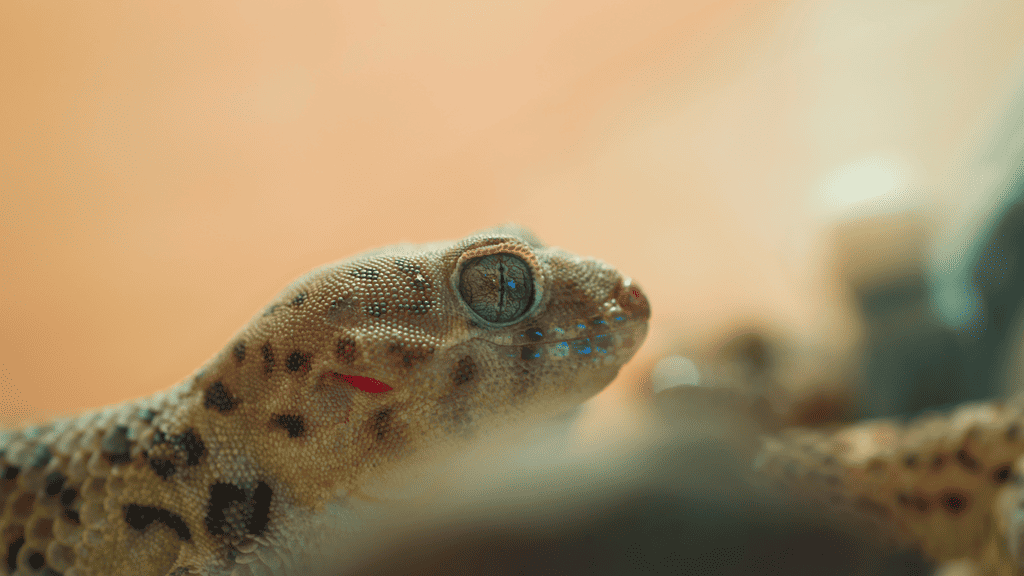
Why Do Leopard Geckos Chirp?

Leopard geckos will chirp as part of their way to communicate and respond to different  situations. They may be making a mating call, feeling threatened, or scared. Also when they are hungry, they may also produce sounds.

Continue reading this article to learn when leopard geckos chirp and click, how it sounds, and what you can do to help your leopard gecko when they do those things.

Do Leopard Geckos Produce Strange sounds?

Like canines, cats, humans, and birds, leopard geckos produce sounds to indicate how they feel. Because humans and leopard geckos do not use the same language, it can be challenging for humans to interpret leopard gecko conversations that take place through sounds.

Leopard geckos can produce many different noises, but the most typical ones include chirps, squeaks, and screams. The sounds made by each pet leopard gecko will be rather similar to one another, although each animal will have its own unique voice.

Various Sounds Your Leopard Gecko Will Make

As you become familiar with your pet, you will realize that your leopard gecko creates a wide variety of distinct sounds. They are capable of yelps, barks, chirps, and clicks, among other sounds.

Clicking

The sound of clicking is another common one. There is a correlation between leopard geckos feeling threatened and clicking their lips. It’s possible that this was caused by careless or harsh treatment. 

Leopard gecko owners say their pets click when introduced to new geckos. This supports the interpretation that the sound is produced in response to feeling threatened or anxious.

Screaming and Screeching

This is the one that may cause the greatest anxiety for anyone new to the responsibility of owning a leopard gecko. It may be pretty loud, and you could believe that it is connected to being in some discomfort.

Leopard geckos that scream or shriek are genuinely defending themselves. It is the experience of feeling terrified, threatened, or under extreme stress. In this situation, the best thing to do is to try to stop doing what is making it happen.

Barking

A leopard gecko’s sound when it barks is similar to a chirp. On the other hand, the tone is much raspier than before. People are uncommon, to be truthful, yet you may hear it occasionally. Again, this noise has something to do with feeling threatened.

What Does A Gecko’s Chirp Indicate?

Chirping signals and pheromones released by male tropical house geckos are used to attract potential mates. If a female is attracted to a male, she will let him mate with her. Chirping is also used by males when they are competing with other males for territory.

Reasons Why Your Leopard Gecko Clicks or Chirps

These species aren’t very communicative, although you may hear the noises. Remember that this is because they are experiencing a specific emotion; for example, they may be making a mating call, feeling threatened, or scared. When they are hungry, they may also produce sounds.

On the other hand, if your leopard geckos are making noise for any other possible causes, some things may be done to make them feel more at ease.

Chirping and Clicking from Mishandling

Leopard geckos are constantly on the defensive, if you don’t already know. Since they are so small, they must be careful to avoid being caught in the wild. So, when your pet observes your hand coming at it from above its head, it is only natural that it will be scared.

This could be why you hear them chirping and clicking, making them feel stressed. As a new Leopard gecko keeper, you must learn how to handle your leopard gecko carefully so it is comfortable when you clean, feed, and engage with it.

Your Leopard Gecko Is New to Its Home

Because they are anxious about moving into their new home, you could hear some chirps and clicks from them. These reptiles are anxious about their trip to your home from the pet store/breeder. It is essential to give them 14 days to settle in and get comfortable in their new home to comprehend that they are in a safe area. Except for feeding and cleaning, no hands should be allowed within the habitat.

Leopard Gecko Cage Isn’t Ideal

It is most probable that you have already constructed your enclosure. You might consider installing a door that opens from the front of the enclosure. This is done with the hope that it would lessen the amount of chirping and clicking that your leopard gecko does due to stress.

It is highly suggested that you give serious thought to purchasing one of these since doing so will make your gecko’s life much less difficult, provided that doing so does not require excessive money or effort.

Leopard Gecko may Fear Other Pets

Many of us have canines and cats that are free to wander our homes and enjoy the fresh air and exercise. We have a special relationship with these cherished creatures and consider them part of our family. However, they are prone to get rather curious, particularly when presented with a little creature that mimics the appearance of a toy.

Your canine and feline companions must be maintained at a safe distance from the gecko. If your Leopard gecko encounters a huge animal, it may experience feelings of fear and panic, which may cause them to start producing the chirping and clicking noises we outlined before.

Clicking and Chirping from Hunger

When leopard geckos are hungry and looking for food, they will make sounds like clicking, chirping, or even barking to attract potential prey. If you hear these sounds around the time of day you usually feed your gecko, it’s probably because they want to eat.

Leopard Gecko Mating Calls

The leopard gecko can make a mating call when it chirps and squeaks, depending on the circumstances. You won’t hear a click in this case because that almost always means pain. On the other hand, you could hear the male conducting an activity called “tail vibration,” which sounds nearly exactly like a rattle.
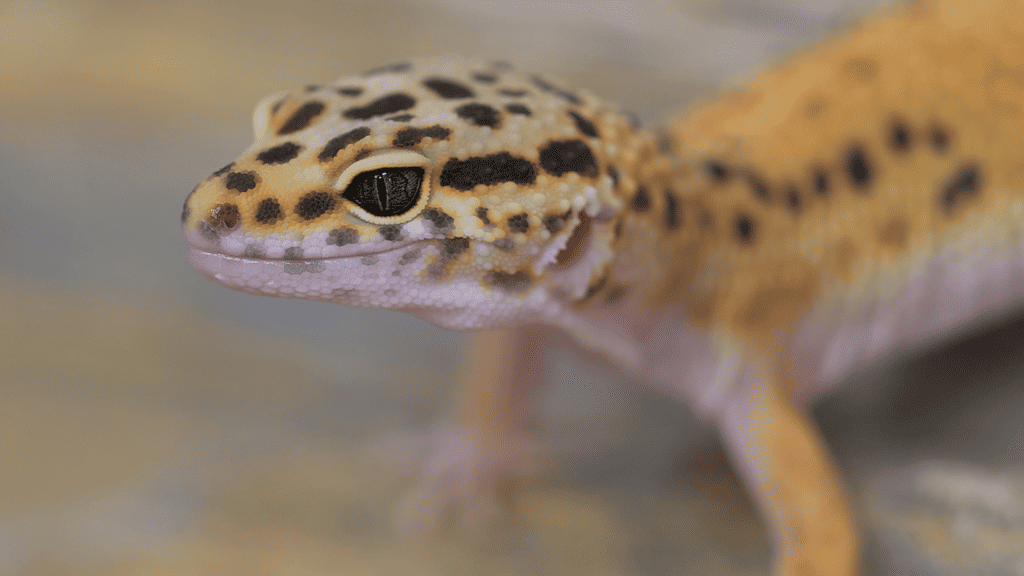
Why Do Leopard Geckos Chirp?

What to Do About Your Gecko’s Sounds

When your leopard gecko makes noises, it’s essential to know what they mean so you can respond correctly. If your leopard gecko is content, there is nothing more you need to do but go with your normal routine.

If your gecko makes worried or fearful noises, it doesn’t indicate you’re a horrible owner. Most likely, the gecko hasn’t had enough time to get used to being around you and other humans.

It is essential to maintain patience, gentleness, and composure while one is in the presence of a worried leopard gecko. For instance, if you are holding your leopard gecko and it begins to click while holding it, it is a warning that you should put the leopard gecko down.

If your leopard gecko seems scared whenever you come near it, you must work on making it trust you. You may accomplish this goal by bringing some snacks and refreshments. Leopard geckos quickly learn who gives them food and who they can trust. They will realize that you do not pose a threat to them if you offer food, and the sounds of their anxiety will likely decrease as a result.
How Do Geckos Sleep?

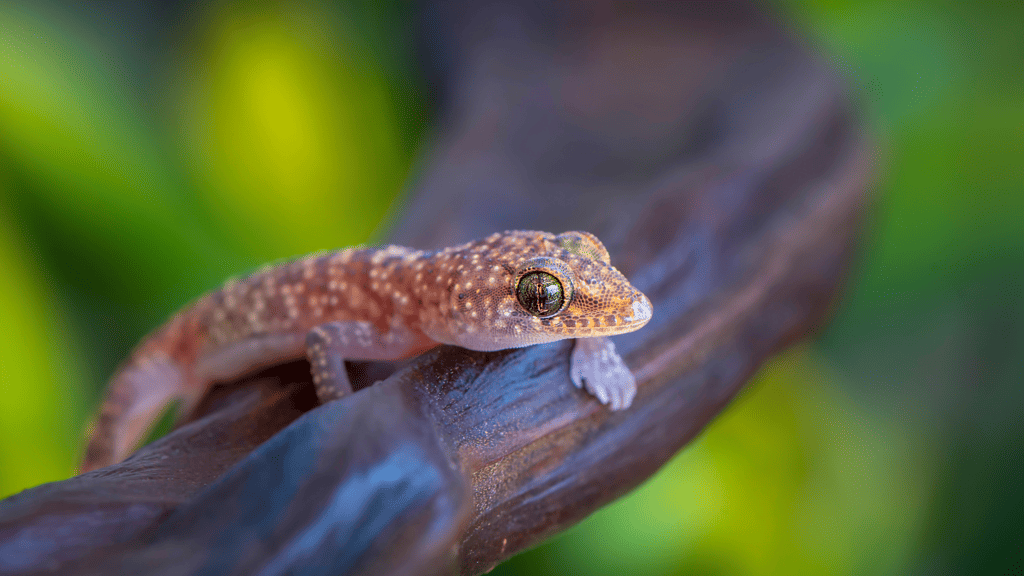
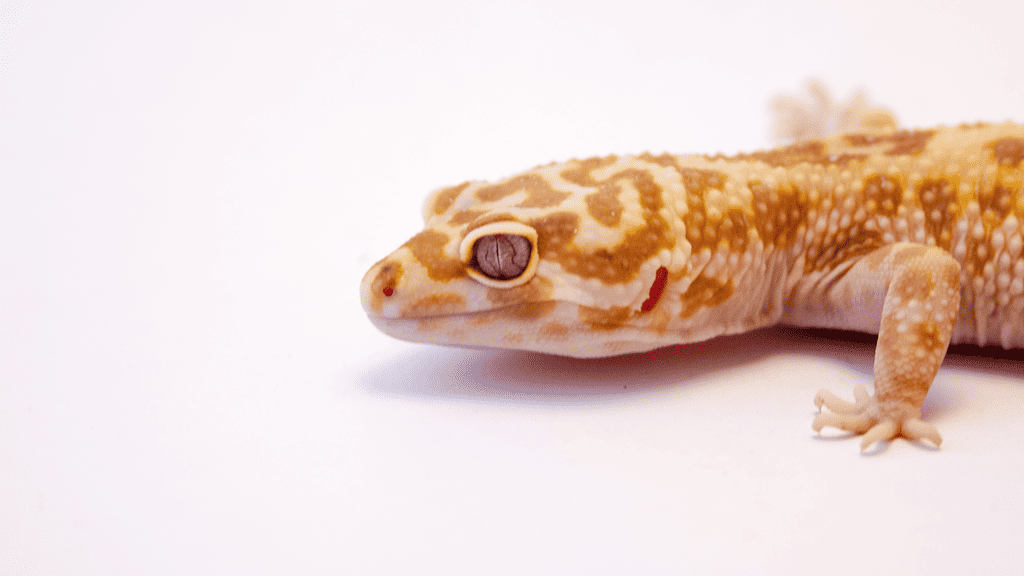
Geckos are one of the most common lizards in the world. They are known for their ability to climb walls and stick to ceilings. Geckos come in a variety of colors and can be found on every continent except Antarctica. But how do these creatures sleep? Do they sleep hanging upside down? Do they curl up in a ball? Keep reading to find out how geckos sleep and why they are able to stick to surfaces.

How Do Geckos Sleep?

Geckos are crepuscular animals that are primarily active at night. Geckos have a routine of sleeping during the day and become more active as the day comes to an end. The geckos will stay active throughout the night, with just a tiny rest period between midnight and daybreak the following day.

If you had intended to spend time with your new pet during the daytime, you might be disappointed to find out that geckos are more active at night.

Continue reading to discover further information on the sleeping patterns of geckos, including specifics about when they sleep and what they do while they are awake.

Do Geckos Have Eyelids?

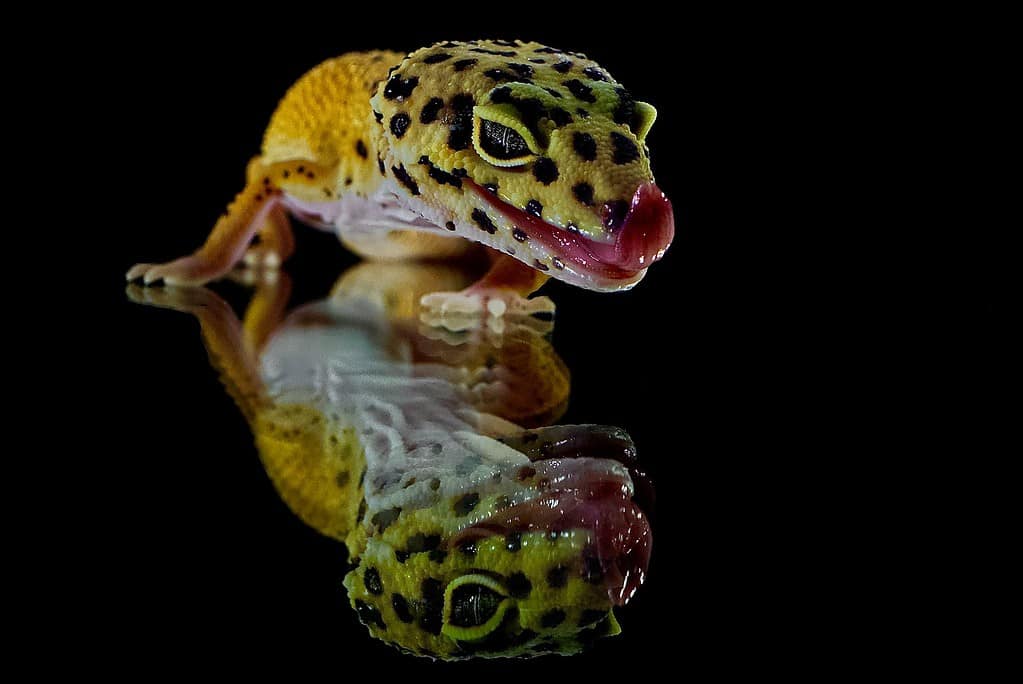
The geckos don’t have eyelids. They have a thick, protective membrane that covers their eyes in place of eyelids, and they use their tongues to help keep their eyes clean, moist and lubricated. This membrane replaces their eyelids.

This membrane functions similarly to a transparent membrane that covers the interior components of the eye. The scale is also called a spectacle. The pet gecko will simply clean the spectacle by licking it when it becomes dry or coated with dirt or dust.

How Do Geckos Sleep?

The solution to this question is quite puzzling. It’s difficult for us to think about sleeping with our eyes open. The gecko, on the other hand, behaves exactly in this manner.

However, since their pupils are so large, very little light can penetrate their eyes, allowing them to sleep. It might seem unusual to us, but it is normal for their species, and as a result, they appear to have no trouble doing it.

Giving them an excellent place to hide in their tank is essential, as they usually sleep while hiding. You may also use synthetic branches or vegetation to create a natural-looking hiding area. Because geckos often do not possess eyelids, it is rather difficult for humans to conceptualize how they can sleep with their eyes open.

Geckos live and sleep most of the time without eyelids. At first, it might seem strange, but it is natural for some animals to sleep without shutting their eyes. Whenever they want to sleep, they will frequently squeeze their eyelids shut. It blocks as much light as possible from getting in, preventing damage to the wearer’s eyes. They can relax and fall asleep more easily as a result of this. It’s also a good idea to put live plants in their cage that won’t hurt them if they eat them.

Do Geckos Keep Their Eyes Open When They Sleep?

Yes. At least 12 hours a day, geckos sleep with their eyes open. When they sleep, they frequently prefer to conceal themselves behind the bark or the leaves of trees. They will do everything they can to help their pupils rest and sleep. 

Geckos without eyelids or eyelashes can be hard to find when they sleep. To know when they sleep, you must recognize the signs. 

How Long Does a Gecko Need to Sleep?

Geckos have a daily sleep need of ten to twelve hours, depending on their age. The geckos sleep before the sun rises, and you can find them awake after it has set. 

They are most active at night, just before dawn, and very early in the morning. Depending on what they do and how they live, different geckos sleep for different amounts of time.

Each gecko has the potential to be unique in its term. Geckos kept in captivity tend to sleep for around 12 hours a day. 

Geckos are no different from any other animals in that their levels of activity and routines, including when they sleep, can vary significantly from one individual to the next. Some geckos have a habit of sleeping for more than hours, while others like to sleep for a shorter amount of time.

How Do Geckos Sleep?

Why Do Geckos Sleep All Day?

Extreme Heat

During the summer months, the temperatures in hot regions might reach well beyond 104 degrees Fahrenheit. Geckos don’t do well in scorching weather, so they have to hide when the weather is bad.

Geckos sleep throughout the day to avoid the heat and hot sand. Most leopard geckos remain hidden until the sun goes down, either in burrows or cracks. This is why giving your pet gecko more than one place to hide is essential.

Body Composition

Geckos need their fat stores to keep them alive, especially when hibernating. Geckos have a very tough time storing fat when the temperature is very high throughout the day. So geckos choose to sleep during the day and eat at night when it is much more relaxed.

What Factors Affect Gecko Sleep Patterns?

Several things can affect pet gecko sleep. Here are several elements that affect how long geckos sleep:

Lighting

When it is time for them to sleep, geckos do not require an excessive amount of light. You might want to consider lowering the lights in the area where your geckos sleep during the day.

Enclosure

It will be simpler for you to regulate their sleep cycle if you provide your leopard geckos with a number of different hiding spots where they may fall asleep.

Illness

Sick pet geckos may sleep too much or too little. However, shifts in sleeping habits aren’t the only sign that your gecko may be sick; you should also look for other symptoms. Visit a vet as soon as possible if you are unsure when your geckos’ sleeping patterns will alter.

Diet

If you feed your geckos at the incorrect time, it may throw off their natural sleeping schedule. You must provide your geckos with food in the evening to forestall any significant disruptions to their normal sleeping routine.

How Can You Tell if a Gecko Is Asleep?

You can tell if a gecko is sleeping or awake in a few ways.

  • Constricted pupils: If the room is dark and a gecko sleeps, its pupils will probably close. This would be the opposite of what it would be doing if it were awake.
  • Sunken eyes: This is hard to explain, but compared to when awake, their eyes look slightly lower in their heads when sleeping. It will look like they are almost frowning at you.
  • Crests that lay down: The crests that usually stand up will lay down much flatter to the body. This is one of the more apparent signals to look for when determining whether or not a crested gecko is sleeping.

What Do Geckos Do While Awake?

Geckos are typically housed in a “reptile room,” “living room,” or “bedroom,” according to the owner’s preference. Geckos, unlike pet rodents, don’t run on exercise wheels and won’t run around their terrarium for miles.

When awake, geckos can make some peculiar chirping and even barking noises. These noises are often not very loud and will occur more frequently when the gecko is kept alongside other gecko species. Your pet gecko may produce noises if it’s feeling uncomfortable or upset.

How to Help Your Gecko Sleep

You can ensure that your gecko continues to get the much-required rest required during the day. These reptiles will sleep more soundly if you do the following, in addition to maintaining an extremely calm environment surrounding their enclosure:

  • Make sure their vivarium has plenty of places for them to hide.
  • The enclosure should be in an area that has a complete cycle of darkness and light.
  • During the day, you should turn off any bright lights surrounding the tank during the day.
  • Feed your reptiles just before it becomes dark.
  • Vivariums shouldn’t be near windows or chilly locations.
  • If at all feasible, keep your geckos in their aquariums.
  • Maintain your gecko’s aquarium at the appropriate temperature
  • Avoid playing loud music close to your gecko.

Finally, you should avoid handling your gecko too much before they go to sleep. While they may seem like they’re always up for a cuddle, handling them before bedtime can actually keep them awake and make it harder for them to fall asleep. If you must handle them, try to do so at least an hour before they’re due for some shut-eye.

If you follow these procedures, allowing your gecko to have more hours of sleep during the day should be much simpler.

What Can Leopard Geckos Climb?

Geckos are often considered the cutest reptile species that may be kept as pets. They are easy to handle, but it’s fascinating to see these small animals defy gravity. Leopard geckos may not enjoy climbing like other gecko species, yet they’re great climbers. So, in that context, let’s discuss what can Leopard Geckos climb?

What Can Leopard Geckos Climb?

Leopard geckos climb on rocks, branches, decorations, and other things related to their environments. They prefer to climb on horizontal surfaces because they do not possess the setae found on other geckos, which allows them to climb vertical surfaces.

Read on to learn about this charming species and how to house them properly, so they love climbing.

Can Leopard Geckos Climb?

Yes! Leopard geckos can climb. If you have a pet, you will observe them climbing trees and soaking wet hides. Leopard geckos like to remain low to the ground is a significant characteristic of these reptiles.

However, this doesn’t mean that they do not enjoy climbing or that they are unable to climb. They are excellent climbers, mostly on nonslippery surfaces. However, several factors should not be overlooked. Leopard geckos can’t climb everywhere like other lizards and geckos.

Why Do Leopard Geckos Enjoy Climbing?

They have a remarkable capacity to climb both horizontally and vertically. However, they are not only doing this for amusement purposes. A leopard gecko would ideally spend most of its time on the ground. This is because they obtain most of their body heat from sunbathing on rocks that the early light has warmed.

The primary reasons leopard geckos climb trees are to search for food and to avoid being eaten by predators. The fact that insects seek refuge and protection in trees from the intense afternoon sun makes it more difficult for a leopard gecko to eat. Because of this, a leopard gecko will often need to ascend to locate prey suitable for eating.

A leopard gecko left out in the open desert is highly susceptible to attack. The leopard gecko has increased stress levels on the desert’s ground floor because it is aware that this is not the safest place to be. Trees provide the perfect protection for a leopard gecko against any attack mode.

Therefore, a leopard gecko would benefit greatly from adopting this defensive strategy. So, climbing is more of a way to stay alive than a fun thing to do.

What Do Leopard Geckos Climb?

Deserts which are arid and rocky, are their natural habitat. Animals often face many dangers in this area, and there aren’t many trees to climb. Leopard Geckos can scale rocks and escape their enemies because of the claws on their feet. They are rock climbers who make a living at it. For their enjoyment, it would be best to make their enclosure look like this. In addition to that, they prefer to climb on tree branches, decorations, and even people.

A strong attachment between you and your pet can be established by facilitating the geckos climbing on you. You may start by holding them and letting them climb on your skin. Afterwards, you may make them climb on your arms and shoulders while seated on the ground. Make sure you close check on them to prevent your gecko from getting knocked over.

The use of a gecko hammock is something else that might be fun for your pet gecko. These items, often constructed of synthetic fibres or rope, provide a place for your gecko to relax and warm while basking in the sun. Before allowing your gecko to use it as a bed, check to see that it is stable. They could also find climbing on artificial plants or chalets made of man-made materials fun.

Accessories for Leopard Gecko Climbing

You may provide your leopard gecko with a place to climb and explore by using a variety of various climbing accessories. These are some of the most common options:

  • Rocks: You can find rocks for sale at the majority of pet stores as well as online. To build an interesting enclosure, you need to be sure to purchase a variety of shapes and sizes.
  • Branches: Purchase a branch from a nearby nature center or pet store to use as a branch. Before you put it in your tank, check to see if it is sufficiently strong.
  • Hammocks: There is a wide variety of hammocks available on the market that geckos can use. In most cases, artificial fibers or ropes are used to construct them.
  • Artificial Hideaway: These can be obtained at most pet stores and constructed out of plastic, resin, or wood. Additionally, they come in various sizes.
  • Fake Plants: Most pet stores and online stores sell artificial plants. If you want your cage to seem attractive, be sure you buy a range of different-sized and shaped pieces.

Can Leopard Geckos Climb up Walls?

No! Leopard geckos are unable to climb vertical surfaces. This is because their feet do not have sticky toe pads. Leopard geckos have difficulty climbing vertical surfaces due to this trait.

Other lizards can climb walls by making force with the hairs on their feet. As a result of the absence of these fine hairs on their feet, leopard geckos have a more difficult time scaling vertical surfaces. Also, leopard geckos don’t have pads that stick to walls and surfaces like other lizards.

Can Leopard Geckos Climb up Stairs?

Leopard geckos can’t climb stairs with a slippery surfaces. Leopard geckos can adhere their feet to stairs and climb if the surface is not slippery. The feet and toes of leopard geckos are equipped with claws that allow them to improve their grip on non-slippery surfaces.

Can Leopard Gecko Climb Plastic?

Leopard geckos’ claws on their toes make it impossible for them to climb on plastic. If you keep geckos as pets, you’ve probably seen that they frequently try to grab hold of the plastic walls of their enclosure, but they are unable to do so. They can climb plastic, walls, stairs, and various other surfaces because of their unique foot and clawed toes, which are not found in other reptiles.

What Can Leopard Geckos Climb?

Can Leopard Geckos Climb Wooden Surfaces?

Leopard geckos can climb trees and wood in their enclosure. This is because these trees are either fake or quite small. Their wood is not slick, and a leopard gecko doesn’t have to climb very high to get to the branches.

Leopard geckos can climb trees as long as the bark is smooth enough to plant their feet firmly for support. The bark of trees not growing in a vertically straight line is rough and slippery.

Why Can’t Leopard Geckos Climb up Walls and Glass?

Leopard geckos don’t adapt to climb walls, glass, or polished rocks. Leopard geckos have scaled and hairy toe pads to assist them in climbing down rocks and trees in the wild.

These claws allow them to cling to cliffs or utilize them as hooks while climbing trees or rocks. This lack of adhesiveness prevents them from climbing upwardly smooth surfaces in the wild.

There is a possibility that you are under the impression that leopard geckos are capable of climbing because they have claws on their feet. The claws, which function similarly to human fingernails or nails, are adapted to facilitate the animal’s ability to seize its prey. The claw has a scratch pad to help it hold slippery prey like crickets and moths without squeezing too hard.

Some geckos have glands on their skin that make a glue-like substance that helps them stick to smooth vertical surfaces. As a result of the absence of this adhesive on their claws, leopard geckos cannot mount smooth vertical surfaces such as glass or walls.

Do Leopard Geckos Climb When Being Handled?

When your leopard gecko is used to being handled, it will love to climb all over you. Much like the vast majority of other species of reptiles, Leopard geckos will frequently look for a raised area that is flattened down. This is why reptiles do not often want to sit on your shoulder. Your shoulder gives it the height it needs and the flat, even surface it likes.

Are Leopard Geckos Sensitive to Sound?

When it comes to Leopard Geckos (Leos), hearing can be a very important sense. Hearing can be vital for seeing predators, hunting prey, or determining if the habitat is safe for growing young. In this way, hearing is a survival mechanism. But despite all these, are Leopard Geckos sensitive to sound?

Are Leopard Geckos Sensitive to Sound?

Leopard geckos have highly advanced hearing built for survival to help detect predators and the location of prey at night. Because of this, leopard geckos are extremely sensitive to loud sounds such as construction, music, or the barking of dogs.

Fact: Leopard geckos are generally sensitive to loud sounds; however, this trait might vary from individual to individual.

Introduction to Sound

In order to provide you with a foundational knowledge of sound, you will need some information on the components that make up sounds. These components include:

  • Frequency (pitch): the frequency of a sound, measured in hertz, defines whether or not a sound is high or low (Hz). A sound above 2000 hertz is of high frequency (or 2kHz). Sounds with a frequency of 500 hertz or below are considered to be low-frequency sounds.
  • Volume (loudness): the sound’s intensity, measured in decibels, decides whether or not a sound is loud or quiet (dB). A sound with high intensity is loud, whereas a sound with low intensity is regarded as soft.

Sounds & Leopard Geckos

When determining which sounds are dangerous for leopard geckos and which others should be OK, it is always vital to analyze the strength, length, and noise. This is because leopard geckos are sensitive to changes in their environment.

If you play loud music close to your leopard gecko’s vivarium, it may induce stress. However, if you have one night of loud music on the opposite end of your house from the leopard gecko’s tank, there is a good chance that your leopard gecko will be fine.

Are the Ears of Leopard Geckos Very Sensitive?

Even though leopard geckos don’t need their hearing to live in captivity, they all have very good hearing.

Loud sounds, especially ones that come out of nowhere, can be scary and disturbing for a leopard gecko. For example, music from a sound system is often much louder than what these lizards are used to hearing, making them very nervous.

However, there are some sounds that they can tolerate. It is known that leopard geckos respond favorably to the sound of their owner’s voice and that they find nature sounds to be highly calming.

Your leopard gecko can identify your voice from across the room because of how sensitive their hearing is. This may help cheer them up and strengthen the link that you share.

Significant Functions of Sound Sensitivity in Geckos

Geckos have a unique hearing to help them survive in their ecological surroundings. They have various benefits due to the sensitivity of their hearing. Unsurprisingly, several of these factors are also connected to the fact that they make unique vocalizations.

Avoiding Predators

Geckos rely significantly on their hearing to evade predators and not have to lower their tails to escape. Geckos can use sound vibrations in the air and on the ground to figure out where larger carnivorous animals are and what direction they might go to get there.

Once they are aware of these things, they can choose to either hide by burrowing into the ground or climb up shrubs and trees to avoid being seen by their enemies who are hungry for their flesh.

Detecting Preys

Because of their heightened sensitivity to sound, geckos can identify and capture their prey even when these insects are hidden in small cracks and hollowed-out decaying tree trunks. 

Even though it is only the second most important sense that geckos use to find insects in the wild and captivity, it is still a very important part of how they eat. Geckos with hearing problems have a reduced chance of successfully capturing their prey.

Some gecko species have night vision, but their highly developed hearing allows them to identify live feeder insects in low-light or dark regions.

Finding Mates

Geckos need to hear very well, of course, because they need to locate suitable partners before the beginning of the breeding season. This is especially true for our cherished small geckos with delicate bodies, who produce mating sounds that are only a few seconds long but are quite gentle.

In the wild or in captivity, most geckos live alone. Therefore, they require a highly developed sense of hearing to determine whether or not a potential mate is within their grasp.

Determining Territories

Most keepers and breeders know how territorial geckos can be; thus, they advise against cohabitating them, even if they are of the opposite sex.

In the wild, a huge mature male gecko must guard his area. This kind of gecko will frequently make a loud noise to assert its ownership of the territory and warn other geckos not to intrude on the land unless they are prepared to engage in a territorial battle.

On the other hand, a young gecko, regardless of whether this is due to its species or its age, will likely wish to avoid being around any adults that are hostile toward them.

Are Leopard Geckos Sensitive to Sound?

Is Loud Sound Harmful to Leopard Geckos?

If there are loud noises close to your leopard gecko’s tank or home, it can be stressful for the gecko. But usually, this will need to be a loud noise that happens all the time. So, you shouldn’t worry if you drop a noisy pan on the floor or if you are in the middle of a loud storm.

Also, the leopard gecko’s vivarium probably does an excellent job of already blocking out too much noise. Unless you have an open tank, the vivarium should mask most sounds.

However, your leopard gecko may become stressed if there are an excessive number of loud noises or if there is constant loud noise. It can change their behavior, make them more irritated, and reduce the likelihood that they will interact with you.

Therefore, leopard geckos should be kept away from extremely loud sounds, but it is ultimately your responsibility to observe their behavior and ensure that they do not appear to be stressed. 

Are Leopard Geckos Sensitive to Light?

Leopard geckos have extraordinary senses that aid them in hiding or getting their prey in captivity or in the wild. They have a highly developed sense of hearing, as well as smell, taste, and vision. But are leopard Geckos sensitive to light?

Are Leopard Geckos Sensitive to Light?

They certainly are. Leopard geckos have inherently light-sensitive eyes, and UVB and albinism make the eyes and skin of animals highly sensitive to light. Because of their sensitivity, they can take in more light, which is helpful when they are out in the wild and have to seek food and other resources.

Their sensitive eyes aren’t particularly useful in captivity because they only have crickets to hunt. But having sensitive eyes is very helpful when hunting in dim light, like at night when you are out in the wild. Continue reading this article, as it may be beneficial in providing you with further information regarding their eyes.

Can Leopard Geckos See Colours?

As a result of cones in their eyes, leopard geckos are capable of colour vision, even if the range of colours they see is limited compared to that of humans. More specifically, leopard geckos have the highest sensitivity to the colours blue and green. It is interesting to note that they cannot perceive the colour red.

Leopard geckos should have a standard incandescent light available throughout daylight hours. It’s better to use coloured light, especially yellow and red, as they are less sensitive to these colours (such as blue and green). Because leopard geckos are sensitive to blue, blue lightbulbs can cause eye injury if exposed for long periods.

It is crucial to note that exposure to UVA light during the daytime might improve the eyesight of the leopard gecko. Hence, buying such a light source can be the best financial decision. If you would like to keep your leopard gecko warm at night, you should only use heat pads and ceramic heat bulbs. Coloured night bulbs must be avoided.

The eyes of the leopard gecko are highly sensitive to light, which is why this is the case. Leopard geckos can perceive the light from a red bulb even though they can’t see red. However, if you want to keep a close eye on your leopard gecko while you sleep, you may leave these lights on for a few hours before you turn in for the night.

In addition to this, leopard geckos must have access to light during the day. In addition to facilitating their sleep cycle, it offers the warmth necessary for digestion and energy.

Which UV light is Best for Leopard Geckos?

There is a wide range of UV light intensities available on the market for use with lizards; some of these lamps provide a higher intensity of UV light than others. Therefore, a bulb with a percentage of 5% emits more UVB than a bulb with a percentage of 2%, for example.

It is usual practice to make the light intensity of a reptile’s artificial environment comparable to the light intensity of the reptile’s natural habitat. Species in the desert might benefit from the stronger light of a 5% bulb, while species that live in forests, where the light is more spread out, would usually be given a bulb with less power.

Leopard geckos are tropical lizards, although they spend much of the day hiding from the sun. Because of this, the common suggestion is to use a 2% UVB bulb.

When to Turn off a Leopard Gecko’s Lights?

If you are familiar with how the lights on your leopard gecko should be arranged, you will have a better idea of when it is appropriate to turn them off.

Set up your pet’s vivarium to look like its natural home.  If you follow the gecko’s natural diurnal rhythm, which requires around 14 hours of sunshine during the summer and 12 hours of daylight during the winter, it doesn’t matter what time you switch the light to switch on and off.

If you want to set exact times for turning lights on and off, you could look up when sunrise and sunset are and set the light timer to match. On the other hand, given that your gecko will be basking in artificial light, you may also choose to stick to a standard routine.  No matter what you choose, be consistent. The goal is to make it look like a natural sunrise or sunset.

Are Leopard Geckos Sensitive to Light?

How to Properly Light Your Gecko Cage

The following guidelines might be helpful for installing and operating the lights in your leopard gecko tank in the correct manner.

Provide Suitable Hides

There is a possibility that leopard geckos have delicate eyes and skin, neither of which would benefit from being exposed to an excessive amount of light. Imagine being stranded on a beach in the middle of the day without any protection from the sun, such as an umbrella. It might be enjoyable for a brief period, but at the end of the day, you might not be in nearly such a cheerful mood!

If you want to put lights in your gecko’s enclosure, you must ensure they have a secure means of exiting the cage anytime they choose. Artificial plants and reptile hides may create shaded regions. Your leopard gecko will be able to select the environment that is most favourable to them in this way.

Replace Bulbs Regularly

As time passes, UV lamps quit generating useful wavelengths. Even though the light may appear normal to human eyes, the amount of UVB generated will decrease. Because most light bulb manufacturers advise replacing the light every six to twelve months, you should keep track of the date you place the light.

Minimize Bulb Distance

UV radiation has a limited range of transmission. Your gecko will receive a diminishing return on its investment if they are kept at a greater distance from the bulb. If you want to give your leopard gecko light, try to leave as little space as possible between the bulb and the enclosure floor. If needed, cage decorations can be used to make a warm spot under the bulb.

Turn Off Nightlights

Even creatures who like to spend their time in the sun require the natural cycle of light and night. To make this process easier, turn off all of the lights as it becomes dark. This includes so-called “night lights,” occasionally offered to reptile keepers who wish to monitor their nocturnal creatures moving about the enclosure.

Supplement with Calcium

UV light won’t prevent skeletal issues if your gecko doesn’t obtain enough calcium. To ensure that your leopard gecko is getting an adequate amount of calcium, it is a good idea to sprinkle some high-quality calcium powder on its diet now and again.

Are Albino Leos Light-Sensitive?

They are not. There is a widespread misconception that albino Leos are sensitive to light. This is not the case. Even though Leos are nocturnal and do not like being exposed to intense sunlight, this does not mean they are sensitive to light.

These animals don’t care how much light there is until they have somewhere to hide during the day. Because they are nocturnal, leopard gecko morphs of any kind will avoid exposure to intense lighting.

Do Geckos Require Ultraviolet Light?

The necessity of ultraviolet lights is one of the most highly debated topics among owners/parents of Leopard Geckos. Some claim they do not require it, but others dispute this claim. But what is reality? Do Geckos require ultraviolet light?

Well, they may or may not. When they are healthy, they do not require UV light. Providing UV light is better only for Metabolic Bone Disorder (MBD). MBD is very frequent in Geckos, and Geckos also like dim light. So, in that sense, UV light may be useful for them.

 It is feasible to avoid this, but doing so is detrimental to a pet’s health unless you know how to supplement their diet correctly.

Before buying a Leopard Gecko UV light, read this post to understand all sides.

What Is UV?

UV illumination is essentially light radiation that is invisible to the human eye, meaning that you cannot see it, but it does heat things. The name “Ultra Violet Light” comes from the fact that its energy power level is significantly higher than that of sources of violet light.

UV light comes from natural sunshine, UVB bulbs, and UV lamps. The electromagnetic spectrum is the scale used to quantify ultraviolet, visible, and infrared light. UV light can come from various sources, including black, fluorescent, and gas discharge lamps.

Different amounts of UVB light or UVB bulbs are required depending on the type of reptile. Near-equatorial and tropical reptiles need greater UV light, particularly UVB radiation. The quantity of UVB radiation depends on how far your pet reptile’s habitat is from the equator.

How Is Uvb Light Distinct From Uv Light?

Lighting is one of the most confusing components of reptile care. This is especially true for leopard geckos, which need UV light, leaving many keepers unclear on how to care for them.

Three distinct types of ultraviolet radiation are produced by the sun. These wavelengths are referred to as UVA, UVB, and UVC. In order to maintain their health and happiness, amphibians and reptiles, such as leopard geckos, require exposure to both UVA and UVB rays.

Do Leopard Geckoes Require UV?

The Leo is a tiny lizard that lives on the ground and may be found primarily on dry lands. Although easier to care for, they have specific lighting needs.

Leos require UVA and UVB to synthesize vitamin D, especially D3, which is necessary for bone health. It should be adequate to use a 6-7% UVB bulb that is turned on for no more than eight hours daily. However, a UVB bulb is not required if you provide them with additional vitamin-D3 in addition to their regular diet. UVB light also helps resemble their natural habitat.

Why Do Leopard Geckos Need UV?

Leopard geckos require UV light to use calcium, manufacture vitamin D3 and maintain body temperature and bones.

Even while leopard geckos do not spend much time exposed to natural daylight, they sunbathe to stabilize their internal temperature. Your pet can maintain health and happiness with the proper lighting setting for your leopard gecko.

Geckos need enough amounts of vitamin D3 to maintain healthy bone density, which is also essential for the Gecko’s overall development. Leopard gecko skin absorbs more UVB rays than other reptiles. Therefore, if your Gecko basks right before sunrise, it absorbs as much UV radiation as possible.

Even if your Gecko exposed its body to modest amounts of light, it would require UV light regularly.  Because of their behavior, these reptiles are known as crepuscular, which means that they are most active during the hours when there is a gradual decrease in light.

They will sometimes relax by exposing various areas of their bodies to the light. You can stop UV rays from coming in or use a dim light at night. However, providing them with some nighttime for their circadian cycle to work properly is vital. The temperature mustn’t fall below the average. There are leopard geckos that can live without exposure to UV light.

How Much Light Do Leopard Geckos Need?

When lighting your leopard gecko tank, you will attempt to replicate the day-night cycles of the Middle East. It means:

  • In the summer, there are 14 hours of daylight and 10 hours of the night.
  • During the winter, there are 12 hours of daylight and 12 hours of the night.

An ordinary Leo owner will not require anything more complex than a simple, inexpensive controller with no additional settings.

What if Leopard Geckos Don’t Get UVB?

If a leopard gecko is not allowed to be exposed to UVB light regularly, it will not be able to produce the vitamin D3 necessary to absorb nutrients and be healthy. They might develop significant health issues or die if they can’t absorb calcium. In leopard geckos, the metabolic bone disease is one of the most prevalent complications of calcium insufficiency.

Lethargy, lack of appetite, a soft jawbone, leg deformity, and an inability to freely move about are some of the symptoms of metabolic bone disease. Supplements and other therapies can save a leopard gecko’s life if calcium insufficiency is discovered early. Make sure your leopard gecko receives regular artificial UVB illumination to avoid calcium shortage and metabolic bone disease.

Do Leopard Geckos Require UVB Light at Night?

Even though they are most active at night, leopard geckos often do not require UVB light. At night, there is naturally less light in the environment, so your Gecko won’t need UVB lighting to do its things.

Therefore, to produce a balanced day and night lighting system, you will need to switch off the UVB light for a minimum of 12 hours. Your Gecko will have a better chance of maintaining a normal internal body clock if you do this. Changing this illumination time might alter Gecko’s normal rhythm, causing vitamin or calcium deficiency.

How Long Can Leopard Geckos Go Without Light?

Any Leopard Gecko can live without light for more than a month if the average temperature is above 15°C.

The Leopard Geckos are unable to generate their internal heat. They must thus be exposed to the ambient temperature to digest their food and carry out their metabolic processes. Leopard Geckos will have difficulty digesting their meal without light due to their slow digestive processes.