Recent Posts

Can Cockatiels and Parakeets eat the same food?

When it comes to having birds as pets, cockatiels and parakeets are very popular. They are similar in many obvious ways. They fly, their birds, they are cute as heck. But the fact is all birds are not the same. Birds come in all shapes and sizes and require different types of nutrition. 

Still, no one keeps penguins as pets, so we will keep our discussion focused on the two most favored for the sake of household birds. What we found is fascinating.  

Can cockatiels and parakeets eat the same food? No. Parakeets and cockatiels can eat some of the same food because they both have similar nutritional requirements. But parakeets can’t take too much fat, whereas cockatiels need more fat in their diet. 

Can cockatiels eat parakeet food? Yes. Since both are birds of medium size and have similar dietary requirements, a cockatiel can eat food meant for a parakeet, but not the other way around due to the fat issue we mentioned earlier. Of course, feed typically doesn’t give a bird the nutritional requirements needed for a healthy life. We cover what a well-balanced diet for a cockatiel looks like later in this article. 

Can cockatiels eat parrot food? Yes, cockatiels can eat parrot food because technically, cockatiels are parrots. Other terms for them are the weiro bird or quarrion. But, you have to be sure it is the right parrot food. Birds come in all shapes and sizes. African Greys, a larger pet parrot, eat seeds and nuts like other birds, but they can also eat fruits, vegetables, cooked beans, corn, tortillas, potatoes, and more. The same goes for the cockatiel, which we get to in a bit of a bit. While the short answer is yes, cockatiels and eat parrot food, be sure that food is okay for this specific kind of parrot and that it’s in a size that they can eat. 

What is a well-balanced diet for a cockatiel? A well-balanced diet for a cockatiel is a 25% seed and 75% pellets. While you can include various fruits and vegetables, only about 20% of their daily intake should consist of fruits and vegetables like greens. While natural foods might seem like the best choice, the reality is pellets should make up the bulk of your bird’s diet. They give the consumer, your cockatiel, a well-balanced and nutritious meal. 

There are all kinds of pellets available, but each possesses equity between vitamins, minerals, and fat to keep your bird living healthy. Some bird owners swear by the natural diet with various foods, but the ultimate choice is yours. At the end, we will go over what foods are excellent, good, okay, and toxic to cockatiels. You can save this article and use it as a handy reference guide. 

How much should a cockatiel eat? A cockatiel should consume about 1.5 to 2 level tablespoons of seeds or pellets per day. As we’ve said earlier, only 25% of their daily intake should be seed. The rest can either be a variety of foods that meets their dietary needs or use pellets. 

Why does a cockatiel need a well-balanced diet? Just like humans, or living things on the face of the Earth, cockatiels have a daily requirement of vitamins and minerals that your cockatiel must meet; otherwise, they can suffer health issues. While living in the wild of Australia, the cockatiel knows how to find what it needs from instinct, but when a bird is entirely dependent upon humans for their meals, it’s not unlikely for their nutritional needs to go unlooked. 

Some of the issues a cockatiel can suffer from iodine deficiencies, obesity, feather picking, and egg binding, to mention a few. An excellent way to ensure that you are giving your bird the best diet option available is to speak to your avian veterinarian. 

While many experts feel a pellet-based diet is the best choice because they meet all their dietary needs, if you want to give your bird a pellet-free diet, variety is the key. First, you should familiarize yourself with their nutritional needs and consult an avian vet. 

Captive cockatiels seem to leave calcium and iodine, so it’s essential to keep that in mind. 

What can cockatiels eat? You are going to be surprised at the long list of foods that are probably right in your home that you can feed to your cockatiel. 

Raw Vegetables

  • Asparagus
  • Beets
  • Beet greens
  • Bok choy
  • Brussels sprouts
  • Carrots (grated or chopped)
  • Celery
  • Corn
  • Cucumbers
  • Endive
  • Fennel
  • Kale
  • Leaf lettuce
  • Mustard greens
  • Peas and pods
  • Romaine
  • Sprouts (fresh)
  • Sweet peppers, red or green
  • Swiss chard
  • Turnip greens
  • Watercress
  • Wax beans
  • Zucchini

Cooked vegetables (must be cooked)

  • Sweet potatoes

Herbs

  • Basil
  • Cayenne (see above paragraph before giving to your bird)
  • Chamomile
  • Chicory
  • Cilantro (Coriander and Chinese Parsley fall under this category)
  • Dandelion
  • Dill
  • Ginger Root
  • Lemon Balm
  • Marjoram
  • Oregano
  • Parsley
  • Rosemary
  • Thyme

Other Safe Food

  • Cooked barely
  • Cooked brown rice
  • Cooked cereals
  • Cooked dried beans
  • Cooked lima beans
  • Cooked oatmeal
  • Cooked pasta
  • Cottage cheese
  • Dried fruit
  • Dry, unsalted nuts
  • Freshly cooked chicken or turkey
  • Newly cooked eggs, hard-boiled, scrambled
  • Freshly cooked fish
  • Freshly cooked lean meats
  • Whole wheat toast
  • Yogurt

Good for Treats

  • Animal Crackers
  • Cheerios
  • Grape Nuts
  • Rice Krispies
  • Shredded Wheat
  • Unsalted crackers
  • Unsalted popcorn
  • Unsalted pretzels

What foods are toxic to cockatiels and should they never eat, and why

FOODS THAT ARE TOXIC TO COCKATIELS

  • Anything moldy (blue cheese, etc.)
  • Artificial sweetener
  • Avocado
  • Bean plant
  • Brazil nuts
  • Broccoli 
  • Caffeine
  • Chocolate
  • Eggs, uncooked
  • Eggplant
  • Fat
  • Fish, uncooked
  • Fresh peanuts
  • Fruit pits or seeds
  • Garlic
  • Meat, uncooked
  • Nutmeg
  • Nuts in shells
  • Onion
  • Rhubarb 
  • Salt
  • Shellfish 
  • Spinach
  • Tomato

Can you warm up the food you feed them? No. The most natural way for a cockatiel to eat fruits and vegetables is raw. Except for the sweet potatoes, which we mentioned above, should be cooked because it offers more nutrition to your bird. 

Not all human foods you can serve your cockatiel needs to be raw. You should cook the following foods and let them cool off completely before feeding them to your cockatiel;  barley, brown rice, cereals, beans, oatmeal, and pasta.

How often should they eat? In their natural habitat, cockatiels eat twice a day in the morning and the evening. So, it’s good to keep their feedings as close to their realistic schedule as possible. 

Items to avoid putting in their cages that might make them sick? While it’s essential to make sure you don’t put anything harmful to your cockatiel in their cage, what’s more critical is remembering to take away things that can become toxic. Cooked foods are one example. They can form bacteria on them, so it’s a good idea to take them out before they spoil. 

Another item you should remove from your cockatiel’s cage are ragged toys or ones that have long strings that they can get caught up. Also, keep an eye out for broken toys that might become sharp. Safety is essential when choosing toys, but there is always a possibility of hazard anytime you put something in the cage. Get used to checking their home daily. 

You should also avoid leaving behind a liner filled with excrement. Sometimes your little guy has to walk at the bottom of his cage,   and this journey will be much easier on them if it doesn’t include all their droppings. 

Conclusion 

Food is essential for all living things. Caged birds are entirely dependent upon our choices when it comes to what they eat. As pet lovers we wouldn’t think of giving them anything less than what they deserve and love. 
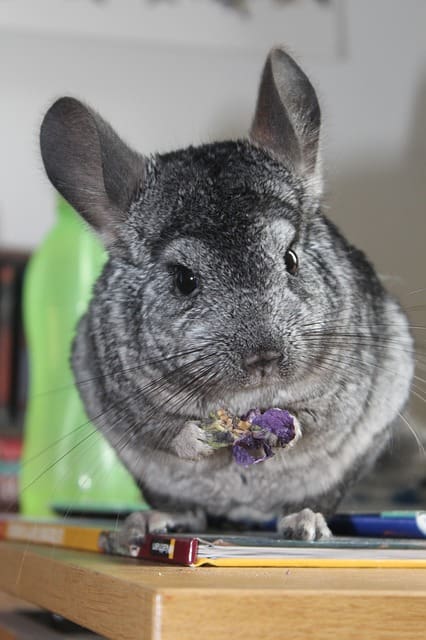
Bedding Options For Chinchillas – What you need to know

My family decided to add a pet, and considering a chinchilla. While researching about the chinchilla I kept wondering what I would have to use in the cage. If you are where I was you probably have the same questions. 

What Bedding Should be used for Chinchillas? There are several options for bedding when setting up your chinchillas cage. Most common are wood shavings, paper bedding, hay, fleece lining, and fabrics.


I’m sure you have lots of questions about each one, read on and I will go into more details.

Do they need bedding?

Yes, you need some kind of bedding in your chinchilla cage. The first purpose of the bedding is to absorb urine. You do not want your chinchilla to be crawling through pee that has puddled. The next reason is that a chinchilla’s feet can become damaged if left standing on a hard surface all the time. This can be very hard to fix once it happens. 

They do not need bedding to burrow in or to make a nest out of. Some small animals like mice and hamsters need the bedding for this. Chinchillas have very dense fur so do not need to build a nest, and they do not burrow in the wild, their front legs are not designed for it.

Wood Shavings

There are many, many choices in wood shavings for beddings. You need to consider that your chinchilla will probably chew on these shavings at least a bit. It is best to avoid any shavings that have been bleached, dyed or had fragrances added. This may be more appealing to you, but some of these can be extremely harmful to your little furball when chewed on.

Wood shavings are good for both odor control and absorption. They are not as soft for your chinchilla’s feet. I will give you some do and don’t uses on wood chips.

Wood shavings do produce dust, and this can affect the respiratory system of your chinchilla, or you if you have allergies. Kiln-dried shavings produce less dust and have fewer oils that could be toxic to your chinchilla.

GOOD WOOD SHAVINGS

The best wood shavings to use are; Aspen and Kiln Dried Pine. You can get these in different sized shaving and even in pellets,  You also need to be careful to avoid the ones that may have sharp edges that can cut the feet of your chinchilla. Because of oils in the woods, they must be kiln dried, this breaks down the oils so they are not toxic to your pet.

BAD WOOD SHAVINGS

Avoid all use of Cedar shavings, these can cause respiratory illnesses and allergies in your chinchilla, they can also adversely affect the liver. Also, avoid mixed wood shavings, this may be a cheap mix but without knowing for sure what types of wood are in it, and the drying method used in this blend it may be toxic to your chinchilla. 

PAPER BEDDING

There are a number of beddings that are made from recycled paper. These are softer on the feet of the chinchilla, and very absorbent. They do not do as well at controlling or covering up odor as the wood chips. 

If selecting paper bedding you will want to make sure that your chinchilla isn’t eating it. A bit of chewing won’t hurt but you don’t want them ingesting much of this or they can get a blockage in their digestive system causing them to not eat or drink. This is called stasis and even if you get them to the vet the damage may have become fatal. 

I would avoid the risk of this bedding unless I know my chinchilla wasn’t going to be eating it. There are some that say they are low dust, otherwise, there is usually a lot of dust especially if you make it yourself.

FLEECE LININGS

These linings are ideal for the feet of your chinchilla. And chinchillas usully do not chew on the fleece. Your chinchilla is likely to take a nibble or two and then leave the fleece alone. If you find your chinchilla is chewing it more than that you will want to remove the fleece from the cage. 

Poop sticks to the fleece and doesn’t end up outside the cage as much. Urine goes through the fleece so it isn’t pooling up for your chinchilla to be tracking through. 

There is virtually no dust with this item. This can be taken out shaken and then washed and reused. It will need to be hung dried so multiple liners are the best way to go. 

These can be hard to find for some cages and may have to be made by you. However, there is no ongoing cost and no storage problem when using them. They will not be knocked out of the cage to make a big mess. 

Fabrics

Fleece is the only fabric that is safe for you to use in your chinchilla cage. It does not have threads that unravel as other cloth does. Other fabrics as they are chewed on will get into the digestive system and can block it up. If you do choose to you something like a towel in your cage be sure to check it often for any sign of being chewed. This will mean a trip to the vet and possibly death.

There is still the best to come. I will tell you what I think is the best solution for bedding and let you know what else you need for a cage with a chinchilla. And also something that you can do to cut down on your chinchilla chewing on the bedding.

The Safest and Best Option

Use a small amount of absorbent and odor control bedding in the bottom of the tray then add a fleece liner on top. This will keep the mess of the bedding to almost nothing. It will also allow urine to be absorbed away from the fleece, letting it dry faster and keeping the odor at a minimum.

This method will keep your chinchillas’ feet in good condition without any risk of cutting. It will also keep them from ingesting any of the bedding. No mess, no odor, no eating the bedding, fleece dries faster, and chinchillas’ feet in good condition. Clearly the best option for your chinchilla.

Changing The Bedding

This should be done at least once a week. If you’re not using the fleece liner, scoop out any wet bedding as you notice it. And replace all bedding weekly. This should be done no matter what bedding you use. This should be a routine along with washing everything in the cage.

Other Items Needed

Your cage will also need a hay rack, a food bowl, a water bottle, ledges and ladders, a hiding place, lots of toys, and chews,  A wheel if your chinchilla is over 8 months. 

The more toys and chewing options that are available for your chinchilla the less likely they are to chew on the bedding. This will keep their teeth the proper length and give them something to do. And keep hay available at all times.

Conclusion 

Yes, you need some sort of bedding for your chinchilla cage. Use caution in your choices, and be sure you know what your chinchilla is doing, (eating the bedding). Give your chinchilla options for chewing.

Chinchillas – Hypoallergenic or not

While looking into getting a chinchilla this question was high on my list to get answered. If you are considering a chinchilla you too are maybe concerned about this. I will let you know what I found out.

Are Chinchillas Hypoallergenic? Chinchillas do not shed as much as some other pets. They can shed lightly during the changing of the seasons, however, their dander is still mostly trapped by the thickness of their fur. Many people that can’t tolerate other pets due to allergies do fine with chinchillas.

First, let me define hypoallergenic: It does not mean that you can not have an allergic reaction. It simply means that you are less likely to have a reaction. Non-allergenic is the term used when you will not have a reaction at all. With this clear, yes chinchillas are hypoallergenic. 

It is not the fur that usually is the cause of allergies, but, rather the dander, which is dead skin cells that are released during shedding. Chinchillas have such dense fur that their dander is gets trapped in their fur and is only released very lightly. Some people with very acute allergies may still have reactions to chinchillas. 

If your allergies are more severe it may be wise to go and spend several hours at a breeder where you can interact with chinchillas for an extended period of time and see how you react before deciding on a purchase.

There are other factors along with the chinchilla that may cause allergic reactions, even if the chinchilla does not. These are things you need to be aware of before deciding.

Dust Baths

Chinchillas require a dust bath several times a week in order to be comfortable and maintain their overall health. This can be bothersome for some allergies. There are a few ways to help with this. And hopefully not have a problem that you can’t live with causing you to get rid of your chinchilla.

You can use a bathhouse that is almost entirely closed, this will help minimize the amount of dust that gets out into the air. When you offer the bath, do not stand and watch, back off, and if need be even cover the cage while your chinchilla does its thing. Be sure to vacuum up all dust as soon as possible so it doesn’t get stirred up again.

You can also use Chinchilla sand instead of chinchilla dust. It is virtually dust-free, However, you may still want to take safety measures and stay back a bit during its use. If you are not the only chinchilla parent, you could leave this for someone else.

The Bedding

The basic bedding of wood shaving will emit dust as your chinchilla runs around. This can be bothersome to those with allergies. There are several things that you can do to help with this.

You could try kiln-dried shavings, or use strips of newspaper instead of wood shavings. Or eliminate shavings sitting around and the cost of replacement and use felt liners, Having a couple of sets allows for using one while washing the other. 

The Food

Chinchillas require hay, and pellets, as a large part of their diet. Timothy Hay is needed to keep their digestive tract in working order. If it is the hay dust and particles that affect your allergies, you can replace the loose hay with hay cubes. 

There are ways to make the things that go along with a chinchilla easier on your allergies as well. So if you are determined to have a pet, you may be able to have a chinchilla. Let’s explore a few more ways.

How Often To Clean The Cage

This can vary greatly depending on what you use for bedding, food, and dust baths. And how bad your allergies are affected by each. At the very least you will want to do a thorough cleaning at least once a week. This will include completely scrubbing all parts of the cage, ledges, dishes, and toys. They need to be cleaned with either bleach or vinegar and water. You will want to make sure that everything is rinsed well. 

You can make this task just a bit easier by doing periodic vacuuming of the cage between cleanings. This will also help with keeping the dust from hay, bedding, and baths from lingering around to be stirred up by your chinchilla’s movements.

If you notice that your chinchilla is starting has an odor, it is most likely that the cage has urine that your chinchilla has picked up in its fur. You will need to clean out any wet bedding.

Grooming

Grooming a pet chinchilla is something that is rarely needed. A chinchilla will do its own grooming or groom each other when there is more than one. Generally, a chinchilla does not sit still long enough for you to brush or comb them. And the process of trying can cause stress to both you and them. 

A dust bath is the main thing to keep your chinchilla clean and oil-free. And afterward, he will groom himself much as a cat does. The frequency and the length of the baths can vary for many reasons. If it is hot and humid they will need them more than if it is cold and arid. If they start to get dry skin you will want to give less and maybe cut the time down as well.

You can take a lint roller and roll it over them to collect loose hairs. They do not shed a lot but this will help the loose hairs from getting tangled and matted in the fur. If they do get a small tangle you can usually get it to comb out easily after a dust bath. This will only cause them a bit of stress but they will feel better afterward.

If they do get a mat you can use a special chinchilla comb and you will need to pull the mat out. By slipping the comb under the mat and giving a steady tug the fur will come loose. This will hurt them, and they are likely to be annoyed with you afterward. You could also cut the mat out very carefully. 

If you give them regular dust baths and keep their cage clean you should never have to do any grooming to your chinchilla. The most often used is the lint roller as it is the least stressful for both you and the chinchilla.

Chinchillas do not smell, therefore, if you notice that your chinchilla has a smell it is ether the cage needs to be cleaned or that he is sick and needs to see a vet. The underlying cause of the odor may be that there is an internal digestive problem that needs to be addressed.

Conclusion

Chinchillas are hypoallergenic. This means that you have a much less likely chance of a reaction to them than a cat or dog. You will need to see how well they will work for you. It is more likely to be some other factor that goes with the chinchilla that will cause an allergic reaction.

There are ways to minimize allergic reactions due to their food, bedding, and dust. You will need to test these out and see if they will work before getting a chinchilla. 

There is not much needed in the grooming area as a chinchilla will usually take care of all this for itself. As long as you provide a clean area and a good dusting regularly your chinchilla will need very little else.

Are Chinchillas Considered Rodents

When the chinchilla was the pet we were deciding on I was curious if they were rodents. You may now be wondering the same thing. I will let you know what I learned.

Are chinchillas considered rodents? Yes, they are in the Chinchillidae, sub-category Hystricognatha. They are closely related to the Guinea Pig and Degus. They are also known by Rodentia, Mammalia. They are without a doubt a mammal and a rodent. 

There are two subspecies of chinchilla (Chinchilla chinchilla, known as the short-tailed chinchilla, and Chinchilla lanigera, or the long-tailed chinchilla). Most of the pet chinchillas are of the long tail category. 

Are Chinchillas Endangered?

The International Union for Conservation of Nature (IUCN), has both types of chinchillas listed on their red list. They have made a very meager comeback. They climbed back up from critically endangered to just endangered in 2016. They used to be found in Argentina, Bolivia, Chile, and Peru. They are thought to be extinct now in all but Chile. 

Their numbers dwindled do hunting by humans, there are still poachers hunting them. However, it is illegal to hunt them now. There are thought to be less than 10,000 of them in the wild now. When reproducing there are usually only 2 Kitts. This makes it slow going for growing their numbers.

Their habitat is being harvested and that is not helping them to make a comeback. The Algarobilla Shrub is being burnt and harvested by the mining industry. This is a good part of their diet, They also eat fruits, seeds, and small insects.

Are They Illegal Anywhere In The USA?

As long as you purchase a chinchilla legally, and do not catch them in the wild you can own a chinchilla everywhere in the USA. I couldn’t find any State or City that had them banned. You may still find buildings that will not allow them. There are some places here in the US. that do ban some rodents and other pets, But the chinchilla isn’t on the list.

The Short-Tailed Chinchilla

The short-tailed chinchilla is larger in size than the long-tailed version. The tail however is about an inch shorter. It also has a broader neck and wider front shoulders. Their ears are also considerably smaller in size. 

The size makes it more desirable for its fur than the long-tailed version. However, Chile outlawed hunting them in 1929. The fur is much denser and has a blueish-gray color. Their underside is more of a light yellowish color. They can shed their fur easily, this is an escape mechanism built-in. 

They have short front legs they use to eat with, and very strong hind legs that can propel them up to 10 feet. They use their whiskers to let them know if a hole is big enough for them to not get stuck. 

They can start breeding as early as 8 months. They usually have 1-2 Kitts per litter. They will usually breed 2 times a year, once in a while they will get a 3rd breeding in. This is part of why it has taken so long for them to recover from near extinction.

The females are more dominant than the males. This is because the males move from colony to colony and the females are more territorial.

The Long-Tailed Chinchilla

It is this version that is most often kept for pets. They have 23 vertebrae in their tail versus only 20 in the short-tailed version. Their tail is about ⅓ the length of their body. The ears are more rounded than the larger short-tailed version. 

The long-tail chinchilla still has very dense fur that has been used for fur coats, but their smaller size makes them less desirable for this. In the wild their life span is about 10 years, as pets, they can live to be over 20 years old. 

They have shorter front legs that they use to grasp onto food to bring it to their mouths. Their longer hind legs are used to jump and spring themselves sometimes at a great distance. They also have whiskers to help them from getting into to tight of a space for them.

They can breed on average 2 times a year, and have 2-3 Kitts. The Kitts are born with their eyes open and they have a body full of fur. The nursing period lasts 6-8 weeks. They reach full maturity by 8 months.

They can leave a predator with a mouthful of fur by letting their fur slip when caught. They will grow this fur back, they have up to 80 hairs per follicle, which is why their coats are so dense and soft.

Breaking it down there is no way that the two can be confused with each other. They have more differences than just the length of the tail.

The Differences

Upon sight, you can see that the short-tailed chinchilla is larger in body size and much stockier they the long-tailed version. Long-tailed chinchillas grow to 8-10 inches long, Short-tailed ones grow from 11-19 inches. The weight for a short-tailed chinchilla is around 38-50 oz., and for the long-tailed 13-18 oz. The females are usually larger. Domestic chinchillas weigh a little more at 21-28 oz.

The short-tailed has front shoulders that are about the same width as its rump is, while the long-tailed version has much narrower front shoulders. The neck of the short-tailed chinchilla is broader as well while the long-tailed one is narrower.

The short-tailed chinchilla has thicker fur than the long-tailed, About 65 hairs per follicle vs up to 80 on the short-tailed ones. This is due to the fact that the short-tailed chinchillas live higher up the mountains in the wild. 

And the long-tail chinchilla has larger and more rounded ears, this definitely stands out when looking at the sizes of the body. The tail of the short-tailed chinchilla is more than an inch shorter due to the fact that they only have 20 vertebrae in their tail versus 23 in the long-tailed chinchillas.

Chinchilla Coloring

In the wild chinchillas needed to blend in so there was basically just one color, they were basic grey and mottled yellow with black tips on their bodies and a yellowish underbelly. This was the typical color for both long and short-tailed chinchillas.

They have been bred to create up to 30 different colors. Chinchillas now come in many colors from Ebony Black to Mosaic White. With variations of grays and browns. There are 8 that are common and some are colors that you would be lucky to find.

  • Black Velvet
  • Ebony
  • Homozygous Beige
  • Heterozygous Beige
  • Saphire
  • Standard Grey
  • Violet
  • White

These are the predominant colors. The rarer the color of the chinchilla the more that you will have to pay to get one. A few of the colors have only been produced a few times, so you may want to select your chinchilla by another means other than just on color.

Conclusion

Chinchillas are rodents that we have turned into pets over the years of keeping them. They have been bred so they have the most desirable colors for us. In captivity, the chinchilla is a bit larger than the long-tailed in the wild. 

There are noticeable differences in the long and short-tailed chinchillas, such as, size, the thickness of fur, and some characteristics that set them apart from each other. Although it appears that some pet chinchillas carry some traits of both Long and Short-tailed Chinchillas, there is no evidence of cross-breeding of the two.

Are Chinchillas Destructive?

While we were considering adding a chinchilla to our family one question that kept arizing was if they were destructive. I will let you know what I found out on this as I’m sure you are wondering too.

Are Chinchillas Destructive? Yes, some of them are known to be destructive. They are notorious for chewing on baseboards, furniture, and just about anything they can get their teeth on. If they can reach it through the bars of their cage it will get nibbled on. They will need supervision when out playing and socializing so they do not chew on something dangerous like electrical cords and plastic. 

Minimizing The Destruction

It requires a lot of effort to chinchilla-proof a room. A chinchilla that is kept with plenty of toys and attention is usually less likely to get bored and chew on things not meant for them. Keep things out of reach of the cage so they can’t get to it. When you have them out for playtime keep them entertained with other things so they are not attracted to things to chew on.

Also, a chinchilla’s teeth never stop growing so they will need plenty of toys, lava bites, and things to chew on. And these items will need to be replaced regularly. They are voracious chewers so a wide variety of things to chew on will help keep them from getting bored with just one thing. If they do not keep their teeth ground down they can actually get Malocclusion, a misalignment of the teeth, which can lead to them starving to death.

Do Chinchillas Make A Mess? 

Yes, they can be very messy. Their bedding, hay, poop, and chewed-up bits can get knocked out of the cage. Many things can keep this mess down to a minimum. You can get guards for the bottom part of the cage to help the mess stay inside. 

If you clean the cage out on a regular basis this will also help. Using a felt lining in place of bedding will help with mess and cost. The felt lining can be shaken out, and washed, and reused. It is also better on their feet. It will need to be washed at least once a week.

Some chinchillas only want a certain part of the hay. They will sometimes throw the parts they do not want out of the cage. The guards can help keep this mess down some however, once they start this it can be hard to stop. You could eliminate some of this by cutting off the part of the hay you know they won’t eat. You could put a small wastebasket where they throw it out most of the time and they can take care of the mess for themselves, HAHA.

Do a quick vacuum out when you do their feeding, this will only take a couple of minutes. It will get the poop, food, and chewed bits out so they are not getting knocked or thrown out. It will also be better for you and your chinchilla’s health.

Toys That Will Last Longer 

There is a wide variety of toys for chinchillas. The Chinchilla Chiller Granite Stone by Kaytee is great and it will last a long time, and is good for their teeth Oxbow has a couple of toys that are larger and will last longer, The Play Table will allow them to get on it as well as just chew, and play, and the Play Post is larger too. There are several from Kaytee that have both wood and lava. The lave is great for helping keep their teeth ground down and clean. 

There are several makers that have multi packages that will give your chinchilla a variety of chews and toys, this is a good thing so they can move from one to another when they lose interest in one. These are meant to be chewed on and will need to be replaced now and then.

You can also get tree twigs of certain trees, no evergreen trees. PVC pipe is good for them to play in both in and out of the cage. Cardboard tubes and boxes are great entertainment for them, they will get chewed up. Place a few boxes with holes in them on the floor during playtime and that is a good way to get them back to their cage when play is over. 

Brytin has a solid wheel that is aluminum this will discourage them from chewing on it and is safer for their feet than those with little slots in them. These will help your chinchilla not get bored and not get overweight. They need a fair amount of exercise being kept in a cage.

There are many tips that can help you with keeping the cage and area around it cleaner and make it easier when cage cleaning day comes.

Keeping The Dust Bath Clean 

You will need to have a container a bit larger than your chinchilla, the higher the sides and the more enclosed it is the less of a mess they will make. There are dust bathhouses that are specifically made for this purpose. However, it isn’t necessary to purchase one if you have something that you can use for this. You can use just about anything, and your imagination can up with many things.  

Put between a ½ inch and 2 inches of the dust or volcanic sand on the bottom of the container, depending on how big your chinchilla is, and your chinchilla will have a blast. They roll, flip and spin to get the dust all the way to the base of the hairs. Their bath antics are quite fun to watch.

You will need to clean the dust after the bath to remove any debris that has come out of the fur. If the dust starts looking clumpy or dirty you will need to change it. You can usually use the dust for multiple baths so long as the chinchilla hasn’t soiled it.

Just give the bath a quick wash with soapy hot water or some vinegar when you dump it to change the dust. This will keep it fresh and clean for your chinchillas use the next round. It will also ensure total drying before you put new dist in. 2-3 baths a week is usually sufficient.

Do They Get The Dust Everywhere? 

They will definitely flip the dust around, and depending on how large and enclosed your container is, will determine how much of the dust ends up out of the bath. This can be minimized by what you choose to bathe them in.

There are dust baths available for purchase that are fairly well enclosed. They usually have just a hole in one end of the house and are constructed of plastic or ceramic.

There will always be a bit of dust that gets out. By placing the bath on some newspaper or a rug you can contain the mess and make it easier to clean up afterward. If you give the bath in their cage it is a simple vacuuming job to clean up.

Conclusion 

It is up to you as the chinchilla parent to do your job. Some chinchillas are just more prone to chewing than others. However, if you provide them with the right chew stuff and activity then you are less likely to have any chewing on the wrong stuff. When you have your chinchilla out never divert your attention from them, this is when the trouble will begin.

Can chinchillas live with other pets?

The chinchilla made it to the top of our list when considering adding to our family. I became very curious as to how a chinchilla would do with other pets, you may be wondering this very same thing. I hope this information helps you as it did me.

Can Chinchillas live with other pets? Yes, chinchillas are in the prey group. They do quite well with each other and other animals in this group, so long as they are not caged together. They do not do well with animals from the predatory group, such as dogs, cats, and large snakes. You can have multiple pets with a chinchilla.

You would want to make sure they were good with each other before putting them in the same cage. Chinchillas are very sociable in nature, and most will do great with another of their kind. But you do have a few that will not tolerate another chinchilla invading their territory. 

Unless you want a lot of little Kitts, keep just same-sex pairs, or be sure to have your male neutered. And keeping littermates or getting them while they are both young is the easiest way to keep more than one.

That being said, some chinchilla can thrive and do fine with you as his only friend. It is even more so you have had a single chinchilla for a longer time, it will be even more territorial. Be aware and careful before adding another pet to any household with an existing chinchilla.

Chinchillas And Dogs. 

Chinchillas are prey animals, and dogs are predatory animals. It is best to not try to have both. Dogs will naturally want to chase the chinchilla. And the chinchilla will be very skittish and scared. Even if you believe that your dog is an exception and would only want to play, they can easily hurt the chinchilla on accident. They have basic instincts that can kick in for no reason at any time. 

If you do decide to keep a dog and a chinchilla in the same house, it is best to keep them separated. Do not let the dog into the room that you keep the chinchilla in. Especially if it is out of the cage, even if you are right there in the room. The dog should have no free contact with the chinchilla. 

If you do have a chinchilla and a dog, don’t think that just because they have been fine with each other for years, that things can’t change in an instant. You never know, what is going to kick in an instinct, or when just one wrong move can be fatal.

Chinchillas And Cats. 

Again it comes down to the predator and prey. And although cats are generally smaller than dogs, they can be even worse than a dog. Especially if your cat is a mouser, they could see the chinchilla as a large mouse and a great prize. They can terrorize the chinchilla, just by sitting in the room staring at it.

Cats are known to jump on the top of the cage and stare down through it. Cats can also get close to the cage and reach a paw through the bars. They could do some real damage to the chinchilla even when it’s in a cage and the cat is in the same room. 

There have been households, that have had both, and it worked just fine. 

Cats do seem to get bored with tormenting the caged chinchilla. However, if the chinchilla were to escape its cage, the cat may get a new interest, and the chase is on. You could have an ugly situation very quickly.

While cats and dogs, seem to be asked about the most I put them at the top of the list to cover. There is plenty of other pets coming, some of the smaller animals you might think of. 

Chinchillas And Birds

You wouldn’t have a problem keeping birds and chinchillas in the same house. Unless you are thinking of some sort of large bird of prey. 

Some chinchillas are more sensitive to noise, and some birds can be very noisy, so you may have to keep them in separate rooms. Especially as they have extremely different sleeping times. 

Birds are also known to pick up parasites more easily and could pass them to the chinchilla. However, there is no real reason to not have both a chinchilla and a bird in the same house and even in the same room. Just watch to see if your chin is getting stressed due to the noise and a lack of sleep.

Chinchillas And Other Rodent Pets

Chinchillas have a very acute sense of smell, so housing other small rodents in the same room could be a problem. Especially mice and hamsters seem to have a more pungent smell than do rats and guinea pigs. Some chinchillas are very bothered by the smell and can become very stressed. The chinchilla does not feel the same kind of threat from these pets that they feel from the predatory animals, and if not bothered by the smell, they can reside in the same room.

If you keep them in the same room, you shouldn’t house them in the same cage. They each have their own traits and instincts and should have the freedom to be comfortable in their surroundings. Each has a different dietary need, and if caged together, they will inevitably eat each other’s food. This could lead to dietary insufficiencies and digestive problems. 

Rabbits are the worst, as their droppings carry bacteria that are fatal to  chinchillas. They also have a very strong kick with their hind legs, that could easily kill a chinchilla. They use their hind legs in play also, so damage can be done accidentally.

Chinchillas And Reptiles

You should never keep chinchillas in the same cage as reptiles, like lizards, snakes, and turtles. These animals need special heating lamps that may be harmful to your chinchilla. Depending on the size of the snake or lizard, The chinchilla could become their dinner. Just one quick bite from a turtle can take off a limb of your chinchilla. This is a bad combination for many reasons, and they are all bad for the chinchilla.

Do Chinchillas need a companion?

No, a chinchilla can live quite happily alone. A chinchilla will not die of loneliness. If you are giving him the attention needed, he will thrive alone. 

If you had a pair of chinchillas and lost 1, they may show signs of unhappiness or grieve for a while. You do not have to get another pet to keep him company. It may take a bit but the one left will do just fine on his own. It may be very difficult to get him to accept another strange chinchilla. 

A chinchilla will learn to know who you as his owner are. He will see you as a companion and bond with you. At first, it may just be as its caregiver. As time goes by, his bond will grow and you will be his friend. Your chinchilla will not need more than you if you are giving him the attention he needs 

Your chinchilla will learn to recognize you apart from all others. If you talk to him and call him by his name he will learn his name. Much like with a puppy, you just have to repeat his name over and over while talking to him. It will start to respond to you when you call it. With patience, you can even teach it tricks just like you would a dog.