Recent Posts

Cockatiels and other birds what you need to know.

Animal lovers are known to have more than one kind of pet. As bird lovers, how can anyone expect us to have just one type of bird? You may be wondering what other birds you can add to your collection for those of you who have one or several cockatiels. There are several captive birds to choose from, so we will cover them all in this article. 

Can a cockatiel live with other birds? Yes. Cockatiels can live with all kinds of birds, but they CAN’T live in the same cage. If there is one rule you should follow, all the birds live with the same kind of bird. There are reasons for this, which we will get to later. 

Why don’t we start with a list of captive birds that would be good options to pair with your cockatiels. 

Finches:

Keeping cockatiels and finches is easy, but they must be kept in their own cages. A cockatiel is larger than a finch and, due to its size, the finch may feel intimidated. Cockatiels are sweet and rarely pick fights, but a finch may get aggressive if they think the larger cockatiel is dominating them. 

You can introduce them slowly with the following steps. But before you do that, you mustn’t put a new bird in the same room as the bird you’ve already had for a week. You should separate them to avoid the spread of any possible diseases carried by the new bird. Once it is safe, you can introduce your fowl friends. 

Step One:

Put their cages in the same room but not next to each other. Now sit back and observe their behavior. If they hiss or act aggressive separate them and try another day again. If they continue to fight, then you know they don’t get along. Don’t fear though, birds who don’t get along will likely just ignore each other. 

Step Two:

Begin to move the cages closer together until they are next to each other. If they are curious and kind, then you can repeat step one for a week. At the end of each session, you should put them back in their rooms. At the end of the week, if all goes well, they should have their cages in the same room. If you reach this point, then you’re ready for step two. 

Step Three:

Bring both cages to the same room. Take the bird you first had out of their cage and spend some bonding time with her. Let the other bird watch and observe what you are doing. Then put the bird back. 

Step Four:

Take the other bird out of its cage and give it the same attention. Then put them back into their cage. 

Step Four:

When you feel ready, open the doors of both cages and see what happens. I would not recommend you leave them alone in case of any scuffles. If you see any aggression or hear any squawking, it’s time for a break, and everyone goes back to their cages. 

Love Birds and Cockatiels:

This little bird will end up bullying your sweet cockatiel if you let them get away with it, which isn’t unheard of when it comes to Love Birds. Even though they are smaller in stature, they are BIG on personality. And, for the same reasons, we listed for the finches. When you pair a smaller bird with a larger one, the smaller bird can become aggressive to stand their territory. 

The easily bullied cockatiel will have a problem. We don’t recommend that you pair cockatiels with love birds. But if you must, they should only be let out of their cages separately if you find that they can’t get along. 

Canaries and Cockatiels:

The same rule of thumb applies to canaries as love birds. The canaries like to be alone and are smaller than a cockatiel. Because of the size difference, they may start to bully the cockatiel. So you don’t want to put a canary and a cockatiel in the same cage. You can try to introduce them using the steps we’ve listed above but be aware that the canary might become aggressive. If you find they can’t get along when outside their cages at the same time, then be sure to give them separate out-of-cage experiences. 

Parakeets and Cockatiels:

Cockatiels and parakeets tend to get along rather well. This is because they tend to be the same size, so one doesn’t feel dominated by the other. You don’t want to throw them into a cage together. It’s still vital that they have their own cages initially, and you introduce them slowly like you would birds of the same species. If the parakeet is smaller, it may bully the cockatiel, so be aware of possible aggression. 

Conure and Cockatiels:

Here, we have a bird that isn’t smaller than the cockatiel, so it shouldn’t feel intimidated. A conure is a small to medium-sized parrot that originates from South America. Their feathers are much more colorful than the cockatiel, and they are obviously from different sides of the world. 

Still, the size thing matters when it comes to birds getting along, and these two are almost neck and neck when it comes to height. So you can try to introduce the two using the same steps we illustrated above. You will know within a short amount of time if these two will get along together. Ultimately it depends on each bird and its personality. 

Parrotlet and Cockatiels:

This type of bird is NOT a good companion for a cockatiel. Cockatiels are tame and nonaggressive, where the parrotlet is the complete opposite. Being small, this kind of parrot feels intimidated and might nip at your cockatiel.  

Quaker and Cockatiels:

The monk parrot, quaker parakeet, or monk parakeet, these birds are around 11 to 12 inches and are parrots, just like a cockatiel. But, there is never a guarantee that two birds of any separate species will get along. Quakers are not particularly aggressive birds, and neither are the cockatiels. If you keep them in separate cages and follow the steps above, then you might find they will become buddies. 

Food / Diet differences of Cockatiels and other Birds:

All birds are not created the same. So it makes sense that their dietary needs would be different. The seed you feed your cockatiel might not be suitable for a love bird and vice versa. The best thing to do when it comes to feeding your birds is to get food specifically made for that species. 

Pellets are a great way to make sure your bird is getting all the nutrients they need. 

Separate Cages / Same Cage / Same Room: When it comes to housing birds of different species, you should always keep birds of individual species in separate cages. It would be ideal to stay mated birds together, and all other birds get their own cells. Birds are territorial, and fights will break out if you try to force one bird into another’s territory. 

You can keep them in the same room if they get along, which can be found by using the steps we listed above. If they don’t get along and end up screeching through the night, then you might want to consider keeping them in separate rooms. 

The critical thing to remember is that each of these birds will likely bond with you or another person in your home. It’s important that each bird feels loved and gets a fair amount of attention, which could alleviate any possible rivalries. 
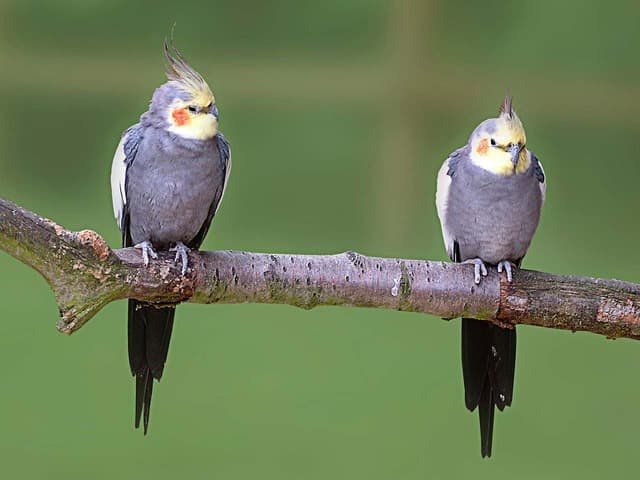
Male Cockatiels in the same cage. All you need to know if it is going to work out.

Pets are fantastic companions, and we love them with all our hearts. But who is there to keep your pet company when you are away? At times we’ve considered getting another pet to keep the one we have company, but you want to be sure that two birds can get along before you set out to purchase another when it comes to cockatiels. You’ve found your way here because you want to know if two male cockatiels can live together. Well, we have an answer for you. 

Can two male cockatiels live together? Yes, two male cockatiels can live together, but it’s in their best interest and yours to put them in separate cages, at least in the beginning. You can put their cages next to each other to see how they interact. But, unless you purchase both birds simultaneously, there are steps you need to take before your cockatiels even meet. 

If you purchased both simultaneously, they could be in the same room, but you may want to slowly introduce them to each other. You can keep the cages at opposite ends of the room until they get used to each other. Of course, if they were caged together at the store where you purchased them, then they are likely already able to live in the same cage. 

Being able to tell if they are going to get along

An excellent way to tell if your birds are not getting along is one, or both of them, will squawk and hiss at each other. If this happens, then you should separate them into different cells. 

If you already have one cockatiel at home and are considering bringing in another, then you first want to make sure you are familiar with the introduction method, which we will get to later. 

First, keep the new bird in a separate room for a week to ensure they aren’t carrying any diseases that they can transfer to your other bird. You can take them to an avian vet to have them tested as well. We always recommend finding an avian vet when you get a bird because they specialize in treating cockatiels. 

Once you are sure your new bird is free of any infectious disorders, you are ready to introduce them. 

How to introduce your birds to each other. Once you are ready to make that introduction, you should take steps to make a proper and safe meeting of the feathered minds. 

Step One:

Put the cages next to each other. Leave them there and watch what happens. Are they checking each other out, or are they ignoring each other, which would be pretty odd? If anything, they should be curious and do some investigating. 

If they are hissing at each other, then that is a clear sign that they are NOT getting along. You may want to separate your birds and try again on another day. 

But, if they seem to be getting along well, you can reward them both with a treat to encourage the kind behavior. Continue with this step for a week until you are sure the birds can live in the same room for good. Only then will you move on to step two. 

Step Two:

Once your cockatiels can live in the same room together, it may be time to introduce them outside of their cage in a communal area. For this step, you will only need to take out one bird. 

Take the bird you first purchased out of his cage. The new bird should stay in their cage but be in the same room. Let the first bird have out-of-cage time and enjoy typical routines and training. Let the other bird watch how you both interact with each other. 

Step Three:

Now it’s time to take both of the birds. Create an area where they both can play. It should be a neutral area, and you can set it up in front of both the cages. Make sure it isn’t an area that one of the birds has already claimed as its territory. You can use something as simple as a tabletop or set up a jungle gym. It should be open as well so you can stop and possibly scuffles. 

You can open both of the cages and let them make their way out. Sit back and let nature take its course. If they have been getting along well thus far, there shouldn’t be a problem. You should still be there and observe if there is a fight, but cockatiels are pretty friendly and should get along fine. 

I wouldn’t expect them to fly to each other and be best friends right away. You may have to do this again and again until they are comfortable with each other. After a while, they may start entering each other’s cages to investigate further. No matter how friendly they get, it’s always best to keep each cockatiel in their cage when playtime is over. 

How much individual time should you spend with each bird? The recommended daily dose of attention for each cockatiel should be at least 15 minutes four times every day, which is a total of an hour. More is always better. You can never spend too much time with your pets. 

You should also give them at least 30 minutes of shared attention for all the pets in your home and a minimum of two hours of public awareness. If you are an animal lover, this might seem like a lot, but it’s a labor of love and quickly done. 

What about two females?

It’s the same with females as it is with male cockatiels. They should generally get along if you take the proper steps, but birds are individuals, and there is no knowing what will happen. The best thing to do is introduce them in the same way you would the men and hope to become friends. 

What about a male and a female?

There is no steadfast rule when it comes to a male and female of any species getting along. The powers that apply to a male/male pair and a female/female pair also apply to couples of cockatiels of the opposite sex. 

The one thing you need to be aware of is nesting and possible breeding. You can take steps to stop a female from laying eggs, but you can’t “fix” a cockatiel. 

Will they mate?

They may mate, and they may not. They may be compatible and form a life-lasting bond, but there is also a chance this won’t happen. You never know with birds, so be prepared that they may not breed. 

To breed, the female must be two years old and the male a year and a half at a minimum. Introduce them following the same steps above and, if they get along, you will know by their behavior.  

Warning signs they don’t get along.

You may have fears of introducing two cockatiels, and they’ll do nothing but fight. While they may hiss at the first meeting and possibly have a scuffle once in a while, two cockatiels that don’t like each other will more than likely ignore each other. Since you will have separate cages for them, it will be easy to keep them separated. 

Whether you are paring a male and male or trying to breed a pair of the opposite sex, you must show both of your birds equal alone time so they don’t feel jealous. Love is one of those things that you can never deplete. The more you give to your bird, the more you will get back. 

Can you leave your Cockatiel alone for the day?

We love our pets, but they are a huge responsibility. When we have others dependent upon us for survival, getting up and heading out for a two-month road trip is possible, but it takes some planning and a little outside help. 

Dogs need a walker, but you can leave cats for a few days without visits. But what about birds? Can you leave your cockatiel alone? We have an answer for you. 

Can cockatiels be left alone?

Yes, cockatiels can be left alone for up to a few days as long as they have ample access to water and food. It is best to get a pet sitter that is going to spend some time with your cockatiel if you are going to be gone longer than a day or two to make sure they have ample water and food and companionship.

If you are just running out and are new to owning a cockatiel, then I am here to tell you if the cage is secure and closed, there is ample food and water in the cage, then you can feel free to leave to the day. Your cockatiel will be fine. 

You, too, can leave your cockatiel alone for those planning to go for an overnight trip or visit. Just be sure to leave ample food and water in the cage. You can leave your bird alone for some time as long as there is access to food and water, but it’s not the best situation if you plan on being away for long periods. 

Birds need stimulation like any other living creature and, if yours is the only bond your cockatiel has, then they will miss you. It’s always a good idea to get someone to come over and just say a few words or hang out with your cockatiel. They may not bond with that person, but the activity will be good for them. 

What you should never do is leave your cockatiel out of their cage when you aren’t home. It can be a recipe for all kinds of disasters, especially those that can injure your cockatiel. You don’t want the family cat realizing your bird is a fun thing for playtime. 

How much time should you spend with your cockatiel?

You should spend as much time as you can with your cockatiel. But we know that spending every hour of every day with your bird isn’t practical, or is it possible. There are other pets, people, and tasks that require our attention as well. But, the more time you spend with your bird, the better your bond will be and the happier you will make your bird. Your happiness level should rise as well. 

At the least, you should spend at least an hour a day with your cockatiel. It does not have to be a consistent hour. You can schedule intervals throughout the day. But it’s worth mentioning that cockatiels love together time. The more time you spend with your cockatiel, the happier and healthier you both will be. 

Can they be left out of the cage?

No. If you or someone else is not around to watch them, I would not recommend you go your cockatiel out of its cage when unsupervised under No circumstances. There are too many places for a bird to get caught up in trouble. Air vents, heating ducts, and mouse traps are just a few hazards a little bird might encounter if there is no one around to keep him out of danger. 

As for time out of their cage, the more “out of cage time” they get, the better off they are. Out of the cage is where you will do a great deal of your bonding, and you can spend the time teaching your friend how to talk or do fun tricks. But, if they are left unsupervised, you are risking their health, safety, and possibly their lives.

How long should cockatiels sleep?

Cockatiels should sleep anywhere from 10 to 14 hours a day, but this will likely span out throughout the day instead of one long sleep. For the best health, your bird should get at least 12 to 14 hours of sleep every day. 

They have different positions, so it may be difficult to tell, at first, when your cockatiel is sleeping. There is the normal position, which on one leg and their head under their wing, baby birds sleep with their legs underneath them, or sleeping on both legs. 

One thing you’ll notice is that cockatiels will tend to get puffy when they are sleeping. There is no reason for alarm. It just means they are in a relaxed state. 

Of course, if you find that all your cockatiel does is sleep, then it may be time to take them to a doctor. If you don’t have an avian vet, then we recommend you find one in your area. While general vets are great, the training an avian vet goes through is much more specific to your cockatiel. 

How to get them back in their cage?

Once you let your bird fly around the room and find its footing in your home, you will find that, at times, you are going to have to make them get back in its cage. For birds that can’t fly, this is pretty simple. But sometimes, they get on a roost and can become rather stubborn. Not that I blame them. They adore their time spent out of the cage so much sometimes it seems like they never want to get back in. 

Unfortunately, things like work and school beckon for us to leave, and we know we can’t leave our bird out in the open where she can find her way into danger. So how do you get a bird to get back in their cage when they don’t seem to want to go back?

First of all, try to quell anxiety or feelings of being rushed on your part. Cockatiels are very sensitive to human emotions and can pick up your senses. If you are emitting an edgy vibe, your bird will pick up on that, and you will make your job all the more difficult. Just relax and do your best to get them to come to you. 

Also, if you are having an issue, it may be a good idea to get your bird’s wings clipped. With this procedure, you can choose the level of height that you want them to achieve. They are easier to tame that way, and it is for their safety. A bird that can fly high tends to get caught in tight places or even escape, which could be seriously dangerous. 

Training techniques like repetition are helpful when trying to get a bird to come to you. Treats and other positive reinforcement are lovely training tools as well. 

Going on vacation.

Do you need a pet sitter? It all depends on how long you plan on being gone. As we mentioned earlier in this piece, cockatiels can be left to their own devices for a short period, but if you plan to be gone longer than one night, it would be best to pay someone or get a friend to come by visiting them once a day. 

Not only will they get lonely, but their water dish will also likely get cloudy from regurgitation, and it will need to be changed. Plus, birds bond tightly, and the distraction of a familiar friend would be suitable for them, especially if they are the only pet you have. If you have other pets, you most definitely need a pet sitter, which would run you less than boarding. 

Out door cockatiel life, what you need to know to keep them safe.

The main reason why we have pets is that we love animals. As animal lovers, we want our pets to have the most natural habitat to live in, but we also want to make sure they are safe from outside predators or mishaps, and they also need saving from themselves at times. All you need is one experience of your dog getting off his leash and running into traffic to realize how essential harnesses and leashes genuinely are, even if we instead feel free to roam. 

Cockatiels are no different when it comes to being utterly dependent upon their owners for overall protection. So, you want to know, “Can cockatiels live outside?” 

Can cockatiels live outside? Yes, but there are restrictions and rules that you must abide by if you are planning to keep your birds outside. The best temperature to allow a Cockatiel to live outside is between 60 degrees and up to 100 degrees, as they are accustomed to living in a warm climate of Australia.

First, the temperature has to be just right.

If you live in an area of the world that tends to be cold and frozen, you may want to reconsider keeping your birds outside. Hailing from the climate of Australia, cold weather is not something in a cockatiel’s instinct. 

Temperatures in the Australian desert, where cockatiels live in the wild, can run from 30 degrees to over 100 degrees Fahrenheit, which is quite drastic.  When a bird lives in the wild, they grow accustomed to the change, and it doesn’t happen drastically. We do not advise taking a cockatiel used to living inside to an outside aviary in cold weather because it may shock their system. 

Speaking of an aviary, this is another topic of importance when considering keeping your birds outside. You will need to build an aviary for them, a specific type of housing for birds that live outside. 

One, you don’t want just to put your bird outside. There are predators of all types in the world, and a yellow feathered bird will be very appealing to many of them. Cats, dogs, and other birds like hawks are just a few of the dangers your cockatiel will find outside of your home if left without any protection whatsoever. Never put your bird outside without a cage or an aviary. 

It’s also important to remember that you shouldn’t keep outside birds in cages. Cages can rust, and rust is toxic to birds. If you only plan on taking your bird outside for a few hours a day, a cage will do just fine. 

For a bird you plan on keeping outside, you will need an aviary to build yourself or have constructed for you. There are typically two sections to an aviary. One area is for flying and another area for shelter and feeding. When designing an aviary, don’t forget it needs to keep your birds off the ground to evade harmful parasites, rodents, and chlamydiosis, a bacterial disease typically carried by wild birds. 

The best way to avoid all of those potential hazards is to get a suspended aviary, a cage used outside. This type of cage will not rust from the elements and put your bird in danger’s way. 

Can cockatiels survive outside?

Yes, they can, but only if you follow the detailed instructions above. Don’t just put your bird outside without a cage or aviary, and make sure the temperature is right. 

A bird left to its own devices outside in most urban settings will not survive. They will either be captured by another animal or worse if you can imagine worse. In this case, no, the bird will not survive. 

Another way your bird will not survive outside is if the temperature is too low. While the Australian desert may get as low as 30 degrees Fahrenheit, if you take your bird from a room that is 70 degrees and bring it outside to a 30-degree temp, their system will suffer shock, and they could be hurt. It’s best to keep them inside if it’s cold out. 

Another thing to take into consideration is that birds kept in outdoor aviaries are challenging to tame. First, you don’t want to clip the wings of an outdoor bird like you would an indoor cockatiel because they wouldn’t be able to get away if something were to happen. So that would, in itself, make them harder to tame. 

Outdoor birds are more challenging to bond with because they don’t have the direct and daily communication with their owners that indoor birds have. If you want to bond with your cockatiel keeping them outside is not going to make it easy. 

If you have a cockatiel that has already bonded with you, then you should NOT put that cockatiel in an outdoor aviary. You will likely put your little friend into depression, and he would suffer from loneliness. 

Whether you are keeping your cockatiel inside or outside is something you should decide before you get a bird. Once the decision is made, you should stick with it. It’s simpler to put an outdoor bird inside, but these cockatiels may be more challenging to train. 

What’s the lowest team-tire a cockatiel can survive? Any temperature lower than 40 degrees is not safe for your cockatiel. As we’ve said, they hail from a warm climate, and their little bodies are not prepared for temperatures as low as 20 or 15 degrees.

On another note, when it comes to baths, your cockatiel can only handle room temperature water. Anything hotter can hurt them. 

What temperature is too cold for a cockatiel?

Any temperature under 40 degrees Fahrenheit is dangerous and too cruel, for a cockatiel. They are not used to that weather, and they don’t have natural insulation like rabbits or raccoons.

Can cockatiels live in an outdoor aviary? Yes. Cockatiels can live in outdoor aviaries, but the question you want to ask yourself is, “Is this the best situation for my cockatiel?”

First, if you live in an area of the world where the temperature fluctuates into dangerous territories, like the ones we mentioned above, then you might want to consider keeping your birds inside in a cage. 

Or, if you want your birds to bond with you, then you are more likely to do this when they live inside. 

If you are a person who wants to keep a few birds, lives in a warm climate, and doesn’t mind not bonding with your pets, then an outdoor aviary is what you need. You may be planning on rescuing several birds and are unable to keep them inside. As long as you don’t hinder their safety or health, then you can save a cockatiel in an outdoor aviary. 

What is the best climate for a cockatiel?

The best atmosphere for a cockatiel would be between 65 and 80 degrees Fahrenheit, which is what the temperature would be in his natural habitat. If you find that the room you keep their cage in might suffer from a drop in temperature, there are ways to keep your cockatiel warm. 

Make sure the room is free of drafts; you can use a warming nest, and be sure to cover their cage at night. Warming cockatiels that live in outdoor aviaries isn’t as simple so, if you are concerned that the weather in your area is too cold at times for your cockatiel to survive, then do yourself and your friend a favor and keep your birds inside. 

When it comes to whether or not to keep your cockatiel in an outdoor aviary, you need to be sure of what you want. While it may seem like living outdoors would be best, if you are only going to home one bird, she will not have an opportunity for bonding. If you pair them with another, then they will have a friend. 

Keeping birds indoors may be unnatural but, when they are kept as pets, for the sake of comfort and companionship, keeping them inside is always best. 

Do cockatiels know when to stop eating

Eating is a necessity in life. If anything wants to survive, anything living that is, then it needs to be sustained with nourishment. This goes for you, your plants, and your pets. Yet, there are certain animals that don’t know when to stop eating, which can lead to a myriad of issues. As the loving owner of a cockatiel, you are wondering if they know when to stop eating on their own. Well, we have an answer for you. 

Do cockatiels know when to stop eating? Yes. As the owner of a cockatiel, I can say that our cockatiel is great at knowing when to stop eating. He is healthy and never overindulges, but we don’t put a lot of food in his bowl each day. We stick with the recommended amount and he is able to graze throughout the day. He never eats all of his food at once and lets it last him throughout the day. 

Does this mean all cockatiels know when to stop eating?

Not necessarily. We come from the school of thought that each cockatiel is an individual and not all of them act the same in identical situations. If you find your cockatiel does not know when to stop eating the first thing you want to do is make sure you put only enough seed or pelts in their bowl for one meal at a time. This should not exceed 1 ½ – 2 tablespoons a day. 

The next thing you want to do is contact your avian vet. If you don’t have a doctor who specializes in birds then you should start looking for one. While general veterinarians are great, avian vets train to treat birds specifically and will have a better idea of why your bird doesn’t stop eating. 

Will a cockatiel starve its-self?

Some cockatiels have starved themselves but not because they were ill. The starvation stemmed from them not being able to recognize the food in their bowls as food or they aren’t keen on a new food you may be trying. Even if your bird nibbles at the new pellets in their bowl that doesn’t mean they are eating them. You must be sure they are swallowing the food as well. 

If they aren’t taking to a new food you may want to go back to the old food so they eat. If they stop eating for more than a night they could die. There have been cases of birds starving themselves to death instead of eating a portion of new food. 

How often should you change its food?

Ideally, you will want to change your cockatiel’s food every day, especially if you are feeding them natural foods like fruit. Bruised fruits, like strawberries, can carry bacteria harmful to a cockatiel so it’s important to remove food from their cage before it rots. Seeds and pellets don’t rot but you should still be changing them every day. 

How much food should you put in their cage?

The total amount of food you should be giving your cockatiel daily should not exceed 2 tablespoons. Ideally, they should be eating 1 ½ to 2 tablespoons each day. What that should consist of is up for debate. 

Some people choose to feed their cockatiels all seed, which is not a great idea because, in the wild, birds eat more than seed and you may be limiting the vitamins and minerals they need to be healthy. 

Pellets are a great option when it comes to food because designers make them full of the recommended daily dosage of healthy nutrients that your cockatiel needs. Still, some people are not a fan of pellets and choose to give their cockatiels a more natural diet. This can be done but it’s important to remember that when it comes to fruits and vegetables you only want them to make up 20% of their daily intake. The rest should be supplemented with seed or pellets. 

We’ve put together a quick bullet list of human foods that are good for your cockatiel and those that you should avoid. 

Vegetables

  • Asparagus
  • Beets
  • Beet greens
  • Bok choy
  • Brussels sprouts
  • Carrots (grated or chopped)
  • Celery
  • Corn
  • Cucumbers
  • Endive
  • Fennel
  • Kale
  • Leaf lettuce
  • Mustard greens
  • Peas and pods
  • Romaine
  • Sprouts (fresh)
  • Sweet peppers, red or green
  • Sweet potato, must be cooked
  • Swiss chard
  • Turnip greens
  • Watercress
  • Wax beans (green and yellow)
  • Zucchini

Fruits 

  • Apples
  • Apricots 
  • Bananas
  • Berries (Not if they are bruised)
  • Cantaloupe
  • Cherries (will possibly turn stool red so be aware of that side effect)
  • Cranberries
  • Grapes (Not if they are bruised)
  • Guavas
  • Honeydew melon
  • Kiwi
  • Mangos
  • Nectarines
  • Papayas
  • Peaches
  • Pears
  • Pineapple
  • Plums
  • Pumpkin
  • Watermelon

Safe Herbs

  • Basil
  • Cayenne (see above paragraph before giving to your bird)
  • Chamomile
  • Chicory
  • Cilantro (Coriander and Chinese Parsley fall under this category)
  • Dandelion
  • Dill
  • Ginger Root
  • Lemon Balm
  • Marjoram
  • Oregano
  • Parsley
  • Rosemary
  • Thyme

Other Safe Foods

  • Cooked barely
  • Cooked brown rice
  • Cooked cereals
  • Cooked dried beans
  • Cooked lima beans
  • Cooked oatmeal
  • Cooked pasta
  • Cottage cheese
  • Dried fruit
  • Dry, unsalted nuts
  • Freshly cooked chicken or turkey
  • Freshly cooked eggs, hard-boiled, scrambled
  • Freshly cooked fish
  • Freshly cooked lean meats
  • Whole wheat toast
  • Yogurt

Good Treats

  • Animal Crackers
  • Cheerios
  • Grape Nuts
  • Rice Krispies
  • Shredded Wheat
  • Unsalted crackers
  • Unsalted popcorn
  • Unsalted pretzels

Foods To Avoid

  • Anything moldy (blue cheese, etc)
  • Artificial sweetener
  • Avocado
  • Bean plant
  • Brazil nuts
  • Broccoli 
  • Caffeine
  • Chocolate
  • Eggs, uncooked
  • Eggplant
  • Fat
  • Fish, uncooked
  • Fresh peanuts
  • Fruit pits or seeds
  • Garlic
  • Meat, uncooked
  • Nutmeg
  • Nuts in shells
  • Onion
  • Rhubarb 
  • Salt
  • Shellfish 
  • Spinach
  • Tomato

How much water should they drink?

Your cockatiel should drink as much water as they want. Typically a cockatiel will consume about one teaspoon of water every day. When it comes to water, there are a few things to keep in mind. 

Change their water twice a day. You can do it when you wake up and before you go to bed.

Make sure they always have access to as much freshwater as you can give them. Never, and we mean NEVER, leave your pets without drinking water. Water is necessary for all living things to survive. 

If you plan a trip and there isn’t anyone to pop in and change out their water, you might want to put two or three water bowls in their cage, so they have an ample supply. 

How often should you feed a cockatiel?

You should provide your bird every day. You can do this by putting the food in their bowl in the morning and leaving it for the day. Then you can change it out in the morning. Do not leave rotting fruit or veggies in your bird’s cage; otherwise, you may be putting them at risk. 

If you are leaving for a day or two, don’t put fresh people’s food in their cage either. Stick with pellets and seeds because they won’t spoil and put your pet at risk. 

How often should you give your cockatiel treats?

You should give your bird treats in moderation because it’s the best way to explain how often you should give your bird treats. They have smaller stomachs than us, so you don’t want to feed them for fun or training to get out of hand. A good rule of thumb is if you are using treats to train your bird, only let that go on for fifteen minutes at the most. Then give them time to digest. 

When it comes to treats, you especially want to avoid any human food that is salted. One grain of salt is much more significant to their little mouth than ours, and it can cause some internal severe digestive issues—no salt for the birdy. 

Allergies and cockatiels what you need to be aware of.

Every year more than fifty million people in the United States suffer from some kind of allergy, which happens when your immune system reacts to a substance foreign to your body. People are allergic to all sorts of things like food, plants, and yes, animals. Animals carry dander, a specific allergen, something we will break down for you later in this text. 

cockatiel

First, let’s answer the question,

Can cockatiels cause allergies? 

As a Whole Cockatiel dander can cause allergies. That can cause immune systems to create antibodies if they perceive this invader as a threat. When the feather’s shaft breaks down, the dust accumulates is called dander. Dander also consists of dust mites, which can collect between your bird’s feathers.

Also, check our our article – What do Cockatiels Like To Play With? for more info on other Cockatiels and must buys for your feathery pet!

Some common reactions to allergens include rashes on the skin, sinus headaches or sneezing, airway congestion, and even digestive issues. Allergies are high on the scale when it comes to causing chronic discomfort, and the dander from a cockatiel or any bird is as likely to cause an allergic reaction as a dog or cat. 

Bird lovers out there need not fear that this means they can’t live with their beloved cockatiel. There are preventative measures and ways to create a living environment that can be shared between your friend and whoever in the family is allergic to their dander. 

How can you tell if your allergic to cockatiels?

The following is a chart that outlines the Potential Allergenic Effects and preventive measures of Cockatiels on Humans

Allergen SourcePercentage of Allergic ReactionsCommon SymptomsPreventive Measures
Feathers40%Sneezing, Itchy EyesRegular Cleaning, Air Purifiers
Dander30%Sneezing, Runny NoseAir Purifiers, Limited Exposure
Saliva15%Coughing, Itchy EyesRegular Cleaning, Limited Exposure
Droppings15%Runny Nose, SneezingRegular Cleaning, Air Purifiers

You can know several ways if you or someone in your household may be experiencing an allergic reaction to your cockatiel. 

  • Itchy eyes
  • Puffy eyes
  • Runny nose
  • Nasal congestion
  • Sneezing
  • Sore throat
  • Sinus pressure
  • Allergic shiners (dark circles under the eyes)
  • Itchy mouth
  • Stuffy nose
  • Stuffy throat
  • Persistent cough
  • Fever
  • Chills

While these symptoms are signs of cockatiel allergies, they are also indications of many different immune sensitivities. Diagnosing yourself is not a good habit to get into because you may not be allergic to your cockatiel at all. You may be allergic to something else in your home. So the best way to find out if you have an allergy to cockatiels or anything else for that matter, you should see an immunologist specify what is causing your allergic reactions. 

Also known as an allergist, an immunologist is a doctor who specializes in immunity and how to treat these types of issues. There are tests available that will pinpoint your allergy as opposed to making a guess after you sneezed a few times. Besides, if you or one of your loved ones is experiencing severe allergic reactions like a fever or their throat is starting to close up it is imperative you contact your doctor immediately. They will be able to refer you to a specialist. 

Are cockatiels hypoallergenic?

As a general rule, cockatiels are not considered hypoallergenic. While some individuals with allergies may have less severe reactions to these birds, they can still produce dander, feathers, and saliva that may cause an allergic reaction. It’s important to consider your personal allergies before getting a pet.

To be considered hypoallergenic something has to be relatively unlikely to ignite an allergic response. You may be wondering why we said that cockatiels can cause an allergic reaction earlier in this piece and now, it seems, we are implying the opposite. The key term there is relatively unlikely, and, in comparison to other birds like parrots, cockatiels are considered the best alternative when you suffer from a dander allergy. 

Cockatiel dust. The reason why cockatiels are less likely to cause an allergic reaction than an African Grey or a cockatoo is simply due to their size. The bigger the bird the more dander you will find in its wake. There are larger birds that are hypoallergenic as well. Some that you can consider along with your cockatiel include the Pionus Parrot, Eclectus Parrot, Macaw, Toucans, and Parakeets. 

Can you get sick from a cockatiel?

As a general rule, it’s possible to get sick from a cockatiel. Practice good hygiene, like washing hands after handling bird or belongings, to reduce risk of illness. Regular vet check-ups are also recommended.

The symptoms we listed above are signs of a cockatiel allergy but the odds that you’ll get seriously sick from a cockatiel are not great. But, when married with another allergy sometimes symptoms can get out of control and then, yes, there could be more serious issues at hand. This is why we highly recommend you see a doctor if your symptoms are not bearable. 

We’ve broken down each allergic reaction, what other causes could be at play, and how to know when that symptom is out of hand. 

Itchy and Puffy Eyes. There are many reasons besides allergies that can cause this to happen. You may be suffering from a fungal, viral, or bacterial infection, may have a case of dry eyes, which can be brought about by age, your eyes could be strained, or it may be your contact lenses. 

Blepharitis, which is known as an inflammation of the eyes, is another culprit when it comes to itchy and puffy eyes. If your eyes are relieved by over-the-counter drops then there is no need to rush to see a doctor but you should make an appointment. By all means, if you can’t see or your eyes are compromised in any way please get to a doctor as fast as you can. 

Runny or Stuffy Nose, Nasal Congestion, Sneezing, Sinus Pressure, Headaches. We grouped these symptoms because they tend to run hand in hand with one another. Like all the other symptoms on our list, there is no guarantee that your runny nose or sinus pressure is due to a cockatiel allergy. You could be allergic to your cat or the new pollen that comes around with seasonal changes. Or you could be sick with a cold. 

Sore Throat.  Here we have another symptom that could very well be the result of a cockatiel allergy, but it could also be an indication of something more serious like strep throat or a virus.  

Itchy Mouth. While this symptom is also a sign of an allergic reaction, it can also be a cold sore, yeast infection, oral thrush, or anaphylaxis, a SEVERE allergic reaction. It could be to a food you ate as well. If you feel this, then you need to seek medical attention. 

Persistent Cough. Besides allergies, infections, viruses, and chronic diseases like COPD can cause a persistent cough. You must take a look at your lifestyle and when these coughs come about. If you notice a distinct correlation between the cockatiel dust and your cough, it may be an allergy. 

Fever and Chills. Whether or not it’s an allergy or something else, if you are experiencing turmoil and chills, you should definitely seek medical attention. This symptom is an indicator of so many different illnesses we won’t waste your time listing them here. But, they are typically a sign of severe infection, so it’s time to call the doctor. 

How To Relieve Cockatiel Allergy Symptoms.

There are over-the-counter medications available for allergies. If they are severe enough to force you to find medical help, hen they will likely prescribe something more substantial. Natural remedies for all of these symptoms are available via a quick internet search for holistic approaches to allergic reactions. 

But, there are steps you can take to ensure that your environment is dander fee without sacrificing the love of a sweet cockatiel. 

Clean the cage regularly.

If you suffer from allergies, then another person should clean another person should cleanxposure to the dander. If you are the only person in the household, then you may want to wear a mask and goggles to avoid exposure. 

No birdcages in the bedroom. You want to keep all the dander from your sleeping quarters. 

Vacuum with HEPA filtered machine. Designers make pet-focused vacuum cleaners with allergies in mind. Take advantage of the technology. 

Don’t touch your face after handling your bird. For obvious reasons, do not touch your face or anyone else who suffers from allergies before washing your hands thoroughly. 

Bird allergies are easy to keep in check with a cockatiel since they are more hypoallergenic than other feathered pets. If you keep on top of the dander, everything should be fine. But don’t hesitate to contact a healthcare professional if your allergies are too much to handle. 

What about are cockatiels bad for Asthma?

Cockatiels, like many birds, can potentially exacerbate asthma symptoms in some individuals. This is primarily due to the allergens they produce, which include feather dust, dander, and particles from their droppings. Understanding the relationship between cockatiels and asthma is important for anyone considering these birds as pets, especially those with pre-existing respiratory conditions.

How Cockatiels Affect Asthma

  1. Feather Dust: Cockatiels produce a fine powder from their feathers, known as feather dust, which helps keep their wings healthy and waterproof. This dust can become airborne and, when inhaled, may trigger asthma symptoms in sensitive individuals.
  2. Dander: Like many animals, cockatiels shed tiny flakes of skin known as dander. Dander is a common allergen and can lead to allergic reactions and asthma flare-ups.
  3. Droppings: The droppings of cockatiels can also contribute to asthma symptoms. When these droppings dry out, particles can become airborne and irritate the respiratory system.

Signs of Asthma Exacerbation

Individuals with asthma may experience increased symptoms when exposed to cockatiel allergens. These symptoms can include:

  • Increased frequency and severity of wheezing
  • Shortness of breath or difficulty breathing
  • Chest tightness or pain
  • Increased need for quick-relief inhalers

Precautions and Management

If you have asthma and are considering a cockatiel as a pet, or if you already own one, it’s important to take precautions:

  1. Regular Cleaning: Frequent cleaning of the cage and the area around it can help reduce the amount of dust and dander.
  2. Air Purifiers: Using a high-efficiency particulate air (HEPA) purifier can help to remove airborne allergens.
  3. Ventilation: Ensuring good ventilation in areas where the bird is kept can reduce allergen concentration.
  4. Medical Consultation: Speak with your doctor about your asthma management plan if you’re exposed to bird allergens. They may suggest adjustments to your medications or other strategies to manage symptoms.
  5. Limit Exposure: If possible, avoid handling the bird and spending prolonged periods near its cage, especially if your asthma is severe.