Recent Posts

Everything You Need To Know Know About Your Chinchilla’s Diet

Keeping your chinchilla well fed is one of the most important part of your chinchillas health. Also know what to feed them and when to feed them is very important. While some food you may think is helathy may in fact make your little friend really sick. Let me help make sure you are aware of what you should be giving your little critter to keep them healthy. While I am not a vet, make sure you consult everthing here with a licensed vet to make sure your little furry friend stays healthy.

What Do Chinchillas Eat? Chinchillas are herbivores, and therefore their diets are mostly hay and grasses. These are most important to keep their digestive tracts working properly. They should always have good quality hay like timothy hay, alfalfa hay, orchard hay, and meadow hay should to munch on. This can be loose or in cubes.

There are also pellets that you can buy for them and they should get about 2 tbs. of these each day. These should be specific chinchilla pellets and not for rabbits or guinea pigs. Each animal has its own dietary needs and the pellets are designed to contain what they need.

They will need to always have clean fresh water available at all times. There are many things that you can give a chinchilla for a treat and many that you can not give them. I will give you lists accordingly. Chinchillas do caecotrophy, simply put, they eat their poop to extract all nutrients from it. This is normal and not to be discouraged.

What A Chinchilla Can Eat

Vegetables

  • Carrot
  • *  Kale
  • * Celery
  •  Squash
  • Alfalfa
  • Potato
  • Sweet Potato
  • Cilontro
  • Hibiscus
  • Dried Rosehips
  • Dandelion Greens

Fruits

These must be given only in small amounts because of the sugar content in them.

  • Blueberries
  • Apples
  • Sultanas
  • Grapes
  • Raisins

By keeping an eye on your chinchilla’s poop you can see if things are going well with their digestion. Their poop should be hard and dry. You should notice if they start having loose poop or the amount of poop decreases. You will want to talk to your vet and see what the problem is. 

Never allow the fresh food to remain in the cage longer than 24 hours. They should only get about a teaspoon of these each day. 

What A Chinchilla Can Not Eat

These items are actually poisonous to your chinchilla and should be avoided altogether. Nuts are to high in fat which can damage the liver but are not poisonous.

  • Asparagus
  • Avocados
  • Bananas
  • Broccoli
  • Cabbage
  • Corn
  • Lettuce
  • Nuts 
  • Peas
  • Rhubarb including the leaves
  • Spinach
  • Sunflower Seeds

You should also avoid nuts as they are high in fats. Fats are not good for your chinchilla as they will adversely affect the liver. If you are not sure about something that isn’t listed get advice from your vet before giving it to your chinchilla. 

Chinchilla Feeding Schedule

Your chinchilla should always have some hay available. This is not only as a food source but by chewing this they keep their constantly growing teeth worn down. If a Chinchilla doesn’t have enough to chew on their teeth can grow and become misaligned, at this point they could starve to death because they can’t eat.

Pellets should be offered In the morning and at night, 1 tablespoon each time. And the fresh food should be offered in the evening when your chinchilla is the most active. 

The roughage that they get from the hay and the pellets will keep their digestive systems in good order. This is the most crucial part of their diet. You can also add vitamins to their water, check with your vet to see if they are needed. There are also salt blocks and wheels that can give added minerals to your chinchilla.

How Much Water Should A Chinchilla Drink?

Your chinchilla should always have fresh water free of chlorine available. They should drink around 2 oz. of water each day. As their diet is mostly dry they will need to get their water from either a bottle or a bowl. Most bottles have marks so you can see how much water they are consuming. 

Your chinchilla will drink water from a bowl. However, there is a greater chance of the water becoming dirty and undrinkable when you use a bowl. A water bottle or two is the better way to go. Just be sure to change the water and clean the bottle at least every 2 days.

I will give you some lists of the best and worst foods to feed your chinchilla. And let you know what your chinchilla would be eating if it were still in the wild. Hope you find it a big help.

Best Foods

When it comes to listing brands of food that are the best it is hard to know just which one to list first as everyone seems to have a different idea. So what I will do is list some of the most recommended in no particular order. You can see which one your chinchilla prefers, you can also see what food your vet recommends.

  •  F.M. Brown’s / Tropical Carnival
  •  Supreme Petfoods / Science Selective Chinchilla Food
  •  Oxbow / Animal Health Essentials Deluxe
  •  Vitakraft VitaNature / Natural Timothy Formula 
  •  Kaytee / Timothy Hay Complete Chinchilla Food

This list will give you a good place to start. Each of them has very good attributes, and it is up to your chinchilla to let you know if he doesn’t like it.  And the best place to start is using the very best one that your vet recommends. 

Some of these have bits of different nuts which some say to avoid. And some have some fruits in them that I was not able to find on a list of good foods for your chinchilla. You definitely do not want something with dyes and fillers that are not good for your pet. Know what you are getting and what your chinchilla will eat.

Worst Chinchilla Foods

Just like with the best foods these are in no particular order, and this is not a complete list. These are the ones that I was able to find some consensus on. 

  • Bonanza / Gourmet Diet for Chinchilla
  • Carefresh / Complete Chinchilla 
  • Sunset Gourmet Blend 
  • Charlie Chinchilla 
  • Nature Chinchilla Food 
  • Xtra Vital Chinchilla Food 1kg (68)

Some of these have ingredients that are not good for your chinchilla. It is best to find something that your chinchilla will like eating and has the nutrients that they need. Your vet is still the best place to turn if you have questions about what to feed your pet. 

What Do Chinchillas Eat In The Wild? 

Wild chinchillas are omnivorous instead of the herbivore that the pet chinchilla is now. There is a number of plants, grasses, bark, nuts, fruits, berries, insects, and even bird eggs that a wild chinchilla will eat. Wild chinchillas have been spotted in trees. 

Chilean tussock grass is a needlegrass native to Chile. It has long thin blades and is one of the favorite foods for the chinchilla it is similar to hay.

Turquoise Puya or Blue Puya its flowers are what it’s known for, it forms natural tall bouquets of deep purple-blue flowers. Because of the arid region, some of these plants only bloom 1 time and then die.

Bridgesia Incisifolia is a kind of woody shrub native to Chile. It’s like a short tree, with lots of small leaves and gnarled branches. Its leaves are similar to those of oak leaves.

These are some of the chinchilla’s favorite plants to eat in the wild.

Conclusion

Chinchillas have delicate digestive systems and need to have a diet high in fiber. And there are things you absolutely can not feed your chinchilla. And wild chinchillas have a diet that is different from pets.
Can Chinchillas Live Together With Other Animals?

When you have other pets in your home and you are looking to add a chinchilla is important to know what you are getting into. Some animals are just not going to get along and you don’t want to put your new found friend at risk of getting hurt. Making sure you have done all your homework before getting that new furry cut bundle of joy is going to lead you to ask the following. 

Can Chinchillas Live Together With Other Animals?

Yes, chinchillas can share the same house with other animals. Chinchillas are an animal that is preyed on in the wild and as such, they have a built-in sense that is triggered around animals that are natural hunters. Some hunting animals can really stress a chinchilla even if they can’t get to them.

What you have to do is understand chinchillas and the other animal that you want in the house. You need to know the personality traits of each. 

You may have to make special provisions to have different pets and understand that you are responsible for maintaining them. It is not only about safety it is also about keeping the stress level low as well.

Multiple Chinchillas?

Chinchillas naturally live in groups called herds. They are very social animals and thrive on being with other chinchillas. However, not every chinchilla will tolerate every other chinchilla. There is a process that you must go through to introduce new chinchillas to each other. And sometimes it will not work. 

Siblings that have never been separated are great together. But you may not bring a new chinchilla in and just put it in the cage and everything is good from the start. You must introduce them slowly (more on this in another post). The thing is that chinchillas can and do live together well.

Dogs – How Will A Dog react To A Chinchilla?

This seems to be a very touchy subject for some. Let me put it like this, dogs naturally are hunters, and chinchillas are naturally hunted. This means that even if you have a very docile dog it will still stress the chinchilla having it around. Stress can be hazardous to your chinchilla as it can cause them to overheat.

You may believe that your dog is different and so docile that it would never hurt anything. You may also have a chinchilla that isn’t easily stressed by the dog.  However, it is really hard to say what may trigger an instinctual reaction, or when it may happen. 

That being said there are many stories of dogs and chinchillas being fine with each other. There are other stories of them acting friendly with each other until all at once the story changes and it is always the chinchilla that loses. It is best to never allow them to be loose to interact with each other, even if you are present.

Cats – How Will A Cat React To A Chinchilla?

This is another case where the cat is a predator. As the chinchilla is a rodent and the natural prey for a cat this is an even worse situation than the dog. If the cat has access to the room where the chinchilla cage is, they will torment the chinchilla without even touching them. 

Cats are known to sit on the cage and stress the chinchilla. They will try and get them through the bars. These 2 animals are natural enemies and should be expected to act as such. A cat allowed in the same room with a chinchilla can stress the chinchilla to death. Some have successfully had both at the same time, it is not an ideal situation and I would not suggest having them both. 

Now that we have covered the big ones it’s time to cover some that might be a little less obvious as to their reactions. And cover some of the small things that you might never think of otherwise. Some of these may really surprise you.

Guinea Pigs – How will Guinea Pigs React To A Chinchilla?

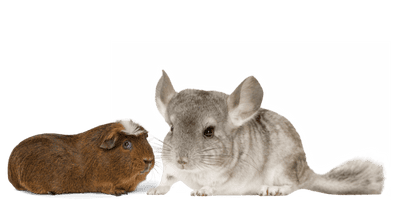
There is not much trouble keeping these two animals in the same house. However, they will need to have their own cages. And they shouldn’t play together. They each have their own traits and body language that can be mistaken and cause the fur to fly. 

As they are both prey animals they will not see each other as a threat. However, the guinea pig is more active during the day and could disturb the chinchilla, and vice-versa at night. But you do not have to worry about what might happen if one of them happens to make an escape from their cage.

Hamsters – How Will Hamsters React To A Chinchilla?

Hamsters and chinchillas do fine together with only one small problem. Chinchillas have very sensitive noses and the hamster has a very pungent odor to their urine, this may stress the chinchilla. So you may need to keep them in separate rooms. 

They should not be left out to play together as they are different and may harm each other. If you want a chinchilla to have a playmate it needs to be another chinchilla or you, the chinchilla parent.

Ferrets – How Will Ferrets React To Chinchillas?

Ferrets are carnivorous animals that would enjoy nothing more than hunting and eating a chinchilla. They are still used in some places for hunting rabbits. These two animals should never be kept in the same room with each other even in separate cages.

Even across the room and separated from seeing each other they would be able to smell each other and both would become very stressed. Although the chinchilla may be able to defend itself it would most likely end up the loser in the end. It is best to not own these two animals at the same time.

Rabbits – How Will Rabbits React To A Chinchilla?

Rabbits and chinchillas can be kept together in the same house. They can not be kept in the same cage. They have very different dietary needs and you can’t risk that they eat each other’s food. The chinchilla has such a sensitive nose that the odor of the rabbit may stress it, to the point that you have to move one to a different room.

They have different types of play and they shouldn’t be allowed to play together as one may hurt the other accidentally. They have different body language that may be confused as aggressive by the other. Keeping them together isn’t a problem but, do not expect them to play with each other.

Conclusion

It is clear that chinchillas are prey animals and should not be kept with a predator animal. They definitely should never be allowed to play together. Even if you have been doing so you never know when instinct will kick in and what will happen when it does. 

Some animals have strong odors that will cause stress to the chinchilla’s sensitive noses, even if there is no threat of harm. So you need to consider this when deciding where in the house to put the cages of different animals.

You may need to consider the sleeping habits of some animals before deciding to house them in the same room. You do not want to overstress or deprive any of them of needed sleep. This is not good for the health and well-being of either animal.

Because of differences in the animal’s behavior and body language, you should never allow them to be loose and play together. A simple misunderstanding between them could lead to a very sad ending. It can happen so quickly that you couldn’t change the results even if you were right there. 

Are Male Chinchillas Bigger Than Females

I’m sure you like me have wondered how large your chinchilla is going to get. And like other species, the size difference between males and females is going to be different. In my research, I learn a lot about the differences between the two. Mainly which is going to be larger.

Are Males Chinchillas Bigger Than Females? Females are the larger of the sexes. Long-tailed chinchillas range in size from 9 – 15 inches and weigh from 1 -2 lbs. The males are on the lower size and the females on the upper size. Their tails are 5-6 inches long.  Short-tailed chinchillas range from 11-19 inches and weigh 2 – 3 ½ lbs. Their tails are 3-4 inches long.  Again the females being on the larger side. 

Because of sexual dimorphism there are many changes from the wild chinchilla to the domestic chinchilla.  Wild chinchillas were closer in size and structure between the sexes than domestic chinchillas are. They were also smaller than the pet chinchillas are. 

They may have originally bred just the larger ones to each other to help bring out the size.This could also be due to the dwindling food sources in the wild caused by the mining of their natural habitat. In the wild their life span is 8 – 10 years, domestic chinchillas 15 – 20 years and some beyond that.

How Big Do Male Chinchillas Get

Males in the wild typically weigh 13.0 – 15.4 oz. averaging 14.5 oz  Domestic male chinchillas  weigh up to 21 0z. They range from 9 – 15 inches (23 to 38 centimeters), however the tail can add 4 to 6 inches (8 to 15 cm) to their length. 

While male chinchillas are smaller than their counterparts, they are every bit as personable and in some ways more friendly than the females. This is in part due to the females being more territorial. However the males will help with the kitts, teaching them to mimic him and keeping them safe.

How Big Do Female Chinchillas Get

Females in the wild typically weigh 13.4- 15.9 oz averaging 14.9 oz  domestic females up to 28 oz. They are typically on the larger side of the size chart while the males are on the small side. They have a long tail that is 4-6 inches long, it is fluffy and covered in long hairs. 

While they are larger and more territorial than the males they have very strong ties to whomever they bond with, be it another chinchilla or a person. They may take longer to form a bond but they usually form a stronger bond.

Now lets compare the chinchilla to just a few of the other small pets out there. I think that some of this will be as surprising to you as it was to me. I am sure that if it isn’t surprising it will at least be interesting.

Are Chinchillas Larger Than A Hamster

Yes, the largest of the hamster family is the Golden or Teddy Bear hamster. They are 5-7 inches long weighing 5 oz. There are even smaller hamsters. The Teddy Bear hamsters are the most popular hamsters sold. These animals need to also be kept in a cage. 

The chinchilla is almost 3 times the size of the largest hamster. Besides the size difference, hamsters are a more solitary rodent. They prefer to have a cage all to themselves rather than to have a cage mate. Where the chinchilla is a herding rodent, and thrives on being with others.

Both the hamster and chinchilla are more active at night, where the guinea pig and rabbit are both more active during the daytime. Other than their nightlife there is really nothing much to compare between these two animals. 

Are Chinchillas Larger Than A Rabbit

There are many different breeds of rabbits and some are down right huge. However I found one that is almost an identical match to the size of the chinchilla. The Netherland Dwarf Rabbit adults weigh between 1.75 to 2.5 lbs. The average length is no more than 33 to 50 centimeters. 

One of these rabbits on the smaller size would be smaller than a Chinchilla on the upper side of the scale. I did find a couple of other dwarf rabbits that were just a bit larger that would also come close to being in the size range of the chinchilla. 

The cage for the rabbit is shorter in height but needs a larger floor space. One big difference is that the Netherland Dwarf is very affectionate and likes to cuddle with you and the chinchilla does not typically. Both are easy to potty train, and both can be trained to do some tricks. 

Are Chinchillas Larger Than A Guinea Pig

Yes, the Guinea Pig is 8-10 inches long and weighs 25-42 oz. Although the chinchilla is larger in size the Guinea Pig weighs more and has a  hardier body structure than the chinchilla. The guinea pig needs to be caged and like the rabbit it needs a larger floor space with less height.

The guinea pig does not have a tail and the chinchillas tail is 4-6 inches long. The guinea pig does not use its front paws for eating like the chinchilla does. It is built low to the ground and usually keeps all 4 feet there. It doesn’t sit up like the chinchilla or hamster. 

Are Chinchillas Larger Than A Cat

No, the Singapore cat is stocky and muscular and is one of the world’s smallest cats. It has a very short and fine coat. A full-grown female typically weighs 1.8 kilograms (4.0 lb) however, a male weighs 2.7 kilograms (6.0 lb). This cat is about ½ the size of your average house cat. 

While this is very small for a cat, it is still bigger than the chinchilla. This is also a very rare breed and not easy to get. While I did find a few record breaking cats that were small enough to compare to the chinchilla they were just abnormal occurrences. This cat is also not hypoallergenic like the chinchilla. 

This cat likes high places to watch its surroundings, so you may find it on a tall bookcase or the top of the refrigerator. This is the one animal in the group that is not a cage dwelling animal, you will need a cat box.. 

Conclusion

Females are usually the larger of the chinchilla sexes. Males are more dominant and the females are more territorial. Males being less territorial may bond with you faster, but the bond with the female is a formidable one. Domestic chinchillas are larger than their wild relatives.

The guinea pig and the Netherland Dwarf rabbit are both comparable in size to the chinchilla. Although, they both have different personalities and traits that do not match the chinchillas. Neither of these animals are nocturnal, so there may b more chance to spend quality time with them during the daytime.

The largest hamster is not large enough to compare in size to the chinchilla. However, they do share the trait of both being more nocturnal than the rabbit or the guinea pig. 

Even the smallest breed of cat is about 2 times the size of the chinchilla. This matchup is not a good one. They both have great personalities but are not on a level playing field as there are more differences than there are with some of the other animals used for comparison.

Are Chinchillas From PetSmart Healthy

When looking for a new companion it is really tempting to purchase a pet from a local pet store. This is going to be Petsmart of other local pet stores. But you really should do your research to make sure you are going to be getting a healthy pet.

Are Chinchillas From PetSmart Healthy? Most pet stores are going to be selling chinchillas that come from chinchilla mills. Where the main thing they are looking for is a profit and not the care of the chinchilla. You will not get any health records, pedigree, or age on a chinchilla you get from them.

If you do purchase your chinchilla from a local pet store it is going to be important to take them to a vet to make sure that they are going to be healthy. Many pet stores offer a health guarantee so be sure to consider this when picking out your new pet.

 Is It Bad To Buy A Chinchilla From A Pet Store?

This is a touchy subject, there are many things to think about when buying a chinchilla from a pet store. The larger chain pet stores and some small ones usually get their pets from wholesalers, who get them from backyard breeders or chinchilla mills. These are places where they breed chinchillas just for the money.

A chinchilla from most pet stores has no information about its background, and no way to know where it came from, how old it is, or how it has been treated. Most of the people that chinchilla has encountered have had money in mind before the care of the chinchilla.

They may have some health issues that are from not being cared for properly, They may have stress issues from being mistreated. There is also the fact that they have probably come into contact with other chinchillas that may have been sick. 

A lot of employees at the pet stores have no idea what a chinchilla needs and only do the basics. They can keep them in improper cages that allow them to overheat. They can allow them to chew on plastic which is very bad for a chinchilla. 

There are many that say you should never get a chinchilla from a pet store for some of the reasons mentioned. Others say they need a home just like the ones from a reputable breeder do. Both are right to a point. You will have to decide which is the right option for you.

Now I will give you some information that will help you know what to watch out for when looking at chinchillas and some sure signs they are not well. and some ideas for private breeders.

Do Chinchillas Have Health Problems To Watch Out For Before Buying Them?

Yes, there are a few things that you can look for before buying a chinchilla. There are some signs that you will not be able to tell at the store since you do not have the advantage of knowing the animal and if it has changed.

Especially if there is more than one chinchilla look for any signs of bite marks. With their thick fur, they can sometimes be overlooked. Bites can very often become infected and will need to be checked by a vet. 

Check around the mouth for any signs of drooling. This can be a sign that they have dental problems. Their teeth never stop growing and with an improper diet, they can become to long or misaligned. These problems will often require x-rays, and anesthesia to repair. Sometimes these problems can be fatal.

Look for any drainage around the nose and the eyes. These can be signs of respiratory problems. They shouldn’t be breathing through the mouth, and there shouldn’t be any wheezing sounds or coughing. Any of these can be a sign of pneumonia. The eyes need to look shiny and bright.

Some things you may see if you are close to the cage are if the droppings are loose or if it has been chewing on plastic. If the cage is in a dirty state. Not knowing the chinchilla you may not be able to tell if it is lethargic or not. Or if the abdomen is bloated. If any of these signs are seen beware and tell the manager.

You should always have a vet that sees chinchillas lined up and get your new chinchilla in to see them as soon as you get them. You can also make it a contingency before the purchase that the store takes the pet back if there are medical problems. Make sure that they put this in writing.

How to choose a breeder

Start by finding one. In some areas there just isn’t one to be found. Ask local vets they usually know, check with people you know, And search for them on the internet. Once you locate a breeder there are some things you will want to do and ask to see if they are right for you.

If possible see if you can visit them, at the site where they keep the chinchillas, (Not all of them keep them in their homes). If this isn’t possible, see if they will take a video of the chinchillas in their facility for you. This will give you an idea of how clean they keep things, and a good idea of how their chinchillas are acting.

You should be ready with a list of questions for them and you should also be ready to answer some questions. Any good breeder will want to know where their baby is going and that you are ready to give it a good home. 

Questions you should ask:

Do you handle your kits daily?

This can help you know if they are going to be open or skittish around people

Can I see the parents? 

This will give you an idea of the health of the parents. Sometimes there is a good reason they say no, but ask why, and use your best judgment on the answer

How long have you been breeding? 

This will let you know if they know what they are doing or just getting started. This may or may not make a difference to you. 

What feed are you using for your chinchillas? 

This is good to know so that you can get them the same thing. Even if you plan to give them something else it is good to switch them over slowly, by mixing it.

Do you have any references I can contact? 

If they do then follow through.

Do you guarantee your kits? 

Any good breeder will have. You may have to prove that it was a condition before purchase, and they may require you to have it seen within a short time for this. 

Can I contact you for more information later?  Any good breeder will always say yes, they always want to know how their babies are doing at their new homes.

Top warning signs your chinchilla is not healthy

Lethargy or refusal of food / Drooling / Runny nose or eyes / Trouble Breathing / Changes With Feces / Fear Of Being Touched / Patches Of Missing Fur

All of these are signs that your chinchilla isn’t well, contact your vet and get help for your sweet furball.

Conclusion

It may not be an easy decision where you get your chinchilla from. However, you now know some things to watch for when you’re ready. You can make a wise decision for both you and you’re future furry chinchilla. 

Can you have chinchillas in pairs or seprate?

Knowing how many chnchilllas to get when you are first looking is going to be something that you will want to think about. Depending on how much time you have to spend with your furry friend you may want to consider getting a 2nd companion. I was thinking the same thing when researching chinchillas and am happy to share what I found out.

Are Chinchillas Better In Pairs? Chinchillas are naturally social animals, they live in large herds ranging upward of 25-200 per herd. They use each other for warnings of danger, for grooming each other, and for play. As they are social animals it is understandable that keeping more than one is more natural to them. 

If you keep a single chinchilla you must give it a lot of attention to make up for what it misses from interaction with each other. This will increase the bonding with you but you may find that the demand on you is very significant to keep them from getting bored and stressed.

There are some cases where a chinchilla will be very aggressive around other chinchillas and need to be kept separate from others. You will need to know your chinchilla to know what is best for them.

Bonding With Other Chinchillas

The easiest way to bond chinchillas is to keep siblings together. It is best if they are 2 males or 2 females, otherwise you will need to get at least the male neutered. Another easy way is to keep a mother and child (preferably a daughter) together, again getting the male neutered.

If you are getting 2 from different litters then it is best to introduce them to each other when they are both very young. And when doing so make sure that you introduce them both to their permanent habitat at the same time so there will not be any territorial issues.

When you get a pair that are already bonded do not separate them even for a few days, This may break the bond they have and they may never bond again. There is nothing that you can do to make 2 chinchillas bond, they will either do this or not. You can sometimes have 2 chinchillas that will live together in the same space non-aggressively but not bond to each other.

Bonding To Their Owners

It is easier to get a chinchilla to bond with you if you only have one. It will see you as it’s only friend. This bonding can still take weeks and even months. If you have 2 chinchillas they may not feel the need to bond with you as much since they have each other. 

You will want to spend time with each one separately as well as time with both together. This may not take as much time as you would have to spend with just one. With 2 they also have each other for company, you will need to devote more time to one that only has you for his companionship. 

Either way it can take a lot of time and effort for you to get a close connection with your chinchilla. This cannot be forced, you must let your chinchilla decide that it trusts you and get close to you. Otherwise you will have a fearful and stressed chinchilla.

How To Introduce A New Chinchilla

There are 2 ways to do this.

First – Side by side

Side-by-side or split cage method. For this you will need 3 cages and everything that goes in 2 of them. 2 of them can be a little smaller but the final permanent habitat must be large enough to house 2 chinchillas together. And you must be prepared to always have 2 cages in case the chinchillas can never be housed together.

Set the cages up side by side with about 4 inches between them. This distance will allow them to smell each other, hear each other, and see each other but it will not allow them to bite paws, ears or tails of each other. Keep an eye on how they are reacting to each other at this proximity. 

Try swapping the cages around now and then so they smell each other from different directions. You could even swap the toys and houses from cage to cage, just to mix up the scents, Maybe even switch which cage you put the chinchillas in. This will give them both a good mixture of the other chinchillas scents.

The permanent habitat needs to be thoroughly cleaned and have no scents of either chinchilla. During the introduction period this cage should only contain 2 water bottles and 2 feed bowls. The first introduction should last only about 15 min. This will keep them from getting to stressed. 

Try putting a dust bath in the introduction area, but this must be an open dish and large enough for them both. Something like a 9×13 cake pan, with just a small amount of dust on the bottom. This may encourage them to groom each other, a very good bonding technique.

Don’t stress if this doesn’t happen right away. You may have to repeat this step many times. If they are getting along increase the time a little each time. Once you feel comfortable leaving them together be sure to monitor them because things can change.

Second – Smooshing

Smooshing -With this method you get a small carrier and put the chinchillas in it with just a water bottle, some food, and some bedding. The carrier should be small enough that they can’t fight in it. There should not be anything that belongs to any one chinchilla in the carrier. 

You can take them and walk around or go for a drive. This will divert their attention to what is going on around them instead each other. You can do this for short periods of time increasing the time as you go. Or you can do it for a few days and see how it goes at the end.

I have read that this is a good way to do it if you are introducing one chinchilla to 2 or 3 that are already cagemates. I do not think this is a kind way to treat them. Sometimes they will still not be bonded at the end of this and you will have to start over.

With all the information already put in this post you wouldn’t believe how much more there will be. Some of the best is still to come.

Can Male Chinchillas Live Together

Yes, male chinchillas can live together. Male chinchillas are less territorial than females are. This makes them a little more ready to share a cage with another male chinchilla. 

They are more dominant and aggressive especially during the breeding season. If you have females in the same cage with males the males will fight over breeding rights and dominance. It is best to have Just males or just females in the same cage. 

Older Chinchillas Baby young Chinchillas

This will all depend on the chinchillas themselves. It is no different then trying to pair any others. You will have to watch a little closer because of the size difference, and you may want to keep them close but separate, till the little one is about full grown. There is no real rule on when to put them together, if they are fine with each other then you do not have to wait. 

Conclusion

There is no way to know in advance if you can put a new chinchilla into the cage with one you already have. It is a lot of work and patience to do so. Make sure that you know what the sexes are. And good luck in your choices.

Best toys for cockatiels

Everyone likes toys. Even though you may be thinking, “Toys are for children,” we will just say that things like motorcycles, bikes, and sporting equipment are toys, too, only on an adult level. Toys captivate our minds and keep us from a boring life. Isn’t this what you want for your cockatiel? Sure you do. That’s why you’re here looking for the best toys for your cockatiels. Since you’re asking, we’re here to tell you what the best toys for cockatiels are. 

Best toys for cockatiels. Several types of toys are best for cockatiels. They fall into the following four categories. 

CHEWING TOYS:  Chewing is a natural way for cockatiels to mark the area where they plan on nesting. Due to this impulse will have your bird chewing on everything she can. To quell this, you should put chew-friendly toys in her cage so she can get it all out of her system. 

When purchasing a chew toy, or any toy for that matter, you must check that they didn’t make it with anything toxic. It’s always better to be safe than sorry. 

NOISE MAKING: If it jingles or makes a fun noise, your cockatiel will love it. The good news is your bird will squawk less when playing with the toys.

MIRRORS: Cockatiels think the bird looking back at them is someone else so that they can get into lengthy discussions about all kinds of bird things. Mirrors are fun, and you should have at least one in their cage. 

FORAGING: Nesting is another instinct that your bird will have, so it’s always good to encourage their interest in natural behaviors. These toys will be bright and made of shredded paper so they can pull them apart. 

PERCHES: While perches are where a cockatiel sleeps, it is also where they spend most of their day. There are fun perches that provide all the other toys we’ve mentioned, like mirrors and chewing toys. 

What types of things do they like in their cage? I would bet that cockatiels like all kinds of things in their cage, but that doesn’t necessarily mean you should put them t in their cage. Our bird would love a big bowl of cheese crackers inside his cage, but that wouldn’t be in his best interest. 

Only put toys that were made explicitly for a cockatiel’s cage inside their home. Anything that isn’t made for a bird might have toxic paint, a loose part, or something that can cause serious bird harm. Keep the toy-making to the professionals and stick to toys made for birds. 

Do they like colorful toys? Yes. When reviewing the toys we’ve listed below, you’ll find that many of them have pretty bright parts because that’s what cockatiels like. 

How many toys should a cockatiel have? Your cockatiel should have at least one of each of the toys we mentioned. There is no limit to how many toys you can have for your cockatiel, and the more birds you have, the better off you are with more toys. That said, you don’t want to make their cage or aviary so overloaded with toys it’s tough for them to get around—everything in moderation. 

How do you keep them from getting bored? Some of the toys we’ve listed below are a great way to stop your bird from getting bored. And, while toys are fun, the best way to keep your cockatiel from getting bored is by spending time with him. It’s a good idea to spend at least one hour every day interacting with your bird. Otherwise, they can get lonely.

Now that we’ve given you a little background on toys, here are some of our favorites.

Toys for under 5 dollars 

Wild Harvest Chewable Perch for Cockatiels, Parakeets & Other Caged Birds

This toy is a 3-in-1 toy for your cockatiel. It can serve as a perch but also as a chew toy. It’s made from a seed blend that most birds find tasty and irresistible. The design looks like natural wood, and it comes with a bracket that can easily attach to any cage. This chewable perch is excellent for cockatiels and other birds of that size. 

Super Bird Creations Beaker Sneaker Toy for Birds

If you are a sneaker fan, this is a fun toy to put in your cockatiel’s cage. You can tuck a treat inside, and your little friend should have fun foraging through the shoe. She will also love playing with the colorful rings on the shoelaces

Swing Cage Accessory

This toy looks like it could hold a cockatiel’s attention for days with all the colorful things to spin. The bell at the bottom will satisfy your bird’s need for noise and consists of quality toxic-free durable materials. It’s simple to install, and it may even reduce any stress your bird might be experiencing. 

Toys for under 10 dollars 

Meric Sola Atta Foraging Balls

Pecking is one of those instincts that your bird might take out on your furniture when you allow her outside if you don’t quell it in her cage. This can be done with foraging balls. They are fun little ways to keep your bird entertained while their natural impulses are met. These are great for babies and senior birds. 

Bird Perch Stand Platform Natural Wood Playground

A perch like this will keep any bird active because there is so much to do once on top. They can grind their beak, which is healthy. They can also control their nails short and chew on them if the mood takes them in that direction. It is made from quartz sands, and the perch is wood. The color is food grade. 

PINCHUANG SHANTU 2 Pack Bird Chewing Toys

You may see many toys like this on your search, and there is a good reason why. They are safe, made of natural materials like wood, cotton rope, and rattan, safe for chewing. Toys like this satisfy a lot of desires like pecking and foraging. Chewing will be fun and safe with these balls of rope and, the bells at the bottom will give them something to chirp about. 

Toys under 20 dollars (Can all be amazon with suggestion links)

Hammock Swing Toy

This ladder would look like something out of a pirate movie if a confectioner made it. The materials used for this toy are all-natural and made by hand. You can use it as a hammock from one end of the cage to another or as a ladder. The bright colors will draw your cockatiel’s attention. 

Rope Perch Cockatiel Mirror

Here’s a great toy that is also colorful, which will attract your cockatiel’s attention and give them a partner to play with without adding another bird. Our little guy loves his mirror, and we do not doubt that your cockatiel will love theirs too. This one is especially nice because it has a colorful rope perch for chewing as well. 

Mogoko Natural Wood Bird Perch Stand, Hanging Multi Branch Perch

If you have more than one bird at home, then you may want to check out a perch that can be suspended from above and give all of your friends a place to hang out and gather for important meetings. This perch has a simple installation process, and it will help your birds socialize with one another. 

No matter what toys you choose, the best thing is to make sure there are no small pieces or sharp edges before installing any toys. We always want our cockatiels to feel safe.