Recent Posts

Cockatiels vs. parakeets – Which makes a better family pet?

You’ve decided to purchase a bird as a pet and have heard positive things about cockatiels and parakeets, so which one is the best? We have put together a wealth of information about both species so you can make an educated decision. Let’s jump right in and find out which makes the better family pet. 

Both cockatiels and parakeets make good family pets. If you want a bird that will let you hold and pet them and loves mornings, cockatiels are the better pet. Parakeets don’t like to be kept as much and have more energy. If those traits appeal to you, then parakeets are the better pet.

When selecting the right companion bird potential pet, you must look at your personality. The bird’s so that you will have a better idea if a cockatiel or parakeet is the best option for you. 

Do you like to keep your mornings quiet? If that’s the case, then you might want to get the parakeet. They are not as vocal when the house is waking up.  

Temperament

Cockatiels: These birds are affectionate and gentle for the most part. If they bond with you, they enjoy being pet, held, and cuddling. If your cockatiel didn’t connect with you, they might be afraid of you and hiss or bite. 

Parakeets: Also known as budgies, parakeets are also gentle and typically get along with people. Unlike cockatiels, they are not fans of being pet or snuggling, and they tend to be quieter. 

It’s always good to remember that birds, like humans, have personalities. They get grumpy, tired, hungry, and anxious, just like we do. So, while there are general temperaments that these birds share, it’s worth noting that not all cockatiels will let you pet them. Not all budgies are going to be quiet in the morning. 

Your bird will come with its own identity with likes, dislikes, and all the other things that make up its charm. It’s up to you when taking on the responsibility of a pet bird to make sure they feel safe and loved. From there, you will see their identity shine. 

Life Span

Cockatiels: A cockatiel will live about ten to fifteen years in the wild if they survive predators and other dangers. In captivity, cockatiels can live up to twenty years or more. 

Parakeets: In the wild, parakeets can live thirty years. In captivity, that life span is much shorter. Parakeets fall under these categories. Budgerigars typically live 5 – 10 years, monk parakeets live 20 – 30 years, and a plain parakeet lives about 15 years. 

While this is not an absolute rule, the larger the bird, the longer they will live. Some larger parrots have 80-year life spans, which requires a lot of preparation for when you might leave them behind, which is a stark comparison to cockatiels or parakeets who do not live as long. 

Life span is another reason why budgies and cockatiels are fantastic family pets. They live long but are not nearly the lifetime commitment of some other birds. 

Size

Cockatiels: Adult cockatiels can grow to be 12 or 14 inches in length and weighs between 2.5 – 4.2 ounces. 

Parakeets: Budgerigars are typically 7.1 inches in length and weighs 1.1 – 1.4 ounces. Monk parakeets are 11 inches tall and 3.5 ounces. Plain parakeets are 23 centimeters and weigh in at 65 grams. 

While cockatiels come in a seemingly one-size-fits-all format, there are various parakeets when it comes to size. If size matters when deciding between parakeets and cockatiels, this section is probably grounding. 

Vocabulary

Cockatiels: This type of bird loves to whistly, chat, and make as much noise as they can. Their vocabulary is rather extensive. Everything they utter can tell you what is going on with your bird. Below are some familiar sounds a cockatiel will make. 

  • Whistle
  • Screech 
  • Singing
  • ChitChat
  • Hissing
  • Chirping
  • Mimicking human words

Parakeets: Budgies also have a vast vocabulary and will make all kinds of sounds. Here are some typical vocals you can expect to hear if you have a parakeet. 

  • Chirping
  • Whistling
  • Singing
  • ChitChat
  • Chiding
  • Twirly Chirping
  • Squawking
  • Screaming
  • Mimicking human words

Both of these birds are vocal, and you will come to love hearing them chirp and sing, whether it’s early in the morning or an evening treat. 

Costs

Cockatiels: The average cost of a cockatiel can run from $80 – $150. Yearly prices fall between $100 to $300 or more per year. Factors that go into cost are food, housing, toys, and healthcare. Some of these items are recurring purchases, while others are one-time or annually. 

Parakeets: Parakeets can run you from $10 – $60 to purchase the bird. Annual costs will be between $200 to $300, but it could be more. The same expenses apply to the cockatiels. They have recurring and one-time fees as well. 

Predicting the total cost for a bird is difficult because so many specifics come into play. We put together an estimate of what you can expect for one-time purchases and recurring fees. 

One-time Fees

Cages: $35 – $135

Toys: $2 – $40

Avian Vet Visits (first-time and illness): $30 – $120 (possibly more)

Recurring Prices

Food: $25-$45 (several month’s supply)

Treats: $1 – $20 

Avian Vet Visits: $35 – $100 (possibly more)

Cage Size

Cockatiels: These birds like to move around and be playful, so a larger cage is a good idea. You want to stick with one that is 24 x 18 x 24 for one cockatiel. 

Parakeets: Also, active parakeets need large spaces too. The typical cage size for a budgie runs 18 x 14 x 22. 

When it comes to birds in captivity, no cage can be too big. If you think about it, birds fly as far as they want to in their natural habitat, which is less limited than, say, humans who are Earthbound without technology. So the more significant the cage you give your bird, the more room to move around and be a bird. 

We can’t always let our birds out of their cage so, if you keep your bird in one that is too small can leave a bird in a bad mood and with good reason. They might start to pluck their feathers, scream, bite, and have psychological disorders.

A cage should allow your friend room to walk around and flap their wings when fully extended. 

Whistling

Cockatiels: These birds love to whistle. It typically means they are happy. Sometimes cockatiels whistle to get our attention. Whistling is also a way to connect with our friends. They enjoy repeating sounds and having a conversation. 

Parakeets: Budgies are enormous fans of whistling as well. Like cockatiels, whistling is an indication of happiness, connection, and an attempt to grab attention. 

Read On: You can teach your bird to whistle with only a few simple steps. You can also use these tips to train them to talk. 

Training 

Teaching both parakeets and cockatiels how to whistle, talk, or step up is relatively simple if you have patience and some treats. All you need to do is create regular training intervals and reward them with positive reinforcement to get your desired results. 

Both of these birds are trainable. Get your bird and some treats. If you are teaching them their name, say it to your bird. Repeat the title until your bird says it back. Words are more complex to teach than whistling, so you might want to start there. 

It’s worth mentioning that training sessions shouldn’t last longer than 15 minutes at a time. Too many treats aren’t good for your bird, and they’ll need time to digest their rewards. 

Family Pets Differences

Cockatiels: These birds are chatty in the morning and will likely let you pet them and cuddle a bit when you bond. 

Parakeets: Budgies are not fans of being pet, but they will sit on your finger. They are not as chatty as cockatiels but, that’s not a set rule. 

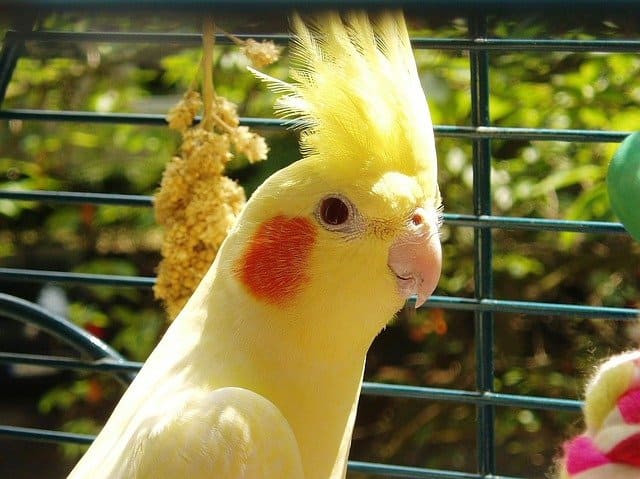
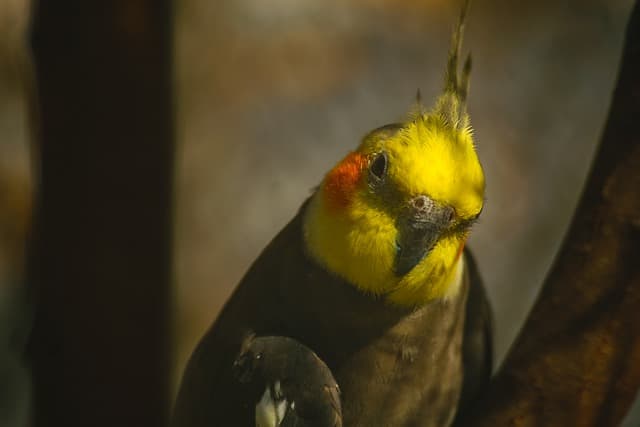
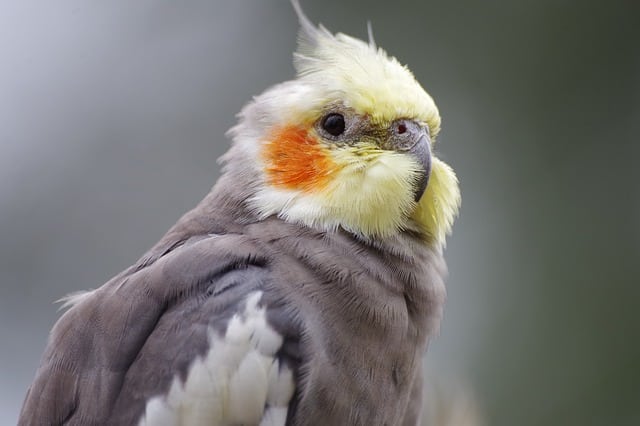
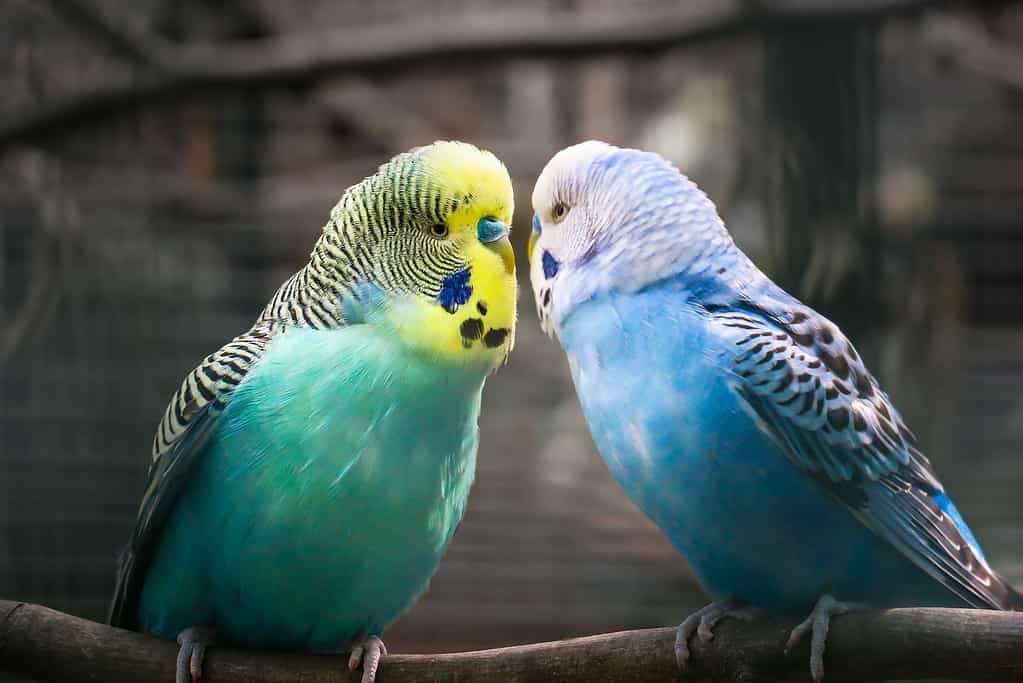
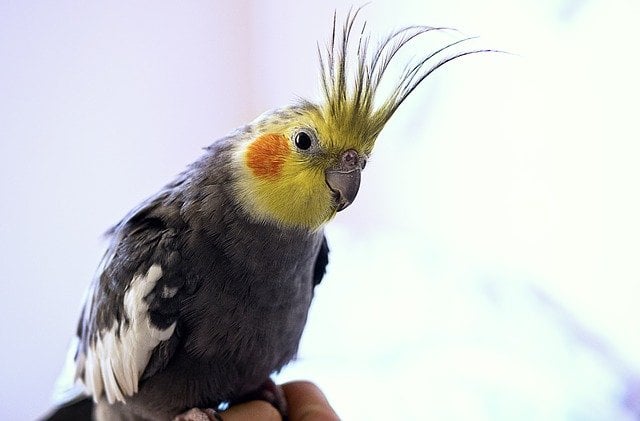
Besides the few differences we mentioned above, the only contrast between cockatiels and parakeets is their appearance. Parakeets come in a variety of sizes and colors, while cockatiels tend to be gray and yellow. 

Otherwise, both of these birds love to play, being social, and eating treats. 
Can a Cockatiel Whistle?

Some birds are vocal, and species who don’t like to say much. If you are considering a pet cockatiel, you might be wondering, can a cockatiel whistle? Below we have an answer for you and other fun tricks that you can teach your bird. 

Cockatiels can whistle, and they love to make this and other sounds. Whistling is a good sign that your bird is happy. Not every whistle a cockatiel makes sounds the same, and they are quick learners and love to mimic their humans. 

Cockatiels make so many different sounds that it may seem overwhelming at first, but soon you will know what each of those sounds means. 

It’s difficult to find anyone on Earth better at whistling than a cockatiel. When he hears music he likes, our tiny guy whistles when he hears one of us whistle first. 

When your bird whistles, it will mean that their happy most of the time. There may be an instance where your cockatiel sends out a shrill whistle to get your attention. If you hear a whistle that sounds like shrieking, you should check on your friend immediately and see what’s up. 

How do I get my cockatiel to whistle?

Teaching a cockatiel to whistle requires love, repetition, and rewards. Positive reinforcement is a great tool when training cockatiels on complicated anything. There are only a few steps to whistle training, which we’ve listed below. 

Step 1: Take your bird out of his cage and have healthy treats aside. Whistle to your bird and keep it simple at first. Once they learn one whistle to mimic, you can work on another using these same steps. 

Step 2: Continue with the same whistle until your bird repeats it back to you. Patience and repetition are required. You have to continue this process until you get the results you want. 

Step 3: When your bird does repeat the whistle back to you, be sure to give him a treat right away. For the first few times your bird whistles, you should provide a treat. 

Step 4: Schedule a few regular training sessions until whistling becomes natural. Training sessions shouldn’t last longer than fifteen minutes if you are giving treats. Cockatiel stomachs are small and can only hold so much food. 

Teaching your cockatiel shouldn’t be difficult or take very long. These little birds love to whistle. Don’t be surprised if they start before you had a chance to teach them. 

Why do cockatiels whistle?

Male cockatiels whistle to attract a mate, which is why they tend to whistle more than females. Females do whistle but not as often as the males. Whistling typically means your cockatiel is happy. They like to whistle along with some types of music. 

Cockatiels love to whistle. They do it when they look in the mirror, hear other birds call on tv or the radio, or attend to a song they like. They also want to whistle to connect with us, their humans. If you can whistle back, it’s an excellent opportunity to have a conversation on their terms. 

Whistling is a sound that you and your bird can create together, so you should spend some time teaching them the steps we listed above. While we believe all cockatiels love to whistle, it is best to teach them any new tricks when they are young. Older birds can learn to whistle, but it may take longer. 

What does a cockatiel’s screeching sound mean?

Most of the time, when your cockatiel screeches, it means that they want your attention, are hurt, or in trouble. Other reasons why your cockatiel might be screeching include the following.

  • Fear
  • Loneliness
  • Lack of nutrition
  • Boredom
  • Flock calling
  • Lack of sleep
  • Other noises bother them

When your cockatiel starts screeching, it’s crucial to check on them, but you should avoid rewarding them in any way for that sound. As we mentioned earlier, positive reinforcement is a powerful tool when training a cockatiel. Let’s create a scenario.

You cockatiel screeches to get your attention. You run to the cage and take your bird out. You pet your bird and say, “you’re pretty.” Maybe you give her a treat because you’re so glad she isn’t hurt. What do you suppose that taught your bird? 

She learned that screeching would get her attention, snuggles, and a treat. Do you think she’ll do it again? Sure she will. That’s how it works. So, if you don’t want screeching to become a habit, which we advise, then what you do is the following. 

When your cockatiel screeches, check-in with her. Make sure she isn’t hurt or in trouble, but once you know she’s okay, leave her be. You can always take her out in ten minutes, as long as she doesn’t screech again. 

The key is to not instantly reward her with attention or any other positive reinforcement after she screeches. Ten minutes later, you can take her out and give her attention if you fear she’s lonely. 

But wait until enough time has passed, so they don’t make the connection between screeching to the attention. Otherwise, you will have a bird who screams a lot and, trust us; this can be jarring at times. 

Odd noises a cockatiel makes and why?

Cockatiels make several standard noises that mean different things. Cockatiels screech when they are afraid or need something, they whistle and talk when they are happy, and they hiss when they are angry. The vocabulary of a cockatiel is distinct, so we’ve listed the typical sounds they make and what they mean. 

The vocabulary of a cockatiel.

  • Whistle: As we’ve said many times in this piece, cockatiels love to whistle, which is why they do it so often. It can mean that they are happy, enjoying music, mimicking a whistle that they heard, or trying to get your attention. 
  • Screech: Cockatiels can scream. If you aren’t expecting it, the sound can send you through the roof. They do this when they are afraid, bored, lonely, hear others talking, or want to get your attention. It may also mean they lack nutrition, so you should consult your avian vet to feed them properly if this is the case. 
  • Singing: If you listen to music with your cockatiel around, it won’t take long before you hear them sing, whistle, or make sounds that coincide with the songs. They do this to connect with us and become a part of our “flock” or when they are happy. 
  • ChitChat: This sound isn’t whistling, it isn’t screaming, but it sounds a great deal like talking. Caged birds need companionship, and they LOVE to have conversations. They also like to mimic the sounds they hear around them, which is human chatter. 
  • Hissing: When a cockatiel hisses, it means they feel threatened or angry. It could also indicate fear. 
  • Chirping: Birds chirp when they feel inquisitive or when they hear other birds. 
  • Human Words: Cockatiels can learn words like “hello” and “pretty bird” with the exact tactics we gave you above for teaching them how to whistle. Just remember, any comment you teach a cockatiel will stay in their vocabulary until they are gone. Teaching them to cuss words can damage their ability to be rehomed if that ever needed to happen. 

Cockatiels are intelligent birds who can learn tons of tricks like talking or even playing peek-a-boo. The best part about the training is you get to spend time with your cockatiel, and you both will better off for it in the long run. 

Do Baby Cockatiels Sleep A Lot?

Human babies sleep a lot, but what about birds? Do baby cockatiels sleep a lot? You are about to get your answer and many fun facts about the tiniest cockatiels for them all. 

Baby cockatiels sleep a lot. Baby mammals and birds spend more time in REM than adults. REM sleep is essential when a human is a baby for developing those later stages of learning. There is no reason to believe this is different for cockatiel babies. 

REM sleep is essential for brain development in newborns. The connections made neurally have a direct effect on the development of babies. REM sleep is a time during sleep when our neural connections pump it up, which means REM sleep bolsters advancement. 

Cockatiels are required to learn quite a bit if they want to survive in the wild, including how to sleep on one leg with one-half of their brain awake, which is an instinctual trait in birds that may develop while they are basking in that REM sleep. 

Let your baby cockatiel get all the sleep it needs but, if you feel she is sleeping too much, we recommend calling your vet because she could be ill. Avian vets train specifically to treat birds, so find one in your area for the best treatment choices. 

Do baby cockatiels sleep more than adults?

If the baby and adult cockatiel are healthy, the baby will sleep more than the adult. Baby cockatiels are developing the first eight weeks of their life and need REM sleep to make neural connections for learning like human babies. 

If your adult cockatiel is sleeping more than your baby, you may want to make sure she feels alright. There are other signs that your bird may not be feeling her best, but some can be confusing. We put a list together for you below. 

  • Puffed-up feathers. Puffiness can be a sign of serenity, but it can also mean that your bird is trying to keep warm because he isn’t feeling well. 
  • Too much sleep.
  • Excessive eating.
  • Tail-bobbing when puffed-up or breathing.
  • Poor appetite. 
  • Eyes that are almost or fully closed frequently.
  • Nose discharge or wetness. 
  • Poop sticking to the vent feathers. 
  • No energy. 
  • Lethargic.
  • Doesn’t sing or whistle. 
  • Crooked beak or toenail.
  • Blood.
  • Dull feathers.
  • Bad posture when resting. 
  • He can’t keep food down. 

If you notice any of these other signs, be sure to contact your doctor immediately. 

Where should baby cockatiels sleep? 

Baby cockatiels in the wild should sleep in the next with their parents. A caged baby should do the same if the option is available. If the parents are not there, the area should be warm for their comfort and safety. 

While humans are the most helpless of all babies, new cockatiels depend on their parents’ warmth and nurturing nature the same way many other newborns of several species do. But we are smart enough to know that nothing is perfect, and your baby cockatiel may not have her parents there for guidance. 

You will need to step in and take charge of how to keep your baby safe from dangers, especially while they sleep. Babies require a great deal of attention and delicacy, particularly those that are birds. Baby birds are some of the most fragile babies there are. 

At what age can a baby cockatiel be away from its mother?

A baby cockatiel should be with its parents for the first week at the least because they feed them around the clock. After two to three weeks, you can begin to pull them for hand feeding and then returned to their nest.  

There are many schools of thought regarding baby cockatiels and their parents. Each has its pros and cons. If you would like your baby cockatiel to get the most natural upbringing possible, we recommend not separating until they develop. 

Some breeders believe that birds raised by humans alone are different, but others feel that the more time they spend with humans, the more socialized they become pets. 

You can hand-feed a baby cockatiel after two to three weeks but, if you do, there are a lot of unique details you need to pay attention to, like the Crop. The Crop is a pouch that sits inside the esophagus—food stores in the Crop for softening and digestion. 

If the Crop is left empty, there can be severe damage to the inner lining of the crop and hinder that bird’s ability to digest food. Keeping the crop is essential and can only be empty for 24 hours one time. This point is highly vital. 

To make it more complicated, you also can’t let too much food sit in the Crop; otherwise, it can spoil and cause fungal or bacterial infections. Unless you have training and experience feeding and breeding baby cockatiels, you should keep them with their parents until they can eat independently. 

How many hours should baby cockatiels sleep?

Adult cockatiels sleep from twelve to fourteen hours every day, and baby cockatiels require more sleep than adults, so we can say that baby cockatiels should sleep AT LEAST twelve to fourteen hours a day, but they should be sleeping much more. 

Baby cockatiels require a lot of sleep because they are developing. All babies need to rest during the development period because that’s when their brain is forming, and it has a direct effect on their ability to learn. 

When can you hold a baby cockatiel?

You can hold a baby cockatiel in the first week it hatches. Cockatiels held by humans at an early age have an easier time with socialization when they become independent pets. Birds that don’t socialize with humans early can still be social. 

If you are breeding, then it’s a good idea to socialize your babies early, but you don’t want to take them away from their parents fully unless they are being abused, which can happen. If your adult is harming the chick somehow, you need to separate them and take on more responsibility. 

When do baby cockatiels eat on their own?

Baby cockatiels that naturally wean off their parents typically eat on their own by ten weeks old. It can take up to twelve weeks for some chicks, and others might wean themselves at eight weeks. 

An indication that a baby cockatiel has fully weaned when eating independently for two straight weeks. You can initiate the weaning process on your own if you like, but you will have to hand feed the baby until it is ready to eat independently. 

Cockatiel chick feeding schedule.

Below, you will find a detailed list of a chick’s age and how to schedule feedings. 

  • Hatched to 10 – 15 hours old: Do not feed your chick anything during this period. When you reach the fifteen-hour mark, you can provide your baby one drop of lukewarm water. 
  • One hour old: One drop of lukewarm water mixed with the ground, pure white cuttlebone, and pure yogurt. Repeat this step in another hour. 
  • Past 3 hours old: Give your baby a few drops of a hand-rearing diet every hour.
  • 4 – 9 days old: Give commercial, hand-rearing formula every two hours. You don’t have to feed them between midnight, and 5:00 am. 
  • 10 – 14 days old: Hand-rearing formula every three hours. No need to do it between midnight and 5:00 am. 
  • 15 – 20 days old: Hand-rearing formula every four hours. It should be thicker too. You can also give them a small bowl of water. 
  • 21 – 25 days old: Feed the formula to them two to three times daily, and be sure it is thicker than when you fed them at four days old. At this stage, you can begin to give them soaked seeds or millet blended with formula. At this stage, they will learn to find their food. 

Do Cockatiels Need Vaccinations?

We all know owning some pets requires yearly vaccinations, but what about birds? If you found your way here, you may be wondering, do cockatiels need vaccinations? The answer is below, including helpful information about the health of your little friend. 

Vaccinations are not a necessity but an option for cockatiels. You can vaccinate your cockatiel against polyomavirus, which can infect all birds. It is contagious and can spread to your other birds. 

While there is a vaccine available for cockatiels, that doesn’t mean she needs one. People choose cockatiels as a first pet because they don’t require yearly vaccinations and other treatments you’ll get when you have a cat or dog. 

Cockatiels are relatively inexpensive to keep, and one of these reasons is the low vet bills. But, if you are a person who plans on keeping more than one bird, you might consider a polyomavirus vaccination for them all because it is contagious, and you don’t want it to spread and have a breakout. 

Typically birds contract polyomavirus from direct contact with other birds. If all your birds are clean of this virus, then you should be fine. If you transport them where they hang out with other birds, you should consider getting a vaccination.  

Signs and symptoms of polyomavirus include the following. 

  • Distended abdomen
  • No appetite
  • Diarrhea
  • vomiting 
  • Excessive regurgitation
  • Weight loss
  • Dehydration
  • Depression
  • Abnormal feathers
  • Excessive urination
  • Trouble breathing
  • Blood below the skin
  • Lethargic
  • Tremors 
  • Paralysis 

Do cocktails need to go to the vet?

Yes. Your bird should have a yearly check-up to make sure everything is going well. Avian vets are the best choice for birds because their training focuses on birds and how to treat them. 

Avian vets are bird doctors, and it is always a good idea to get your bird in there yearly to check their overall well-being. Birds have a much longer lifespan than other typical household pets, so having an avian vet who is knowledgeable about the signs of sickness and aging in birds will ensure you can share a long life. 

We don’t mean any disrespect to general veterinarians and, for your cockatiel, they will do in a pinch. But it is worth the extra research and possible expenses for an avian vet, so your bird is getting the most experienced doctor in your area. 

How much is a vet visit?

A one-time visit to the avian vet can cost you anywhere from $75 to $700, depending on what you have done. Bloodwork, tests, and vaccinations are all separate fees. While you only need a yearly check-up, this can cost about the same, depending on the vet you select. 

While we would love to give you a definite price, many factors come into play when figuring out veterinary costs for your cockatiel. First, you want an avian vet, which will run you more because the practice is specialized. 

Next, what are you having done? Is it a first-time visit, and you need a complete check-up? Did your bird eat something he shouldn’t have and is now sick, or is this a yearly visit with a doctor your bird has seen for years? 

Where you live also plays a factor in the price. If your veterinary choices are limited, that can alter the price as well. A great way to find out what the cost will be is to start checking out the websites of avian vets in your area. If they don’t list their prices, give them a call and ask them to itemize the visit before you go. 

What can you expect when visiting the vet.

When you visit your avian vet for the first time, you can expect the doctor to check your bird’s throat, nasal passages, and eyes. Your cockatiel will be weighted, they will check her claws and trim them, examine her wings, and the doctor will take a listen to the heart and lungs. Finally, the vet will check the vent and crop. 

Visiting a vet for the first time can be intimidating, so we suggest that you find a vet you like before you get your cockatiel. You can research your area for avian vets, and, hopefully, you will have more than one choice.  

If you have friends or family that own birds, ask them where they take their pets. There is no better reference than a customer you know. Once you find a vet check out what their website and reviews have to say. What are they offering? 

You can go a step further and call to speak to the doctor. Our vet is happy to contact us when he is free and answer our questions. Most doctors get into the veterinary business because they love animals, so avian vets but have a thing for birds. A vet would also appreciate the extra care you put into knowing what to expect when you visit. 

How to transport your cockatiel to the vet.

First, let your cockatiel get familiar with their traveling cage a week or two before you go. You can do this with toys and repetition. When the day comes, lure them into the traveling cage with a treat and close the door. Cover the cage, secure it in place, and drive him to the doctor. 

Your cockatiel’s travel cage should be free of any loose perches or toys because, no matter how hard you try, the pen will get rattled, and you don’t want anything flying around inside your bird’s cage. 

It’s important to remember that birds can get motion sickness, so it’s essential to try and keep that cage as steady as possible. If you have company to the vet’s office, have them hold the pen on the way there. If you are riding alone, try to secure it with the seatbelt or another source like a rope or bungee cord. 

Don’t be surprised if your bird seems a little shaken up after their first vet visit. Our little guy had a visit and was in a bit of shock for a day. He ate and slept but wanted to be left alone, so we respected his wishes. But his last visit was due to illness, so it was more traumatic. 

Signs of Illness 

Birds get sick sometimes. Below are some symptoms that are concerning. 

  • Puffed-up feathers. Puffiness can be a sign of serenity, but an ill bird will puff up to keep warm.
  • Too much sleep.
  • Excessive eating.
  • They will bob the tail when puffed up or breathing.
  • Poor appetite. 
  • Eyes that are almost or entirely closed frequently.
  • You see crust or nasal discharge or beak wetness. 
  • Poop sticking to the vent feathers. 
  • No energy. 
  • Lethargic.
  • They don’t sing or whistle. 
  • The beak or toenails are crooked.
  • Blood.
  • Dull feathers.
  • They use unusual posture when sleeping. 
  • He can’t keep food down. 

There are many reasons why your cockatiel might be sick. It could be their diet, trauma, poor hygiene, genetics, or simply stress that could make your little buddy ill. You must get to know the habits and mannerisms of your cockatiel, so you can tell if something is off. 

Any little diversion in their everyday behavior should be a red flag that something isn’t right. If you notice that your bird is exhibiting any of the symptoms we’ve mentioned in this article, you shouldn’t hesitate to contact the doctor. Your vet will be able to tell if your bird is sick and help you remedy the illness. 

Birds are fragile little pets, and they don’t require as much as other pets when it comes to vaccinations and upkeep but, when they are sick, they need to be cared for right away; otherwise, they can suffer needlessly. 

Do Baby Cockatiels Sleep A Lot?

Human babies sleep a lot, but what about birds? Do baby cockatiels sleep a lot? You are about to get your answer and many fun facts about the tiniest cockatiels for them all. 

Baby cockatiels sleep a lot. Baby mammals and birds spend more time in REM than adults. REM sleep is essential when a human is a baby for developing those later stages of learning. There is no reason to believe this is different for cockatiel babies. 

REM sleep is essential for brain development in newborns. The connections made neurally have a direct effect on the development of babies. REM sleep is a time during sleep when our neural connections pump it up, which means REM sleep bolsters advancement. 

Cockatiels are required to learn quite a bit if they want to survive in the wild, including how to sleep on one leg with one-half of their brain awake, which is an instinctual trait in birds that may develop while they are basking in that REM sleep. 

Let your baby cockatiel get all the sleep it needs but, if you feel she is sleeping too much, we recommend calling your vet because she could be ill. Avian vets train specifically to treat birds, so find one in your area for the best treatment choices. 

Do baby cockatiels sleep more than adults?

If the baby and adult cockatiel are healthy, the baby will sleep more than the adult. Baby cockatiels are developing the first eight weeks of their life and need REM sleep to make neural connections for learning like human babies. 

If your adult cockatiel is sleeping more than your baby, you may want to make sure she feels alright. There are other signs that your bird may not be feeling her best, but some can be confusing. We put a list together for you below. 

  • Puffed-up feathers. Puffiness can be a sign of serenity, but it can also mean that your bird is trying to keep warm because he isn’t feeling well. 
  • Too much sleep.
  • Excessive eating.
  • Tail-bobbing when puffed-up or breathing.
  • Poor appetite. 
  • Eyes that are almost or fully closed frequently.
  • Nose discharge or wetness. 
  • Poop sticking to the vent feathers. 
  • No energy. 
  • Lethargic.
  • Doesn’t sing or whistle. 
  • Crooked beak or toenail.
  • Blood.
  • Dull feathers.
  • Bad posture when resting. 
  • He can’t keep food down. 

If you notice any of these other signs, be sure to contact your doctor immediately. 

Where should baby cockatiels sleep? 

Baby cockatiels in the wild should sleep in the next with their parents. A caged baby should do the same if the option is available. If the parents are not there, the area should be warm for their comfort and safety. 

While humans are the most helpless of all babies, new cockatiels depend on their parents’ warmth and nurturing nature the same way many other newborns of several species do. But we are smart enough to know that nothing is perfect, and your baby cockatiel may not have her parents there for guidance. 

You will need to step in and take charge of how to keep your baby safe from dangers, especially while they sleep. Babies require a great deal of attention and delicacy, particularly those that are birds. Baby birds are some of the most fragile babies there are. 

At what age can a baby cockatiel be away from its mother?

A baby cockatiel should be with its parents for the first week at the least because they feed them around the clock. After two to three weeks, you can begin to pull them for hand feeding and then returned to their nest.  

There are many schools of thought regarding baby cockatiels and their parents. Each has its pros and cons. If you would like your baby cockatiel to get the most natural upbringing possible, we recommend not separating until they develop. 

Some breeders believe that birds raised by humans alone are different, but others feel that the more time they spend with humans, the more socialized they become pets. 

You can hand-feed a baby cockatiel after two to three weeks but, if you do, there are a lot of unique details you need to pay attention to, like the Crop. The Crop is a pouch that sits inside the esophagus—food stores in the Crop for softening and digestion. 

If the Crop is left empty, there can be severe damage to the inner lining of the crop and hinder that bird’s ability to digest food. Keeping the crop is essential and can only be empty for 24 hours one time. This point is highly vital. 

To make it more complicated, you also can’t let too much food sit in the Crop; otherwise, it can spoil and cause fungal or bacterial infections. Unless you have training and experience feeding and breeding baby cockatiels, you should keep them with their parents until they can eat independently. 

How many hours should baby cockatiels sleep?

Adult cockatiels sleep from twelve to fourteen hours every day, and baby cockatiels require more sleep than adults, so we can say that baby cockatiels should sleep AT LEAST twelve to fourteen hours a day, but they should be sleeping much more. 

Baby cockatiels require a lot of sleep because they are developing. All babies need to rest during the development period because that’s when their brain is forming, and it has a direct effect on their ability to learn. 

When can you hold a baby cockatiel?

You can hold a baby cockatiel in the first week it hatches. Cockatiels held by humans at an early age have an easier time with socialization when they become independent pets. Birds that don’t socialize with humans early can still be social. 

If you are breeding, then it’s a good idea to socialize your babies early, but you don’t want to take them away from their parents fully unless they are being abused, which can happen. If your adult is harming the chick somehow, you need to separate them and take on more responsibility. 

When do baby cockatiels eat on their own?

Baby cockatiels that naturally wean off their parents typically eat on their own by ten weeks old. It can take up to twelve weeks for some chicks, and others might wean themselves at eight weeks. 

An indication that a baby cockatiel has fully weaned when eating independently for two straight weeks. You can initiate the weaning process on your own if you like, but you will have to hand feed the baby until it is ready to eat independently. 

Cockatiel chick feeding schedule.

Below, you will find a detailed list of a chick’s age and how to schedule feedings. 

  • Hatched to 10 – 15 hours old: Do not feed your chick anything during this period. When you reach the fifteen-hour mark, you can provide your baby one drop of lukewarm water. 
  • One hour old: One drop of lukewarm water mixed with the ground, pure white cuttlebone, and pure yogurt. Repeat this step in another hour. 
  • Past 3 hours old: Give your baby a few drops of a hand-rearing diet every hour.
  • 4 – 9 days old: Give commercial, hand-rearing formula every two hours. You don’t have to feed them between midnight, and 5:00 am. 
  • 10 – 14 days old: Hand-rearing formula every three hours. No need to do it between midnight and 5:00 am. 
  • 15 – 20 days old: Hand-rearing formula every four hours. It should be thicker too. You can also give them a small bowl of water. 
  • 21 – 25 days old: Feed the formula to them two to three times daily, and be sure it is thicker than when you fed them at four days old. At this stage, you can begin to give them soaked seeds or millet blended with formula. At this stage, they will learn to find their food. 

Can Cockatiels Play with Toilet Paper Rolls?

You may have seen videos where birds tear paper and cardboard and go to wondering if you could let your cockatiel play with a toilet paper roll. We’ve done some research and put it all below. We also touch on toys and things to look out for, but first, an answer to your question, can cockatiels play with toilet paper rolls?

Paper is a safe alternative to store-bought toys, but the glue that turns each piece of cardboard into a roll can prove to be unsafe for your cockatiel. Adhesives are made up of toxins that a bird shouldn’t ingest. 

Zinc is another ingredient in the glue used on toilet paper rolls, which can make your bird sick or kill her. Toxicity is a real threat to pets and, since cockatiels are so small, they are at a greater risk. The amount of zinc they ingest will have a direct correlation to how sick your pet will get. Zinc(Zn) is metal and number thirty on the Period Table of Elements. 

Many things in your home have zinc in them. Some examples are things made of metal like board game pieces, zippers, toys, and jewelry. Skin creams, shampoos, deodorants, vitamins, and some over-the-counter medication has zinc in them too. While there should be some zinc in their diet, too much can prove to be hazardous. 

The size of your pet is the deciding factor when considering how poisonous zinc can be, which is why birds the size of cockatiel are at a higher risk. 

Toilet rolls are not safe for Cockatiels? The glue is likely toxic to your pet. The paper on the roll is treated with chemicals as well. There is no guarantee that this type of paper is safe for consumption. 

For the same reasons mentioned above, giving your cockatiel toilet rolls or tissues is risky. While we warned you about the risk of ingesting zinc in our earlier passage, we haven’t mentioned paper impaction yet. 

What is paper impaction? Impaction is a situation that happens when their intestines can become blocked with what they ingested, and in this case, that would be paper.  While it rarely happens, it’s a risk I wouldn’t be willing to take with my cockatiel because there are so many more options when it comes to entertainment and toys. The ultimate choice is always yours in the end. We can only provide you with the information. 

What type of paper is safe for birds?

Paper free of bleach, toxins, dye, and other chemical treatments are somewhat safe for birds to shred. Paper impaction is a threat if your cockatiel ingests some, which is rare. Be observant when you give your bird any paper toy and double-check the materials. 

Baby cockatiels are more likely to ingest paper because they don’t know any better and will probably swallow everything that goes into their beaks. While paper impactions aren’t a common occurrence, if it were to happen, it would require surgery to save your bird, which can also be a risk. 

On top of the risk you are putting your bird into by letting him play with paper, surgery for pets can be costly. While it may be tempting to throw that toilet paper roll into their cage because you can’t afford a new toy, the result may have you paying more in the long run. It’s rare, but there is a possibility. 

Are tissues safe for cockatiels? 

Tissues like Kleenex are tempting to a bird, but they are still not 100% safe for your cockatiel to use as a toy. Makers create tissues and other products like it with humans in mind and likely contain materials that can harm your pet. 

Paper impaction, if ingested, is as equal a threat with tissues as it is with toilet rolls. When manufacturers create products for our consumption, they don’t do so with the thought that you might let your pet play with those items. 

Designers make tissues primarily from wood pulp, which is natural, but materials like softeners, lotions, perfumes, or other components can prove harmful to your pet. 

Tissues can stand up against anything, but we can bet that your bird will tear that paper up within minutes of it being in his cage. When he does that, even if you almost sure that your buddy hasn’t ingested any of the paper, you are still risking that slight chance that he might, which could cause a paper impaction in his intestine. 

What do cockatiels like to play with?

Cockatiels like to play with toys containing moving parts, wood for chewing, and ones with ladders to climb—birds like chewing toys, toys that make noise, mirrors, and toys that require foraging. 

You can make toys for your cockatiel or purchase playthings made by reputable manufacturers. When choosing toys is best to know what materials are involved so you can avoid possible danger. As you shop, keep in mind the type of things that make your bird happy. 

Is she a fan of looking at herself in the mirror? Get one made of natural materials free from paints and other toxins that might cause her to have health issues. 

Are dyed toys at the pet store safe for the cockatiel to chew?

Toys with painted surfaces are not safe for your bird. Dyed surfaces are not worth the risk since you aren’t 100% sure that dye is toxic-free. Colored toys are worth checking to make sure the materials used are not harmful if ingested. Naturally colored toys are the best option for your cockatiel. 

When it comes to toys, you can make safe options and not-so-safe choices. We put together a list of safe toys and the ones you should avoid. 

When searching for toys for your cockatiel, we suggest you stick with these safe toys.  

  • Natural fiber ropes. Cotton and hemp are good options
  • Chains made with stainless steel with welded links, free of zinc and lead
  • Vegetable-tanned leather toys
  • Rings made of safe materials that aren’t too small for your bird to get caught
  • Bells that have loose clappers (your bird could swallow and choke)
  • Cuttlebones
  • Coco-husks

Toys that are unsafe for cockatiels include the following.

  • Wood; cedar, red cherry, plywood, oak, or treated with chemicals. 
  • Nylon ropes
  • Chains coated in zinc or lead
  • Chains that have openings that can catch your cockatiel
  • Acrylic toys that can break easily
  • Chemical-tanned leather 
  • Improperly sized rings
  • Bells with clappers that are loose

Our pets are family, and it’s up to us to keep them out of danger every chance we get. Choosing suitable toys is imperative to the health of your bird. 

Is cardboard safe for cockatiels?

Just like using paper proposes an issue to birds, giving them cardboard can present the same risks. The manufacturer likely treats the cardboard with chemicals or dyes. Paper impaction is a risk with cardboard too. 

We’ve discussed the risk of giving our bird things made for humans as toys, but it’s well worth mentioning again. Papers, cardboard, and the like are a world of fun for birds because they can dive in and tear it up to their heart’s content. 

Your little buddy doesn’t know that if she swallows part of that paper or cardboard, your cockatiel is at risk of toxicity and possible internal impaction. The chances that impaction will happen are low, but the overall risk will be pretty costly if impaction does occur, and not only to your pocketbook. It could cost your bird her life.