Recent Posts

How To Teach Your Cockatiel To Go On Your Finger

One of the most satisfying moments you can have when you get a new cockatiel is when they step up on your finger. Teaching them to do this requires quite a few things, which we get into much later in this text.

For now, let’s get to the original question. How do you teach your cockatiel to go on your finger?

The Key here is repetition. When you use a few treats, and prepare for a lot patience and positive reinforcement,you and your feathery friend will be at it in no time.

The answer is below, in the steps we provided for you. But you can’t just follow them and expect your bird to jump right onto your finger. Training cockatiels takes patience, understanding, and lots of treats. 

Before You Begin

Below you will find the step required to train your cockatiel to step up on your finger. But before we start, there are a few things you need to take into consideration. So first, you should ask yourself these questions.

Is your cockatiel tame or aggressive? If it’s the latter, be prepared to be bitten when you extend your finger to your bird. Whether your cockatiel bites softly or hard, it’s essential to teach them not to bite first. 

Biting is a bad habit, and you want to break it right away. You can do this simply by saying, “no” after it bites and try again. If it continues to bite, stop the training session and give your bird alone time to calm down and try again later. The more time you spend with your cockatiel, the stronger your bond will be. 

Here are the steps to teach your cockatiel to go on your finger. 

Step 1: When you know your cockatiel is comfortable and won’t bite your finger, open the cage door. If your bird doesn’t move when your hand approaches it, that means they are ready. 

Step 2: Put a few treats in the palm of your hand and let your cockatiel eat them from your writing. Do this for a day or so. 

Step 3: After a couple of days of palm feeding, open the cage and extend two fingers horizontally. Give your cockatiel a treat if it doesn’t bite or get excited. Repeat this step several times a day for ten or fifteen minutes tops. Keep it up for a couple of days.  

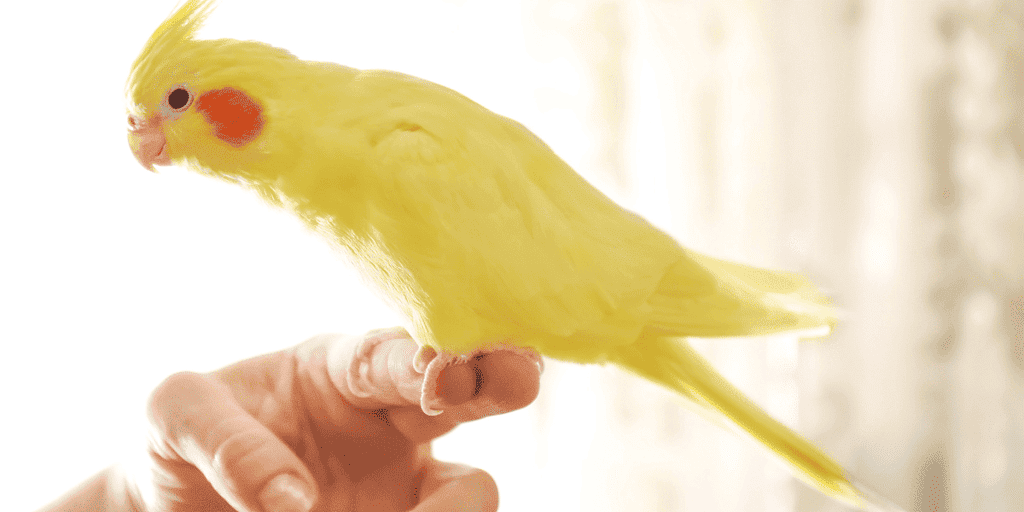
Step 4: Once your cockatiel is comfortable with your digits moving in their direction, you can put your fingers directly under their belly. This position should prompt them to put one foot on your finger, even if only to balance themselves. That first time, your bird will likely test the stability of your finger. Be sure to keep your hand steady and firm. 

When your cockatiel puts its foot on your finger, make sure to say “step up” so they associate the words with the action. Keep that trend going with every training session. Every time your bird steps up, congratulate them for a job well done and give your bird a treat. It should only take a week or two for your bird to get on your finger naturally. 

Treats

Rewarding your cockatiel with treats one of the fastest ways to get them to do what you want. While they eat pellets and seeds for their regular meals, you can add fun, tasty goodies for these times when you are teaching them to do something new. 

We put together this list of treats that are acceptable to give a cockatiel. 

  • Animal Crackers
  • Cheerios
  • Grape Nuts
  • Rice Krispies
  • Seeds
  • Shredded Wheat
  • Unsalted crackers
  • Unsalted popcorn
  • Unsalted pretzels

Here is a list of foods that are not safe for cockatiels to eat as treats or otherwise.

  • Anything moldy (blue cheese, etc.)
  • Artificial sweetener
  • Avocado
  • Bean plant
  • Brazil nuts
  • Broccoli 
  • Caffeine
  • Chocolate
  • Eggs, uncooked
  • Eggplant
  • Fat
  • Fish, uncooked
  • Fresh peanuts
  • Fruit pits or seeds
  • Garlic
  • Meat, uncooked
  • Nutmeg
  • Nuts in shells
  • Onion
  • Rhubarb 
  • Salt
  • Shellfish 
  • Spinach
  • Tomato

What Else Can You Teach A Cockatiel?

When it comes to pets, they don’t get much brighter than a cockatiel. Dogs can learn to speak, play dead, rollover, and other tricks rewarded with, you guessed it, treats! Of course, you can teach your cockatiel parlor tricks, but they can learn to do so much more. 

Step Up/Step Down

While this article covers how to get a bird to go on your finger, the term commonly used among bird lovers is step up/step down. Of course, you can use any phrase you like, but these are simple words, and by using them, you are making life easier on your bird if they have to find a new home. 

Shake or Bow Its Head

When a cockatiel bows its head, give it a treat or praise it. Try to pair the bowing with a question with the response “yes” or the actual word. When your bird shakes their head in a way that reminds you of humans saying, “no,” repeat the word to your bird or a question that you would generally answer no. 

Talk or Say Their Name

Cockatiels love to repeat sounds, and it’s this passion that will help you teach them to say things like “hello,” “pretty bird,” or their name. You need to use the exact repetition and treat method we mentioned above. First, say the word to your cockatiel in a way that that is pleasant. Then, when your bird repeats what you want, give it a treat. 

Be sure to stick with easy words or phrases with few syllables. 

Fly To You

Flying on command is quite an advanced trick but, with the same repetitive steps and rewards for a job well done, you can teach your bird to fly to you on command. First, you must gain their trust and have trained them to step up on your finger. 

Once you do, put them on a perch outside the cage and step a few inches away. Extend your finger and say, “step up.” Continue to do this until the bird flies to your finger. Be sure to have a treat in your hand for a reward. 

From this moment on, the bird will associate a treat with your hand. At this point, put the bird back on its perch and move further away. Repeat the command “step up,” and your bird should fly to you. Don’t forget that treat. 

Do you see why it’s a good reason to stick with simple and widely used commands? After this, your bird will not only get on your finger when they hear “step-up,” you can also show everyone how it flies to you on command. 

Turn Around

Cockatiels can learn other entertaining tricks like turning on command. For example, try holding a treat behind its back and say “turn around” when they do, they will get the reward and associate it with the turn and the phrase. It shouldn’t take long before they turn around every time they hear those two words. 

Wing Flexing

You will find that your cockatiel stretches and flexes its wings regularly because it feels good. When you see it doing this, praise your bird and say something like “show me your wings” and give them a treat. Are you beginning to see how influential goodies are in a training session?

What To Consider Before Training Your Cockatiel

There are a few things to take into consideration before you start teaching your cockatiel. First, how old is your bird? Younger birds are easier to educate, while older birds may take more time or have already learned unteachable habits. 

When teaching a bird to talk, it’s essential to consider what words you’ll be teaching it before you do. Some people find it funny to teach them inappropriate words or phrases, but this can cause damage to the bird in the long run. 

It could get annoying, and if something happens to you, a bird that says things people don’t want to hear generally could hinder it from being rehomed if needed. 

Other Articles that you may be interested in
How to stop a cockatiel from biting you

How Often Do Cockatiels Poop

How To Stop Your Cockatiel From Biting You

Cockatiels have several ways of communicating with their owners. When you hear your bird singing, you will get the impression that it’s happy. If your cockatiel screeches so loudly that you jump out of your seat, they’ve done their job in getting your attention. 

You have a cockatiel that is biting you. How do you get it to stop?

The best way to stop a cockatiel is with the proper training, which is completed successfully with repetition and reward. Of course, you never want to reward your bird for biting you. Otherwise, you will reinforce the behavior. However, treats are effective when paired with good behaviors, as you will see when using our training techniques to stop your cockatiel from biting you. 

Taming your Cockatiel

The first step to taming your cockatiel is by getting to the root of their aggression. There are many reasons why a bird will bite, and it’s up to us as their protectors to play detective and figure out what is going on. 

Fear, neglect, feeling threatened, and even illness could prompt your cockatiel to bite you or anyone else in your family that reaches in their cage. If you go down the list, you’ll be sure to understand better why they are acting out. 

At this point, you can get rid of any threats quickly or spend more time with your bird if you feel it’s because they’re lonely and angry with you. However, if you suspect your cockatiel doesn’t trust you, you will have to take steps to gain their confidence, ultimately taming them for handling. 

Step One

Create a non-threatening, calm environment for you and your bird to spend time together when you greet them in the morning while uncovering their cages, smile, and be sure to say, “Hello” brightly and cheerily. 

Take time every day to play with your cockatiel. If they don’t even step up onto your finger, en you will have to train them to do that once they have gained their trust.

Step Two

If, when you reach in for your cockatiel to step onto your finger, it bites you say, “No” right away but don’t do it angrily or impatiently. Cockatiels mimic the emotions surrounding them, so this will likely only prompt them to bite you again. 

Step Three

If your bird is on your finger or a perch that you happen to be holding, another way to stop your cockatiel from biting you is to cause them to lose their balance when they bite. It will startle them, and they will associate the feeling with biting and likely stop this bad habit. 

Step Four

Once you see clear signs that your cockatiel has stopped biting, you begin training them to do something else and reward them for a job well done with treats. 

Treats

One of the most effective ways to train any animal is by giving them a treat after performing the actions you are looking for. However, when it comes to the types of goodies that you can provide your cockatiel, that can vary. 

The most important thing to remember is this, when you are following out training steps that call for treats is to put a time or treat limit on your sessions because cockatiels have tiny stomachs, and you don’t want them to stuff themselves sick.  

Here is a list of treats that are acceptable to give a cockatiel. 

  • Animal Crackers
  • Cheerios
  • Grape Nuts
  • Rice Krispies
  • Seeds
  • Shredded Wheat
  • Unsalted crackers
  • Unsalted popcorn
  • Unsalted pretzels

Following is a list of foods that are not safe for cockatiels to eat as treats or otherwise.

  • Anything moldy (blue cheese, etc.)
  • Artificial sweetener
  • Avocado
  • Bean plant
  • Brazil nuts
  • Broccoli 
  • Caffeine
  • Chocolate
  • Eggs, uncooked
  • Eggplant
  • Fat
  • Fish, uncooked
  • Fresh peanuts
  • Fruit pits or seeds
  • Garlic
  • Meat, uncooked
  • Nutmeg
  • Nuts in shells
  • Onion
  • Rhubarb 
  • Salt
  • Shellfish 
  • Spinach
  • Tomato

Repetition

Another critical component to good training is repetition. Language is the most significant barrier when it comes to communicating with other species, and it seems the more you repeat something, the better your odds are at the lesson sticking. 

Young cockatiels around the age of eight to twelve weeks old are easy to train. Hand-fed cockatiels are also easy to discipline, but they must also be young. Training older cockatiels takes more time and patience than the babies. 

Using the following steps and persistence and tasty goodies, you should have no trouble teaching your bird to do many things like talk, step up, and even come when called. We’ve generalized the steps, but the rest will fall into place if you insert the trick you want to teach them. 

How To Train a Cockatiel

Step One: The first step is to get everything ready. Set up fifteen-minute intervals throughout the day, when you can, and it may be a good idea to wait until after your bird eats since you will be giving them treats.  

Step Two: Let’s use saying “hello” as an example. Say the word to your cockatiel and keep repeating it. Do so in a non-threatening way. Cockatiels prefer to be at eye level, so that’s an excellent place to position yourself or slightly above. 

If you want them to step up on your finger, put your finger in front of them and say, “step up.” Whatever you are trying to teach them will require repeating this repeatedly until they understand and do what you want. 

Step Three: When your cockatiel says, “hello” back to you, or steps upon your finger, or flies to you from across the room, or they have done what you want, give them a treat immediately. The idea is to condition them to associate the behavior with the treat. This is how Pavlov got a dog to drool in 1902 and discovered the concept we now know as classical conditioning. 

Petting

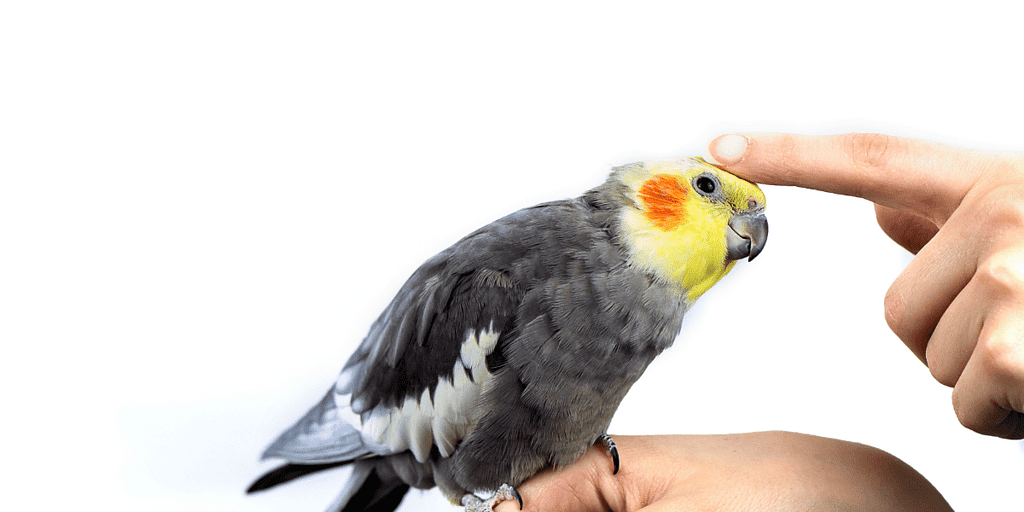
A better alternative to biting is petting, which is the act of taking your hand or finger and stroking your cockatiel’s head. If you are a new pet owner, this may take time and training. Our cockatiel has bonded with my partner, who is allowed to pet our bird all the time. Unfortunately, I didn’t create that bond with our little guy because I came into the picture late, and, at first, he wouldn’t let me pet him.

It wasn’t until I followed the steps below that he finally let me stroke his head. 

Step One: Just as we instructed above, you need to set the right environment for your bird to feel comfortable. It’s important to schedule the time too. The fifteen-minute interval rule we introduced above applies here as well. 

Step Two: Pay attention to what your bird does. If you are attempting to pet your bird, we will assume you’ve already trained your cockatiel to step up onto your finger. Take your finger and move it slowly toward the beak. 

If your bird lets you pet its beak, then you can take it a bit farther by moving up. Be careful of the eyes. Your cockatiel will let you know when you’ve gone too far. If they nip at your finger, say, “no,” and move on. Give them a treat if they let you pet them. Do not give them a treat if they bite you. 

Step Three: Continue to repeat the first two steps until you get the results your want. 

Training your cockatiel to let you pet them shouldn’t take very long because they love affection and connecting with their humans. 

Other Articles that you may be interested in
Why You Shouldn’t Get A Cockatiel

Pets are great, and there is nothing like the connection a human can make with another living being that is not of our species. The experience is like no other, and it’s easy to say it isn’t for everyone. However, animals have feelings and should be with owners who have what is needed to take care of them. 

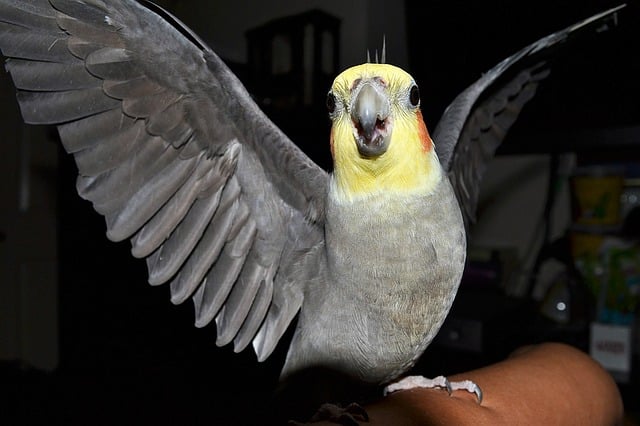
You came here wondering why you shouldn’t get a cockatiel? There are many reasons not to get this bird as a pet, and the most prominent argument I could lay before you is time. Birds are animals that need connection and interaction. They are brighter than other species and cannot be left alone for days, not that any pet should be left alone. 

There are many things you need to consider before you get a cockatiel. We’ve taken the time to list them below.

What To Know Before Getting A Cockatiel

They Have Big Egos

One of the most important things to know about cockatiels is that they like attention. So if your cockatiel feels like it isn’t getting enough attention, then they will let you know in a myriad of ways, including banging their beaks on the cage, shrieking, screaming, screeching, and other loud vocal sounds that will make you jump out of your seat, which brings us to our next point. 

They Like To Make Noise

Cockatiels are vocal birds, which is lovely if that’s something you enjoy. I love to hear my guy chirp or whistle along with some Mozart I have playing in the background while I write. But there are times when he feels he hasn’t had enough attention and sends a jarring sound flying through the air. 

They Live A Long Time

The typical life span is ten to fourteen years, but they have been known to live much longer. My bird is now eighteen years old and, while he is an older man, his energy is relatively high for a bird that age.

Longevity Is something to consider if you are contemplating purchasing a cockatiel for your kids. In ten years, your eight-year-old will be eighteen and likely off to college or out on their own. Will they be bringing that cockatiel with them? Longevity is a definite consideration before getting a cockatiel. 

They Poop Around The House 

As an excellent bird owner, you will likely let your birds be soaring around the house if they can fly. When this occurs, there is always the likelihood of feces landing around your home. The feces maintenance with cockatiels is higher than cats and dogs. 

Cockatiel Dust Gets Everywhere

Feathered creatures molt the same way furry friends shed, which primarily happens when it’s warm. Even when your bird isn’t molting, it will be grooming, which is the process of cleaning each feather with the beak until it is immaculate.  What’s left behind is a substance called cockatiel dust all over the place. This dust can trigger allergic reactions in some people.

They Require A Serious Commitment

As we’ve already pointed out, cockatiels enjoy spending time with the birds they’ve connected with and humans they have bonded with. They aren’t as time-consuming as dogs when you compare walks, but they need together time; otherwise, you will have a maladjusted bird. The reason for this need is because cockatiels are highly intelligent and feed off interaction with humans. 

Time You Need To Spend With Your Bird

When it comes to time, you should be spending a minimum of an hour each day with your bird in a one-on-one scenario. Birds should be allowed outside and time to fly around. They enjoy sitting on a perch outside of their cage. Outside time should be an hour a day as well. You can achieve these goals in intervals if you can’t do an hour in one sitting. 

Bird Proofing

Birds can fly, which can put them into precarious situations in a typical household. Making sure your home is safe and secure is the best way to know that you are ready to take on the responsibility of owning a cockatiel. Here are the best practices to birdproof your home. 

Fans

Before you let your cockatiels out of their cage for the outside time, you must turn off all fans, so they don’t get injured. 

Temperature

Cockatiels need to live in a climate between 65˚F to 80˚F, and they are temperature sensitive, so you can’t have drastic changes; otherwise, your bird could suffer. These birds are native to Australia, which sways toward the warmer side of the climate scale. 

Mess

As we’ve mentioned already, cockatiels will poop around your house at times, but the good thing is that cockatiels do most of their popping also, these they are sleeping. So as long as you are not letting your birds sleep outside of their cage, which would be a dangerous thing to do anyway, the mess isn’t that bad. 

When you compare it to digging for stools and urine blocks in a litter box, a cage is a much less maintenance. All you have to do is remove the paper, wash down the cage, and put a new piece down. 

Attention

When we mentioned that cockatiels love attention earlier, we were just touching on the gravity of what that means. Birds are known to connect on a deeper level with their owners. Some birds go into a depression if they don’t get enough attention. Also, this is the kind of love and attention this species requires. 

Cockatiels are a little more high maintenance than cats, so this is a serious point to consider before taking on a cockatiel. That said, I can attest that owning a cockatiel is well worth the extra time if you are willing to put it into a relationship with a pet. These are fascinating birds that are a delight for the whole family. 

Quiet

Peace is something you will get with a cockatiel in your home, but the bouts of quiet you will get can be few and far between. As we’ve mentioned, cockatiels love to talk, whistle, scream, squawk, bang the water dishes, and chirp so loudly at times. It’s all you can do to hear yourself think. 

As if on cue, our cockatiel is chirping loudly now, likely because he is enjoying the classical composition playing while I write this piece. Music can get a bird going, and, at times, gentle melodies can quiet a bird down. I have personally found that my bird is calm and quiet when I am meditating and practicing yoga. 

Cockatiels react to their surroundings so. If there is a great deal of chatter going on, your bird will join in gladly and win any “who can be the loudest” competitions that might be going on at the time. 

There are ample ways to quiet your cockatiel down. For example, turn down the volume on the television, don’t keep them around when you are on speakerphone or in a Zoom meeting or move them to a room where there is silence. 

One thing to remember is this. When you raise your voice or get loud, your bird will mimic your emotions. An anxious human will have an anxious cockatiel. If you want your bird to quiet down, talk to it in a whisper or take it out of its cage for some one-on-one time. 

There is a great deal to consider anytime you decide to bring an animal into your home, no matter if it’s a bird, dog, cat, or a fish. Different species require unique circumstances and birds lay somewhere in the middle when it comes to care and maintenance but high on the scale in terms of attention. 

Do Baby Cockatiels Sleep A Lot

Babies of all kinds are innocent and new to the world that surrounds them. Taking it all in is exhausting and can tucker a little one out. When it comes to cockatiels, the need for sleep and rejuvenation is just as vital as it is for human offsprings, who seem to need a lot of sleep. 

Typically you will see a baby cockatiel sleep for 90% of the day and spend the reset of the time feeding. As they get older they will tend to sleep less  between 12 and 14 hours a day. 

Read on to learn more about normal behaviors of your baby bird.

Also, check our our article – What do Cockatiels Like To Play With? for more info on other Cockatiels and must buys for your feathery pet!

Normal Behavior

How a healthy baby cockatiel acts from the moment it hatches until it matures into a fully formed cockatiel differs from day to day. We’ve tried to break it down for you so you can keep an eye out for any troublesome behaviors. 

One to Seven Days

At this age, your bird will be completely helpless. A chick will barely be able to move, and its eyes will be shut. 

Eight Days to Two Weeks 

By eight to ten days, your baby should be opening its eyes. 

Two to Four Weeks

They will begin to show colorful feathers and be able to sit up well. As they move from the third into the fourth week, the chick will have their baby feathers, but more juvenile plumage will start to grow. 

Four to Five Weeks

Since it takes seven to ten weeks for a cockatiel to grow fully, this is somewhat the middle point. This stage is when flight feathers will begin to grow on your cockatiel. When they reach this age, the term typically used for birds is fledglings, which is apropos. 

Six to Seven Weeks

At this point, your cockatiel should be fully grown and getting ready for that first significant molt. The behaviors they exhibit will be the same as other adult cockatiels, which we cover below. 

Adult Cockatiel Behaviors

Birds are individuals and have likes and dislike like anyone else. And, like humans, they are predictable as well. Here are a few standard species behaviors you can expect from your cockatiel. 

Visual Behaviors

Sleeping is an easy-to-spot behavior. A cockatiel is typically puffed up and has one leg raised when it is sleeping. 

These birds are also vain in the sense that they like to groom themselves, which means they spend a lot of time moving down their feathers from the base to the end, meticulously inspecting each one. Cockatiels groom socially as well, so they will perform this ritual on each other. 

Play is another form of behavior your cockatiel is likely to display. Whether it’s fighting a set of rings in their cage or singing to their reflection, cockatiels are intelligent birds and like to be active. 

Strutting is a behavior many males display when they see their reflection or are beginning to court. Female cockatiels are not typically interested in their reflection. 

Some cockatiels hang upside down, which means they are on the defense, and their territory is threatened. 

Banging things with their beaks is another way cockatiels like to behave and communicate to the world around them. It could be to stake a claim of their territory or as a way to get your attention. 

Cockatiels that are bored or want attention have also been know to throw things. This behavior is typical if they are feeling neglected. 

Vocal Behaviors

It’s probably not surprising to read that what a bird says is as relevant a behavior as what they do with their bodies. Cockatiels can talk, sing, whistle, hiss, and create a bevy of vocal stylings to keep you entertained for years. Here are a few familiar sounds you can expect from your cockatiel. 

  • Whistle: Cockatiels love to whistle and do it often. This sound means they are happy, enjoying music, mimicking a whistle that they heard, or trying to get your attention. 
  • Screech: Cockatiels also scream. They do this when they are afraid, bored, lonely, hear others talking, or want to get your attention. It may also mean they lack nutrition. 
  • Singing: Singing along with music is another vocal styling cockatiels can pick up when living with humans. Birds love to connect with their owners, and this is one way. It also means they are happy. 
  • ChitChat: Cockatiels like to have chatter time and love conversations. Our bird can repeat the sounds he hears, and sometimes that is human chatter. 
  • Hissing: When a cockatiel hisses, it means they feel threatened, angry, or afraid. 
  • Chirping: Cockatiels chirp when they are inquisitive. They do so a lot when they hear other birds off in the distance.  
  • Human Words: Cockatiels can learn human words. There are simple steps to teach them to say “hello” or other simple words or phrases. 

Winning Them From Their Parent

There are different schools of thought on when is a good time to separate a baby cockatiel from its parents. It’s important to remember baby birds are gentile, and the longer they stay with their parents, the better it is for their development, is what some say. Others, primarily breeders, feel it’s better to ween them off the parents early, so they are easier to train. 

Every situation is different, and we try to cover them all. If you choose to ween a baby from its parents before the typical ten-week development, you should at least wait until the first week because the babies get around the clock feeding and can die quickly. 

If you find yourself with an orphaned, abandoned, or abused baby, you can follow the feeding schedule we listed below.

It is ideal for those looking to breed if you wait to hand feed the baby cockatiel until two or three weeks old. 

Hand feeding

  • Hatched to 10 – 15 hours old: Do not feed your chick anything during this period. When you reach the fifteen-hour mark, you can provide your baby one drop of lukewarm water. 
  • One hour old: One drop of lukewarm water mixed with the ground, pure white cuttlebone, and pure yogurt. Repeat this step in another hour. 
  • Past 3 hours old: Give your baby a few drops of a hand-rearing diet every hour.
  • 4 – 9 days old: Give commercial, hand-rearing formula every two hours. You don’t have to feed them between midnight and 5:00 am. 
  • 10 – 14 days old: Hand-rearing formula every three hours. No need to do it between midnight and 5:00 am. 
  • 15 – 20 days old: Hand-rearing formula every four hours. It should be thicker too. You can also give them a small bowl of water. 
  • 21 – 25 days old: Feed the formula to them two to three times daily, and be sure it is thicker than when you fed them at four days old. At this stage, you can begin to give them soaked seeds or millet blended with formula. At this stage, they will learn to find their food. 

Adult sleeping patterns

Humans sleep lying down, as do some other mammals. Fish rest but don’t sleep as we do. Birds have their way of dealing with sleep and danger, which is a half-sleep thing that is fascinating. 

When cockatiels sleep, half of their brain is still alert to dangers like predators in the wild. Because of this unique pattern, they sleep with one leg perched and the other tucked underneath their body. Baby cockatiels sleep with both legs tucked under because they haven’t fully developed yet.  

If you find your adult bird isn’t sleeping well, contact your veterinarian for possible solutions. 

Do Cockatiels Need A Heat Lamp

Cockatiels are a species of parrot that is original from Australia. The climate is typically warm and desert-like for most of it, which gives you an idea of the type of warmth cockatiels are used to experiencing. Maybe you live somewhere cold and are wondering,

Do Adult cockatiels need a heat lamp?

On Average Cockatiels are adapted to warm temperatures and usually don’t need a heat lamp if kept in a draft-free room (65-75°F). However, a heat source such as a ceramic heat emitter or a heat lamp may be necessary if room temperature dips below 60°F.

The answer is different for babies and full-grown cockatiels. 

If you can provide warmth for your adult cockatiel in other ways, you will be much better off than getting a heat lamp. You can use a specifically made light to heat a birdcage, but some bird lovers have said this isn’t safe for their eyes or skin.

Check out what Amazon has to offer (Amazon Pet bird heat Lamp)

Do Baby cockatiels need a heat lamp?

Baby cockatiels need higher temps (90-95°F) and a heat lamp may be necessary. Monitor temp with a thermometer to prevent overheating/dehydration.

Your goal may be to breed chicks and ween them off their parents early, requiring lamps to maintain a steady temperature. Baby birds are fragile and have dramatic reactions to drastic changes in temperature. Sudden changes can result in death.

When keeping your chicks in a brooder, you will likely use lamps to maintain an internal temperature of 99.5˚F. It shouldn’t drop below 86˚F while they are developing. Once they begin to mature, you can gradually decrease the heat as they grow older. 

What is the best Best temperature for a Cockatiel

On Average Ideal temperature for cockatiels is 65-75°F (18-24°C). Consistent temperature is important for their health and comfort. Fluctuating temperatures can cause stress and increase illness risk. Provide extra heating/cooling if needed.

When it comes to climate in a home, it’s essential to keep your bird’s cage off the floor because heat rises, and they need to be kept warm. This need for heat is why we began discussing lamps in the first place. 

Another environmental need your cockatiel has is to be kept in a well-lit area free from cold drafts. I live in a geographical location that experiences all four seasons, and there is no way we would keep our bird next to an open window in the dead of the winters. 

Cockatiels are small and temperature-sensitive. Their internal structures are not equipped for anything below 65˚F as a constant, risking it a bit. Anything below could prove to be deadly since birds can suffer hypothermia like any other animal in the world. 

Extreme heat isn’t a great idea either, so be sure you keep your cockatiel clear of hot coffee, teas, or a hot bath. It’s OK to put them on a perch in the bathroom when you shower, and they love the steam. But keep them at a safe distance from the hot spray of water.  

Should I Cover My Cockatiel at night?

On Average Cockatiels are naturally social birds and typically do not need to be covered at night. However, some cockatiels may feel more secure and settle down better if they are covered, especially if they are in a new or unfamiliar environment. In this case, covering the cage with a light blanket can help the bird feel more secure and comfortable.

It is important to make sure that the covering is not too heavy, as this can interfere with air circulation and potentially cause respiratory problems. Additionally, the covering should not be too tight or restrictive, as this can prevent the bird from moving freely and can lead to feather damage.

Ultimately, whether or not to cover a cockatiel at night is a personal decision and will depend on the individual bird’s preferences and needs.

How do I keep my cockatiel warm?

Here are several ways to keep your cockatiel warm:

  1. Provide a warm environment: Keep your cockatiel’s cage in a room that is between 65°F and 75°F and is free from drafts.
  2. Use a heat source: If the room temperature is too low, you can provide a heat source such as a ceramic heat emitter or a heat lamp to keep your bird warm.
  3. Offer warm perches: Provide perches made of natural materials, such as wood or bamboo, which can retain heat and provide warmth for your bird’s feet.
  4. Offer warm baths: Offer your cockatiel warm baths, which can help increase its body temperature and promote circulation.
  5. Provide plenty of food and water: A healthy diet and access to fresh water can help boost your bird’s metabolism and keep it warm.

It is important to monitor your bird’s behavior and overall health and make adjustments as needed to ensure that it stays warm and comfortable.

How long do Baby cockatiels need a heat lamp?

As a general rule baby cockatiels need heat for the first 4-6 weeks, until they’re fully feathered. Maintain a temp. of 90-95°F. Monitor temp. closely & adjust heat source as needed for comfort & health.

If you are breeding chicks, you will want to keep the lamps on as long as necessary to maintain that temperature of 99.5˚F. If the lights are the only heat source, you may want to keep them on as the chicks mature, but we must point out some breeders have warned about keeping chicks directly under lamps. 

We suggest you speak to an experienced breeder before you jump into raising baby cockatiels. Baby birds are some of the most delicate and defenseless creatures on Earth, so you want to make sure you do it correctly the first time, so no innocent lives are lost. 

How Much Food Does a Cockatiel Need?

As a general rule a cockatiel’s food needs vary based on age, size, activity, & health. Offer a balanced diet of seeds, pellets, & fresh fruits/veggies. A healthy adult may eat 2-3 tablespoons of food daily. Consult a vet for specific recommendations.

Like everything else, there are different approaches to feeding both baby and adult cockatiels. Adults should be consuming anywhere from 1.5 to 2 tablespoons of pellets, seeds, or a mixture each day. There are plenty of fresh foods you can include and others you should avoid. We listed them below so you can give your bird a healthy variety. 

It’s important to remember that any foods that you give your bird other than pellets or seed should only consist of 20% of their diet every other day. Some people feel that all grain and natural foods are the way to go with cockatiels, while other bird owners swear by the pellets because they have all the vitamins and nutrients your pet needs every day. 

Baby cockatiels are a different situation altogether. Chicks will ween off their parents naturally by the tenth week of hatching. There are other schools of thought when it comes to weening chicks before that time. Some say babies that are hand-fed earlier by humans will be easier to tame, while others believe a baby should stay with the parents as long as possible. 

Which approach you take will be a personal choice, but there are always risks to weening them early. As we mentioned, baby cockatiels are fragile, but they can be weened early. Here is a feeding guide to help you get an idea of the correct way to ween a baby cockatiel. 

AgeFeeding ScheduleWhat to FeedNotes
0-15 hoursDo not feedNothing
1 hourOne drop of lukewarm water mixed with cuttlebone, yogurt ever hour
3 hours+A few drops of hand-rearing formula every hour
4-9 daysEvery 2 hours (except midnight-5am)Commercial hand-rearing formula
10-14 daysEvery 3 hours (except midnight-5am)Commercial hand-rearing formula
15-20 daysEvery 4 hours, thicker formulaCommercial hand-rearing formulaProvide a small bowl of water
21-25 days2-3 times daily, thicker formulaSoaked seeds, millet blended with formulaChick will start to find food on their own
It is important to consult a veterinarian for specific recommendations and to ensure that the chick is receiving proper nutrition. The feeding schedule and diet can change as the chick grows and develops, so regular monitoring and adjustment may be necessary.


As you can see, feeding a chick is quite intensive and take a great deal of time. But there are times when it is unavoidable as well. 

Other Ways To Keep Them Warm

Lamps should be a last resort for an adult cockatiel. There are plenty of other ways to keep them warm. Cover their cage at night, but never fully, so they have ample air supply. Use an air humidifier in the winter when the air gets dry. An excellent alternative to heat lamps is space heaters for that area of the room, and you won’t risk hurting their eyes and skin. 

Signs They Are Doing OK

Adult cockatiels will have healthy feathers, enjoy time with their owners, usually eat, and sleep well when they are doing okay. Babies that are growing up strong will change from a small pink thing with closed eyes to a fully feathered young adult in ten weeks. 

If you don’t have experience raising chicks, we recommend you do a great deal of research on the topic before trying. You can become a breeder as well, but try to learn from one who has been doing it for a while first. 

You may be a person who suddenly found yourself in possession of a parentless cockatiel chick. If that’s the case, you may want to find a vet or breeder near you that can help. 

How Often Do Cockatiels Poop?

Everybody poops. That’s the title of a top-rated children’s book that illustrates how we are all the same. When they wrote that book, we hope they considered all the creatures of the Earth because everyone from dogs to cats to lions and giraffes all poop. And so will your sweet little cockatiel, so be prepared, as it is a sign to if your little one is healthy or not.

Before we get into the deep end of the poop pool, let’s answer the nagging question that brought you here in the first place. How often do cockatiels poop?

Cockatiels are known to poop anywhere from eighteen to thirty times a day but mostly at night while they sleep. This is due to their quick metabolism that allows their body to digest food quickly. Normal poop will be dark with a while or beige center with a tubular appearance.

Continue on to read more about when to see a vet and what are some other signs to look on forward.

Also, check our our article – What do Cockatiels Like To Play With? for more info on other Cockatiels and must buys for your feathery pet!

Cockatiel Pool Normal Color

When a cockatiel is healthy, their feces will be dark with a white or beige center, which is their urine. Birds differ from humans in that their urine and poop all come out of their bodies at once. 

Their urine should resemble ours, which is clear, and the feces will be smooth to somewhat firm but should be tubular in appearance. There should be darker areas that are solid. If you find that their stool does not resemble the description we’ve given above, then that could be a sign of a health issue. 

When Do Cockatiels Poop the most?

While the amount of a single pooping session for a cockatiel might be small, as you have read, they defecate dozens of times during the day, so there will be a lot of poop. Cockatiels tend to do their business at night when they are sleeping, so the increase in waste when you uncover them in the morning. 

Cockatiel Sign they have Healthy Poop

Healthy bird droppings should resemble dark tubes that are multi-colored, but, in general, the appearance of their poops should be on the darker end. But there should be a bit of white or beige, which we’ve indicated earlier to be the urine. 

Consistency is also something that you need to consider when investigating your bird’s excrement for signs of health issues. Like humans, dogs, cats, and the poops of many other animal species on our planet, bird poop tends to look like a tube. It can be soft and mushy or partially solid. 

When to talk to a vet

Contact a veterinarian when the consistency, color, or anything in your cockatiel’s droppings seems strange or unusual. When it comes to your flying friends, we suggest you contact an avian vet as opposed to a general practitioner. Doctors in this field train to treat birds, which are pretty different from other animals, as their combination urine/poop illustrates. 

Signs Cockatiels are not healthy

Runny Stools

Runny poop is a strong sign that your bird is having a health issue. If you see watery droppings, a few things could be happening, but, most importantly, it’s time for you to contact that avian vet we talked about earlier. 

If you have more than one cockatiel and share a cage, it may be a good idea to separate them to find out who is the one with the runny poop. As you’ve read, cockatiels defecate often, so it shouldn’t take long to pinpoint who it is. 

There are several reasons why a bird’s poop will be runny. It could be something with their kidneys or an internal infection, so you must contact a doctor as soon as possible. 

Other possible causes for runny poop in birds include stress, surroundings, and diet are a few.

Color Changes

Black

A color change is another indicator that something might be wrong with your bird. If you see a dark brown, black, or reddish stool, it could be something the bird ate or zinc poisoning. If you put a new toy in the cage, take it out and have the excrement tested at the vet to ensure there are no issues. 

Green

Green poops could indicate Parrot Fever, which is a rare bacterial infection called Chlamydia psittaci. It’s also known as psittacosis. Humans can also catch Parrot Fever, but the instances are infrequent. Eating lettuce or other greens may cause an excess of color in their stool. 

Green poops accompanied by a yellow urine spot could indicate excessive bile in their system, which would mean a problem with their liver. In this situation, you should contact your avian vet right away to remedy the issue.  

Polyuria

If you notice your bird is expelling more liquidy poop, it could be polyuria, which happens when the bird is experiencing stress, fear, or agitation. It can be mistaken for diarrhea. Polyuria could also indicate diabetes, a hormonal imbalance, or liver or kidney issues, so it’s also an excellent time to call your vet.  

Diarrhea

If the tubular portion of your bird’s stool is foamy, looks like pudding, or full liquid, this is diarrhea, which is dangerous for cockatiels. Call your vet immediately! Your bird will quickly lose vital nutrients. 

Constipation or Lack of Excrement

If you notice that there are no droppings, the first thing to do is check their vent or behind. If there is a backup of dry poops, then you may need to seek out professional help. A way to relieve them right away is to bathe your bird. Let them soak it in warm water but never hot. Slightly above, room temperature is as high as you should go. 

Just let your bird waddle around in the soothing bath until the dried-up stool starts to break away into the water. Cockatiels aren’t too keen on people poking around back there, so don’t be surprised if you get some hissing in reaction to your help. If this type of backup becomes a regular thing, contact a vet to see if there are underlying issues. 

Birds don’t experience constipation often, but if your bird is overweight, it is a possibility. You could try some fresh fruit to loosen their stool. But if they still don’t poop, that means there could be an internal blockage, another good reason to call the vet. 

Other Possible Issues

Blood, undigested food, and a foul odor are other reasons to give your vet a call. Any of these could be an indication of a parasite, fungal or germ infection, food or digestive issues. 

There are some home remedies out there on the internet, but we feel it’s in your bird’s best interest to consult a doctor before you try to treat your bird for diarrhea or any other possible health issue your suspect. 

Baby vs. adults

While it may seem like adult cockatiels poop a lot, be prepared if you plan on getting a baby. They poop more, but if you take a few preventative steps and keep up with our tips below, cockatiel poop will barely be noticeable. These gems of pets are easy with a little bit of maintenance. 

How To Clean

Everyone can stick by a rule of thumb to give that birdcage an excellent clean and wash it down from top to bottom once a week. When you clean it, use a toxin-free soap, and be sure to rinse it thoroughly. If you already own cockatiels, you know how they love to bang their little beaks on the cage, and we don’t want them to ingest any soap. 

Remove the dirty paper and replace it with a new clean sheet. One of the best ways to keep an eye on the consistency and color of your cockatiel’s poops is to clean their cage regularly. If you have multiple birds, you may want to do it more often if you notice the poop piling up quickly.