Recent Posts

Do Bearded Dragons Need a Heat Lamp?

If you’re a bearded dragon owner, one of the first questions you may have is whether or not your pet needs a heat lamp. After all, these lovable lizards need to stay warm in order to be healthy. The truth is, while some bearded dragons may thrive with a basking light, others may actually do better without one! In this blog post, we’ll take an in-depth look at the debate surrounding the use of heat lamps for bearded dragons and discuss when—and if—it is necessary to provide your pet with extra warmth.
Do Bearded Dragons Need a Heat Lamp?

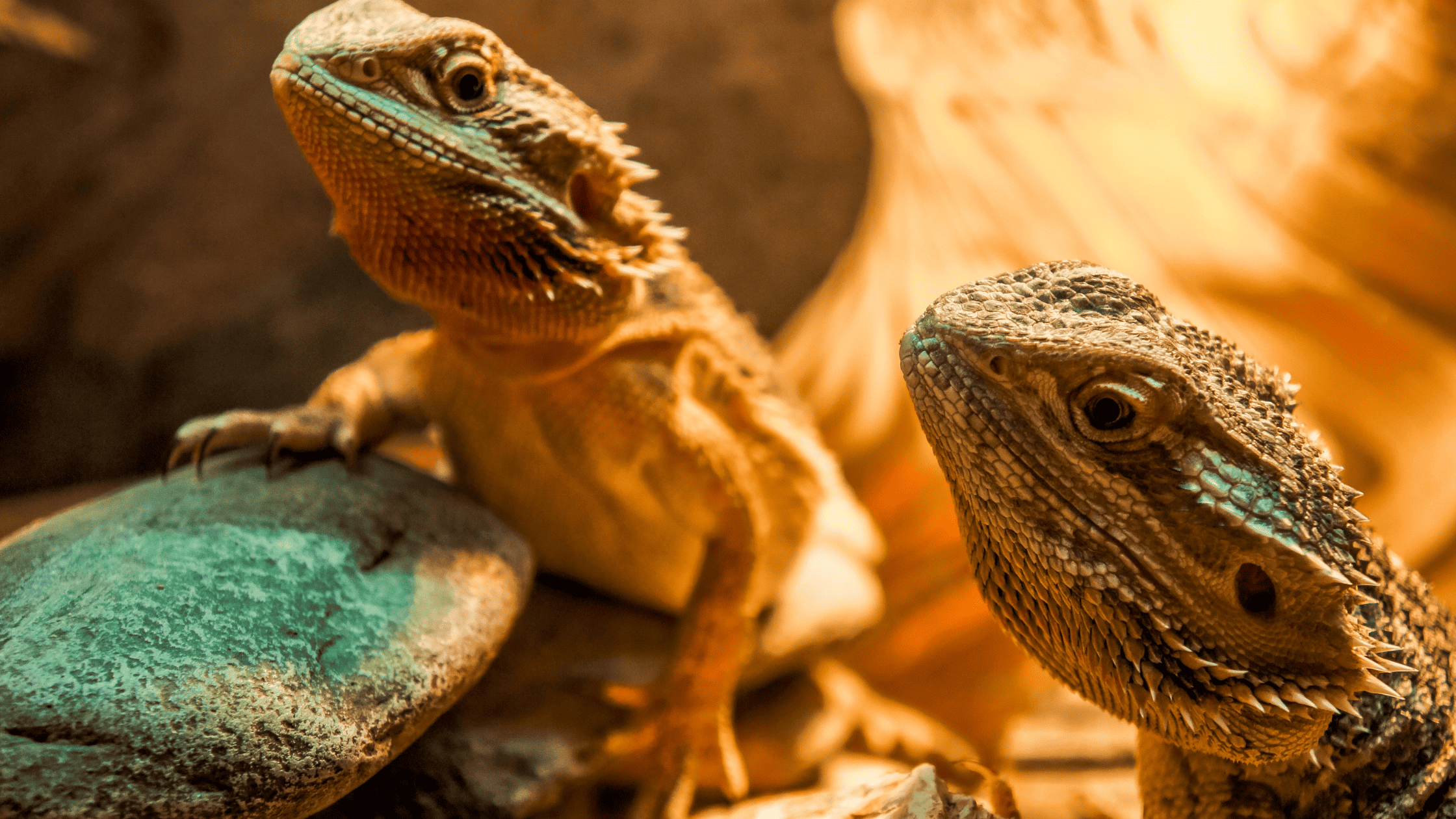
Yes, in order to keep a bearded dragon’s habitat at an optimal temperature, it is typically necessary to provide a heat source, i.e., a heat lamp. When the temperature in the vivarium drops below 76 degrees Fahrenheit, this lamp must be turned on. In most cases, bearded dragons must be kept under a heat lamp for 12 to 18 hours daily.

Beginners may find it hard to figure out how much light and heat a bearded dragon needs, which is understandable. Choosing the improper fixture might impair your bearded dragon’s health.

This article will tell you all you need to know about how much heat a bearded dragon needs.

What are Heat Lamps?

Heat lamps are light bulbs that give off both light and heat. They are available in various forms, which can be used for multiple purposes and wattages. You may get ceramic heat emitters, vapour bulbs, and heat lamps for your bearded dragon, supplying it with the necessary amount of heat to keep it healthy.

The majority of the time, heat lamps are placed in the locations where beardies like to sunbathe. During the day, here is where they will rest and either perch or lay. They do this so they may also be exposed to UV radiation and heat. Since this is how bearded dragons act in the wild, it’s only natural to let your pet bask in your home.

The wattage of the light bulb that you will put in the heat lamp will be determined by the environment in which it will be kept. If you have a terrarium that is 50 gallons in size, you will need a bulb with a lower wattage than if you have a 100-gallon terrarium. To maintain the same temperature inside the terrarium, the heater’s wattage will need to be increased.

Do Bearded Dragons Need Heat Lamp To Sleep?

Bearded Dragons need a heat lamp to keep them warm at night, but only when the temperature dips below 76 degrees Fahrenheit. During the day, it will be pretty warm, but at night, the temperature will drop to about 70-76°F.

If the temperature in the room is already this high or close to it, then you do not need to purchase any more heaters to keep your beardie warm. On the other hand, if the temperature falls below the range of 70 to 76 degrees Fahrenheit, you might want to acquire a ceramic heat emitter. 

A ceramic heater will produce no light while still providing sufficient heat to maintain the tank’s temperature at a constant level.

How to Use a Heat Lamp at Night for a Bearded Dragon?

At night, you might also require the use of a heat lamp. This is to ensure the temperature doesn’t fall below 76 degrees Fahrenheit. The great news is that you can find nighttime heat bulbs in stores, and these bulbs produce a lesser degree of light. Because of this, your bearded dragon can maintain a comfortable temperature without being bothered by any light.

Night-time heat bulbs are often sold in shades of red or dark blue and may be purchased at pet stores as well as online. These bulbs’ wattage can range from 15 to 75, depending on the specific model. Because your bearded dragon cannot see the light emitted by these bulbs, you won’t have to worry about the bearded dragon being scared by it.

If you use a lamp that simulates daylight at night, please do not do so since it will prevent your dragon from having a restful sleep.
Do Bearded Dragons Poop?

What Happens If a Beardies Gets Cold?

Many bad things can happen if you don’t keep your beardie warm. The first sign is that your pet will become tired and have a diminished appetite or none. This is because inadequate illumination for bearded dragons causes a slowdown in the bearded dragon’s metabolism.

If a bearded dragon gets too cold, they can become sluggish and stop eating. In extreme cases, dragons can get pneumonia and die. To avoid this, always make sure your dragon has a warm basking spot and the temperature in their tank does not drop below 70 degrees Fahrenheit.
In addition, make sure to provide your dragon with a cool side of their tank to create a temperature gradient. This will allow them to regulate their body temperature and stay comfortable.

What About Under Tank Heat Pads?

Bearded dragons require a steady supply of moderate heat, which may be provided with under-tank heating pads. In addition to the heat lamps, these cushions may be placed below the terrarium to provide additional warmth.

Heat pads are perfect for warming the layer underneath and giving your bearded dragon a little more warmth. Heat pads are beneficial, not just in the winter but also in other cold seasons.

If you need a heating pad under the tank, you’ll have to ensure it fits the terrarium. This is because heat pads of an insufficient size will not provide sufficient heat. You may want more than one heat pad if you have a huge terrarium. In addition, you will want an adequate number of power outlets into which the heating pads may be plugged.

Heat Tape

Heat tapes, also referred to as “heat cables,” can heat particular habitat regions. Wrapping tape over the terrarium’s larger rocks is one option. Tape is another option that might be used to cover the perch. When it is sunbathing, this will offer additional heat for your bearded dragon.

Heat tapes should only be used when needed. If you use an excessive amount of heat tape, you run the risk of the terrarium becoming overheated. This might cause burns.

Ceramic Lamp

A ceramic lamp is excellent for heating at night because it doesn’t give off light and won’t mess up your bearded dragon’s natural sleeping schedule.

You can get a lot of great ceramic lamps at great prices. Make sure it is connected to a thermostat so it will only turn on when the temperature falls below 18 degrees Celsius.

Infrared Nighttime Bulb

A bulb that emits infrared light is yet another suitable option. The illumination from this bulb won’t disturb your bearded dragon’s sleep. Just remember that a ceramic lamp will last longer than an infrared bulb.

Using Thermometers

You should use a thermometer in the warmer parts of the terrarium, such as the basking area (where beardies sleep/take naps). This will let you always keep an eye on the temperatures. You can get good results with digital thermometers, but if you like, you may also use an analogue thermometer. Whatever type you pick, make it function properly, and check the heat frequently.

Putting thermometers in different places in the terrarium lets you control the heat. Your bearded dragon will be pleased and in good health, if the temperature in its terrarium is maintained within the appropriate range.

Do Bearded Dragons Always Require Heat?

Your bearded dragon’s vivarium should have the same heat and light cycle as the wilds, where the temperature drops at night. Because of this, your bearded dragon requires a soothing effect at night. This allows you to switch off your heat light when you get ready for bed.

What Temperatures Are Unacceptable for a Bearded Dragon?

In order for a bearded dragon to effectively digest the food it eats, the temperature of its habitat should be maintained at a level between 100 and 110 degrees Fahrenheit. If the environment’s temperature is too high, the beardie will not be able to digest its food properly and will have other adverse effects on its health.
Do Bearded Dragons Pee?

Beardies are fantastic pets because they are friendly and easy to care for. They are a good choice for anyone who wants to get a lizard. Beardies are low-maintenance and inexpensive to house, with only a few basic needs. But as a new reptile owner, you must wonder, do bearded dragons pee?

Yes, Beardies pee like any other reptile. They pee in three distinct forms:

  • Liquid urine
  • Yellow urine
  • White powdery urine

The dry, desert areas of Australia are the native habitat of bearded dragons. People who live in this severe, hot, and dry part of the world don’t have many chances to get the water they need to stay alive. That means bearded dragons have to get as much water as they can.

Bearded dragons can pee, but not in the sense that humans are accustomed to thinking of it. Instead of urinating in liquid form, they excrete uric acid, a solid material resembling chalky white powder. It’s possible that your bearded dragons won’t urinate for several days. 

Whether it lives in the wild or is kept as a pet, the bearded dragon’s body is designed to keep as much hydration as possible. 

How Do Bearded Dragons Pee?

The pee of bearded dragons varies from one specie to the other. For example, beardies indigenous to Australia’s deserts have bodies adapted to the country’s scorching temperatures. So, due to hot weather, their elimination process, including urination and defecation, is different from that of other subspecies. Inexperienced bearded dragon owners are often perplexed or alarmed by their pet’s inability to urinate in a traditional liquid form.

Liquid Urine

Bearded dragons are adapted to the desert’s harsh temperatures. So, even a small quantity of water expelled from the lizard’s body might create a water imbalance.

As a result, it may be quite upsetting to watch your beardies pee in liquid consistency. Remember that certain bearded dragons urinate in a liquid state, so you don’t need to be very concerned about this.

Eating a lot of veggies can also cause this; thus, a faecal test will be helpful in diagnosing the problem. However, there is also the possibility of an underlying cause; for this reason, it would be prudent to see your veterinary to acquire an expert opinion on the matter.

Yellow Urine

Bearded dragon pee can occasionally be a bit yellow, but this is normal and should not cause concern. However, if your reptile’s urine is consistently yellow, it may indicate that they are not getting enough water. 

Yellowing, on the other hand, may also indicate that your reptile is getting an excessive amount of calcium in its food. The most important thing to do is to examine the food you provide to your pet and check to see that it does not include excessive calcium. If this is the case, you should switch to a diet with less calcium.

White Powdery Urine

Some beardies have liquid pee (as discussed above), but the pee of the typical pet dragon is a white powder commonly known as urate.

If you see that your beardie is urinating a white powdery substance. This is perfectly typical behaviour for bearded dragons.

Bearded Dragon Dehydration Symptoms

When you realize that your bearded dragon only has to urinate once or twice a week, you’ll feel much better. The most serious health risk is dehydration, which is not caused by a lack of urine in and of itself; instead, the problem is that there is not enough urine. But that doesn’t mean your bearded dragon can’t become dehydrated.

Some of the warning signs of dehydration include the following:

  • Sunken eyes
  • Lethargy
  • Wrinkles skin
  • Consistent yellow pee
  • Sudden lack of appetite
  • Harder pee than usual

When a bearded dragon is sick or injured, it is extremely critical to take immediate action if he is dehydrated. A sick bearded dragon can have trouble swallowing water or be unable to do so at all. This results in severe dehydration, which, if left untreated, can be deadly.

You may assist your bearded dragon in getting back on track with his hydration by adding additional water to his tank or feeding him water using an eye dropper or needle-free syringe. These options will provide your bearded dragon with adequate hydration.

You may also speed up the process of hydrating your bearded dragon by giving it a warm bath. In addition, you may moisten your bearded dragon’s snout with water.

How Often Can a Bearded Dragon Pee?

The bearded dragon doesn’t pee very often. This is probably because their elimination system operates so that it tries to retain as much moisture as possible to prevent dehydration.

The following are some of the behaviours that a bearded dragon owner might observe from their pet:

  • Bearded dragons younger than four months old normally pee between one and three times daily.
  • Bearded dragons a little bit older, or “teens,” often only pee once per day between the ages of 4 and 18 months.
  • Bearded dragons that have reached adulthood will only defecate two to four times in a single week.

It is safe to say that the fact that you only see your bearded dragon pee once per week is nothing to worry about. Additionally, it is usual for an adult bearded dragon to defecate regularly.

Remember that every bearded dragon is unique. Even while age is the most essential component in determining urine frequency, it is not the only variable that impacts the length of time between voiding. The frequency of your bearded dragon’s peeing can be affected by various factors, including its nutrition, stress level, and the level of heat and light in its environment. For example, if there is an excessive amount of heat inside the enclosure, this might result in an excessive amount of moisture evaporation.

Does Stress Affect the Urination of Bearded Dragons?

Stress may also affect the peeing habit or shedding of the beardies. Bearded dragons are susceptible to experiencing stress due to a wide variety of circumstances.

Even a slight shift in the environment in which they live might potentially cause them to worry. Bearded dragons will, in most situations, need some adjustment time to adjust to their new living arrangements.

Temperatures that are either too low or too high can be stressful. It’s of the utmost importance to keep a close eye on the temperature of the habitat in order to prevent any health problems from occurring to the bearded dragons.

Noise is another potential source of stress for bearded dragons. Therefore, ensure that there is as little noise as possible so that your bearded dragons may continue to feel comfortable in their home.

Does Bearded Dragon Urine Consistency Matter?

In addition to the color of the urine, you should pay attention to the consistency of the urine as well. The healthy and typical urine consistency is that it is light. If the urine of your bearded dragon is thick, this might be another indication that they are becoming dehydrated.

You might try giving your bearded dragons a warm bath if the problem still persists. This will assist them in rehydrating themselves. Carry out this task regularly or as required to help your bearded dragons regain the appropriate hydration level.

How Do Bearded Dragons Sleep?

Bearded dragons are cute, gentle, and fascinating reptiles. They do some strange and sweet things. The owners love these behaviours and qualities. Particularly in the case where the owner is aware of the significance of these actions. But how do beardies sleep? This is a question that many new bearded dragon owners ask, especially when they see their new pets sleeping upright.

Let’s discuss how bearded dragons sleep.

A beardie is a diurnal species like humans. In nature, they are awake during the day and sleep at night. Bearded dragons have several peculiar sleeping patterns, some of which are charming, but all of them are perfectly healthy. Knowing how your reptile sleeps will help you care for it at its most vulnerable period.

This page will teach you how bearded dragons sleep, as well as where they sleep, how often they sleep, and for how long they sleep.

How Do Bearded Dragons Sleep?

Bearded Dragons sleep in the dark, on their bellies, like us. They can get into positions that we may find strange for several reasons. It can also signify an energy deficiency from inadequate meals, low ambient temperatures owing to the season or a bad heat lamp, or low nocturnal temperatures for the same reason.

Bearded dragons are renowned for their peculiar sleeping habits. These reptiles will frequently sleep on their bellies and in a variety of other postures as well. People have seen these animals sleep standing up in the wild, usually against trees or stems. Bearded dragons kept as pets also fall asleep while leaning against the walls of their cage or other things in their living space.

Covered in Sand

Bearded Dragons bury themselves in the sand before entering a sleeping state. In most cases, this is an entirely normal pattern of behaviour. The vast majority of Beardies occasionally engage in this behaviour, while some do it often.

Very little light should penetrate the tank at night, and you should maintain perfect temperatures inside the tank. Make sure your Beardie isn’t hiding from a dominating tank mate. If every one of those conditions is met, there is no cause for alarm.

Change of Colour

Bearded dragons typically undergo a change in colouration when they are sleeping. This behaviour is a response to the temperature conditions that exist within its cage. They naturally lighten their skin, so it seems pale when they have to cool off, and they darken it to appear darker when they want more warmth.

Bearded dragons often turn completely white or very pale as they sleep. This will help it maintain a more comfortable temperature while resting, allowing it to receive some much-needed relaxation.

Slow Breathing

When sleeping, a bearded dragon may slow down their metabolism and breathe much slower. It may look like they’re not breathing at all when they’re fast asleep. It might be a typical sleeping breathing pattern or a sign of a problem. Check on your bearded dragon carefully and ensure everything is well with it.

Brumation

Some bearded dragons sleep for a while, which is called brumation. This time period can last anywhere from a few days to a few months, and it often takes place in the latter part of fall and into the winter months.

Bearded dragons brumate when nocturnal temperatures are 60 to 70°F. A bearded dragon’s metabolism and respiratory rate drop significantly during brumation. Their respiration may gradually slow down, and they appear to have stopped breathing altogether.

Burying Themselves

It’s possible that right before it goes to sleep, your bearded dragon will begin to wrap itself in the fine substrate in its enclosure. When the substrate is sand, this phenomenon is seen most frequently. If you learn that your bearded dragon engages in this behaviour, you shouldn’t stress out.

How Do Bearded Dragons Sleep?

When Do Bearded Dragons Sleep?

Bearded dragons, like us, are diurnal, meaning they sleep at night and are awake throughout the day. In their native habitat, they wake up with the sun and sleep when it’s dark. This implies that your beardie should be asleep when you are.

On the other hand, most bearded dragons need more sleep than you. Bearded dragons usually get between 8 and 12 hours of sleep each day. Bearded dragons are nocturnal creatures requiring complete darkness to rest; therefore, their enclosure should be as dark as possible during their designated nap time.

Where Does A Beardie Sleep?

Bearded dragons sleep in different ways and positions depending on where they sleep. Therefore, you may be interested in learning about the best bed for you and your pet.

Bearded dragons always rest in a shady areas when living in their natural habitat. Dens, holes in rocks, fallen logs, loads, holes or hollows in trees, etc., are all excellent examples.

On the other hand, in captivity, bearded dragons preferred to live in cages or vivariums made by humans.

So, be careful when you choose and put up your pet’s shelter. Maintain a warm environment inside the cage while preventing disturbances from entering. In addition to that, it is vital to have specific hiding spots.

Do Bearded Dragons Sleep After Eating?

Bearded Dragons need sunlight to aid in their diet’s digestion. If they did not have the opportunity to bask in the sun, it would be impossible for them to digest their food.

Your Dragon might get sick if you give it its final meal before bedtime and turn out the lights. Bearded Dragons might suffer from a wide range of health issues.

Impaction is one example of such a problem. This happens when food gets stuck in your Dragon’s intestines because it isn’t digesting well, causing it to be constipated.

This could cause Bearded Dragons a lot of pain, irritation, and a loss of appetite. In addition to this, because they are unable to digest food, they will have a nutrient deficiency, which might lead to potential health problems.

Why Do Bearded Dragons Sleep So Long?

Beardies need significant sleep to maintain their health and develop normally. Since wild bearded dragons follow the sun’s natural cycle, captive bearded dragons need to adhere to a regular “bedtime routine.” This is a biological process taken in by most animals, including humans.

Furthermore, this assists your bearded dragon in maintaining an appropriate body temperature when it is outside. When it’s cooler at night, they sleep, and when it’s warmer during the day, they sunbathe so that they have more energy to devote to tasks like finding food.

How Often Do Bearded Dragons Shed?

f you own a bearded dragon, you may have noticed that your pet sheds their skin from time to time. But how often does this happen? Is it normal for them to shed their skin frequently? In this blog post, we’ll explore the answer to these questions and more, so you can understand what’s going on with your beloved pet! We’ll also discuss how to help them through the shedding process and what signs to look out for if something is wrong. So keep reading to find out everything you need to know about your bearded dragon’s shedding habits!

What Can Bearded Dragons Eat?

During their first six months, Beardies shed their skin usually once a week. Between the ages of six months and twelve months, Bearded Dragons‘ shedding may slow down from once per week to about twice a month. As they get older, they shed less because they don’t need to develop anymore.

This article will describe Bearded Dragon shedding, so you understand what to expect. 

What Is Bearding Dragon Shedding?

The process of getting rid of old skin cells and replacing them with new ones is called “shedding.” Approximately once every two weeks, this takes place in reptiles. When a beardie loses its skin, it does not often experience discomfort or suffering. But if your pet gets too frustrated during this time, he might feel some pain.

If you observe that your beardie is behaving especially lethargic or exhausted, you must take him to the veterinarian as soon as possible. Your vet can look at your bearded dragons and tell if they need medical care.

Why Do Beardies Shed Their Skin?

Bearded dragons undergo shedding because their skin is rigid and lacks elasticity. As they develop, their skin must be shed. Bearded dragons, like other reptiles, experience ecdysis, Greek for “put off” or shedding. Small, hard plates called scales or scutes cover the epidermis, the top layer of a reptile’s skin. These scales defend the animal from potential predators as well as the environment.

Proteins called alpha and beta keratin is used to construct the scales. The process of shedding begins at this point when the new scales begin to develop, and the old, scaled skin begins to shed off.

The shedding process might vary greatly from species to species. For example, snakes usually shed their skin all at once, leaving behind a copy of themselves. On the other hand, bearded dragons shed in distinct areas with flakes of varied sizes. In the wild, shedding also aids in the elimination of parasites like ticks and mites.

The majority of beardies will be able to successfully shed their skin without any problems. However, it is still suggested that you keep a careful check on them as they go through this. It’ll also ensure that all of their skin has been lost. Your bearded dragon might develop health problems, such as tail rot if it repeatedly sheds its skin in an inadequate manner.

How Often Do Bearded Dragons Shed ad different ages?

Changes in hormones cause shedding, and it is different for each beardie. Compared to adult dragons, young dragons less than a year old shed their skin much more often. This is because bearded dragon babies grow up so fast.

Similarly, young dragons often shed their skin many times throughout the first year of their lives. Until they’re over a year old, they shed every 6-8 weeks. As a result, as they reach maturity, when the rate of their overall body growth begins to slow down, the rate at which they shed their skin also begins to decrease.

The shedding process is usually triggered by specific situations or behaviors in bearded dragons that have reached adulthood. Beardies that have reached adulthood may shed their skins many times throughout the course of a single year, but more often than not, they will do so in fragments.

How Do Bearded Dragons Shed?

Bearded dragons go through a number of developmental phases before reaching their adult form when they shed. In the beginning, the juvenile bearded dragon will begin to develop hair on his neck and face. After these hairs develop, the bearded dragon’s whiskers will lengthen.

The thickness of these whiskers increases until they reach their entire length. At this stage in life, the beardie has developed into an adult. The bearded dragon will continue to mature into a full-sized adult throughout this stage of development.

After three years, it becomes sexually mature. After reaching sexual maturity, the bearded dragon will no longer undergo any further development. 

What are Signs of Bearded Dragon Shedding?

If you own a bearded dragon and are curious about why it is shedding, the following are some potential reasons:

Diet Changes

Your bearded dragon might also be shedding because its diet has changed. It’s possible that your bearded dragon can develop stomach issues if you make too many abrupt changes to its food.

Illness

When your bearded dragon is sick, it may lose weight faster than it normally would.

Injury  

Your bearded dragon may lose its skin more regularly due to the excessive blood loss it has experienced.

Aging

Bearded dragons that are older tend to lose their skin more frequently than younger bearded dragons because their bodies develop fewer follicles.

Stress

Stress can sometimes lead animals to lose their appetite, which might result in their putting on additional weight. This could make your bearded dragon look thinner than usual.

Parasites

Certain parasites, such as mites, may also cause excessive shedding.

Hormonal Imbalance

The hormone estrogen is involved in the process of controlling the growth of facial hair. If your bearded dragon is afflicted with a hormonal imbalance, it is possible that he may struggle to generate an adequate amount of testosterone. This deficiency in testosterone causes an increase in the amount of shedding.

Sexually Matured

An animal’s body that has reached sexual maturity will create fewer sperm and egg cells as a result. The result of this is that the males become sterile, and the females stop ovulating, which causes the loss of their skin.

Breeding Season

It is normal for male bearded dragons to shed their shedding scales during the mating season. On the other hand, not every species displays this behavior.

Reproduction

In order to mate with a female bearded dragon, a male bearded dragon must first complete the shedding process. 

Most Common Shedding Period For Bearded Dragons

Bearded dragons can either partially or completely shed their skin, giving them the flexibility to do so. Bearded dragons that only shed in parts will do so at their own pace. Some may lose their tails first, while others will lose them last. At first, it’s up to them entirely, and each one will be unique.

Juveniles

Bearded dragons that are still juveniles will shed their skin more frequently than adults that have reached full maturity. The only reason for this is that they are still getting bigger. Because the top layer of their skin is so thin and fragile, their bodies grow too large for their skin because the top layer is so delicate.

Beardies lose their skin once a month during the first five months of their existence if given the right conditions. Individuals exposed to improper environmental circumstances may shed more or less than they should.

Mature Adults

Bearded dragons will lose all of their skin once or twice a year when fully grown. They don’t shed as much as young dragons since their size isn’t changing as quickly. They may even do a partial shedding once every several months each year, seemingly unfazed by the procedure.

After Brumation

All reptiles go through a phase called brumation, similar to hibernation and occur throughout winter. Bearded dragons tend to lose their skin extremely quickly once the brumation stage has ended, which is something that happens very frequently. Beardies do not need to shed their skin when they are brumating since they fall into a state of inactivity during this time. During this time, it will eat less and preserve energy. However, soon after that, they might not have shed their coat for three or even four months, which means that the next shed will be long overdue. In the first several weeks after brumating, they may do this.

How to Help Your Bearded Dragon With Its Shedding?

If you wish to make sure that your bearded dragon is as comfortable as possible while he is recovering from its shedding, use the following strategies:

  • Give him a sunny location to bask. To ensure that your bearded dragon receives adequate amounts of sunlight, you should keep it close to a window.
  • Provide proper ventilation. Take precautions to prevent your beardie from being overheated.
  • Ensure that it has access to clean air. You shouldn’t keep your bearded dragon inside for extended periods.
  • Avoid overfeeding. Animals that are fed excessively will have diarrhea, which will result in loose feces. There are a lot of bacteria in these stools, which could make your beardie sick.
  • Clean up the poop often. If you come across any feces, remove them as soon as possible.
  • Resist the use of strong chemicals. There are several cleaning chemicals that should not be used around reptiles. Instead, make use of natural cleaning solutions. 
  • Your bearded dragon should never be given raw meat to eat. Reptiles can get very sick from eating raw meat. Always ensure that your pet’s food is correctly prepared.
  • You must never force your bearded dragon to eat. Give him the option to choose whether or not he wants to consume anything.
  • You should only give it food once a day. Instead, you might want to try feeding them twice daily.
  • Keep a tight eye on your bearded dragon at all times. If you see anything odd, call your vet.
How Often Do Bearded Dragons Shed?

How Does Your Bearded Dragon Act Differently When It Sheds?

While there shouldn’t be any major shifts in behaviour, there are a few unusual ones that you should keep an eye out for. These may suggest your beardie will shed (especially if they’re older).

Their activity level could slow down, and they might even start eating less food. Even if your beardie is used to being handled, they may become less willing to do so. This is because they experience discomfort whenever they are handled or gripped.

When Can You Hold A Bearded Dragon While Shedding?

When our loved ones are going through hard times or aren’t feeling well, it’s only natural that we want to be with them. In the same vein, because we are aware that the process of shedding may be difficult, painful, and inconvenient for our bearded dragons, every beardie owner wants to cuddle and pat his or her bearded dragon in order to express their love for their pet and ensure that it is comfortable. During the shedding process, the most helpful thing you can do for your buddy is to give him space and try to avoid cuddling him as much as possible. But there are instances when you have to hold your bearded dragons.

  • During an emergency
  • Misting & bathing
  • While Providing Skin massage
  • For feeding them
  • To clean the enclosure

Even if you can hold your beardie in the above situations, be gentle and hold it for as short a time as possible.

What To Consider When Holding A bearded Dragon While Shedding?

  • When handling a bearded dragon, the most important thing to remember is to be gentle and not hold him too tightly. This is because the areas of the body where the skin is just being shed are painful, and those areas may also be slightly inflamed. This is especially important when the bearded dragon is shedding.
  • Do not hold or handle your bearded buddy for an extended period. Long-term handling can upset a bearded dragon, causing him to hiss and huff, indicating he wishes to be left alone. Additionally, it will become terrified of you and make every effort to avoid you in the future. It will make handling much more challenging, particularly when handling must be avoided.
  • If your bearded dragon displays hostility or aggressiveness against you, it may attempt to avoid you, run away, or hide; when you visit its habitat, you should never attempt to handle him.
  • The last and most important thing is to be careful not to pull off its skin. Many inexperienced pet owners mistakenly believe they may assist their bearded buddy in shedding its skin. Continuing to do this will just make his suffering worse, and it might lead to other difficulties. Since it’s a natural occurrence, the best thing to do is nothing and allow it to happen on its own.

Do Bearded Dragons Change Colour When They Shed?

Bearded dragons usually lose their skin many times within the course of a single year. This can take place either immediately before they molt or instantly after they have completed the process. In most cases, a bearded dragon will lighten in colour throughout shedding. This is because the new skin is thinner and more permeable than the old skin.

Do Bearded Dragons Eat the Skin That They Shed?

Bearded dragons have a unique manner of shedding. This behavior is utilized to ward off potential predators, obtain calcium, and recycle nutrients. The shed skin of a bearded dragon may be found all over the area once the dragon has shed it. This can occur everywhere, such as on land, in water, or even in the branches of trees.

In fact, old skin is full of nutrients. Some of these nutrients help the bearded dragon grow new skin, while others help it digest its food. In addition, the dragon disperses its old skin to protect itself from being trodden on or consumed by its enemies.

What to Do if the Bearded Dragon Isn’t Eating When Shedding?

Bearded dragon owners have dealt with this problem many times. In fact, many reptile species get unhappy before or during shedding. Because of this, they might stop eating, try hiding, or become less active. In most cases, this only lasts for a few days. It is almost always the cause of shedding, whether it is already taking place or is about to start. Examine your bearded dragon in great detail, of course. And if no shedding occurs, set up a visit with a veterinarian as soon as possible.

It may be more challenging for a bearded dragon that is still young or a baby to stop eating. In any case, they don’t shed much within their first year because of their disposition and belief that they need to eat to get bigger. If it does occur, it will only last for one or two days.

Why Is the Bearded Dragon Not Losing Its Shed?

You shouldn’t be too concerned about an adult pet. They will shed their skin at the appropriate time if you provide sufficient UV illumination, the appropriate heat gradient, adequate hydration, and nutritious food. 

If your pet is this age and hasn’t shed any skin, you might want to take them to the doctor. Your bearded dragon won’t be able to go through this procedure without appropriate heat, light, moisture, vitamins, and food. Although everything appears in order, you should still schedule a visit with your veterinarian.

Are Bearded Dragons Good for Beginners?

When you’ve never had a reptile as a pet before, it’s natural to be anxious about the likelihood of caring for one. Everyone understands how to care for pets, but caring for reptiles is an entirely different issue. Before you get an animal, you should consider whether it might work well for you. So, do bearded dragons make good pets for beginners?

Bearded dragons are good pets for families because they are calm and friendly. They have specific dietary needs and must be kept in a suitable environment.  These animals make great pets if you can give proper environment. This article explains why bearded dragons are wonderful pets for beginners.

Are Bearded Dragons Good Pets for Beginners?

Bearded dragons are great for people who have never had a reptile before because they are so calm. Training them is a simple process that only requires the appropriate procedures. They are pretty good at becoming used to their environment. Because of their tiny size, providing proper care for them is not difficult.

The following is a list of the characteristics that make bearded dragons an appropriate pet for beginners.

Behaviour

The Bearded Dragon is a one-of-a-kind lizard species known for its distinct character. They’re great for beginners as a first pet because they’re quiet and slow-moving. They’re quiet and simple to handle.

Beardies also like to get your attention by running up and down the glass. They will also form a line when it is time for supper and look at you the entire time if food is served later than expected.

The creatures are friendly, and if they are handled appropriately, they are receptive to human interaction. You can keep the animals together when they are young, but you will need to closely check them to ensure they don’t hurt each other.

Clean Animals

Bearded dragons are naturally neat and clean. They like to keep their habitat clean, so you will only find their poop in a small corner instead of all over it. To avoid being dirty, they will go so far as to avoid having their faeces come into contact with them at all costs.

Every youngster should know that washing their hands before and after handling pets is crucial. You are responsible for keeping the cage clean as a parent until your youngster is old enough to do so independently. 

Intelligence

When people look for a pet, many don’t realize that these lizards are very smart. They can unmistakably identify their owners and build a deep bond with them over time.

They can also pick up new information by seeing how bearded dragons act in different cages and gaining multiple insights. Bearded dragons can even be taught tricks! You can train these creatures to come when they are called, get ready for food and drink, and even walk on a leash if you are consistent in your training and take the appropriate approach.

Show Affection

Bearded dragons may not demonstrate their love for their owners, but they are certainly capable of showing expressions of affection for those who care for them. Bearded dragons are great pets because reptiles can be kind and affectionate.

Bearded dragons enjoy the company of humans, and when they are removed from their terrariums, it is not unusual for them to climb up their owners’ necks or into their chests to seek warmth. 

Developing this relationship with your lizard might take some time, but the effort is well worth it. Allow your beardie some time to become used to its new surroundings and you.

Simple to Provide Food

Bearded dragons, as adults, only consume food once per day, but younger beardies consume food twice each day on average.

Bearded baby dragons consume food three times a day on average. Since they consume both plants and animals, bearded dragons are considered omnivores within the animal kingdom.

Crickets, spiders, mealworms, earthworms, grasshoppers, caterpillars, silkworms, and slugs are some of the live foods that bearded dragons like eating. It is always entertaining for children to watch other people eat, particularly when chasing after cockroaches and bugs.

Bond with Humans

When a bearded dragon becomes devoted to its owner, it will cuddle up to them and show them affection. They will rush about in all directions to grab their attention and show that they are lively. When you take them up, they will cuddle up to your chest or neck and remain in that position for some time.

It has been shown that taking them on walks strengthens their connection to their human companions. Kids love to show off their pets to one another, thus providing them with a quality leash that allows them to easily take their bearded dragon with them when they leave the house will not only make them happy but also give their owner a sense of renewal.

Good Life Expectancy

Bearded dragons are also great pets because they live for a long time. You may be able to keep these small animals for a considerable time if you care for them properly.

They may live anywhere between 8 and 15 years! This means you will have more time to spend together bonding, playing, and generally having a good time.

Entertaining

The fact that bearded dragons may be highly enjoyable to watch may come as a complete surprise to you. Your beardie may rush back and forth inside its terrarium to get your attention. It will eventually figure out when dinner is, and if you’re going to be a little bit late, it will let you know!

Beardies like to get out of their enclosures and look around, too. Make sure to give your lizard plenty of opportunities to get some fresh air and exercise by taking regular walks around the room, the yard, or even outside the house. It’s always fun to watch these little creatures explore.

Home Friendly Animals

Beardies are wonderful pets that are easy to keep at home. They don’t get too big, only 18 to 24 inches long.

The lighting and temperature controls for the enclosed tank should be adjusted appropriately. Bearded dragons are inexpensive pets, and the tank they live in won’t cost you much, either.

They could live in both indoor and outdoor homes. They can live and play comfortably on a lawn or in a living room.

Are Bearded Dragons Good for Beginners?

Are Bearded Dragons a Good Pet for Kids?

Bearded dragons make wonderful pets for youngsters. With time, children will be able to understand how to deal with them and form a close attachment with them.

They are simple to care for, but on a consistent basis, they need to be fed, attended to, and maintained. Kids may learn to take care of a pet and develop a feeling of responsibility while handling a bearded dragon, a low-risk pet option.

Bearded dragons thrive on regularity, so providing care for one may help them understand how to manage their time effectively. Your bearded dragon’s habitat has to be cleaned consistently, in addition to receiving regular feeding and care from you.

How Much Does It Cost to Keep a Bearded Dragon?

The fact that Bearded Dragons are quite inexpensive is just another reason why they are an excellent choice for new pet owners. In the beginning, you’ll need to invest in creating a habitat appropriate for your beardie.

You are necessary to acquire a thermometer, along with a high-quality terrarium and a source of light. It is estimated that providing a suitable environment for your bearded dragons will cost you between $200 and $600.

After you have prepared the environment for the pet, the costs associated with its upkeep are manageable. Most of the food you have to feed beardie is easy to find and doesn’t cost much. Bearded Dragons are expensive pets because they need to see the vet regularly. 

Are Bearded Dragons Exotic Pets?

Bearded dragons are only found in Australia’s natural habitat; nevertheless, most bearded dragons kept as pets in the United States are produced in captivity. These cute and friendly lizards are excellent first pets for several families interested in keeping reptiles. However, are bearded dragons considered to be exotic pets?

Are Bearded Dragons Exotic Pets?

The bearded dragon, also known as the dragon, lives in the wild in Australia. However, beardies are kept as exotic pets in many places worldwide. Bearded dragons are a common pet that may be purchased at pet stores, reptile expos, and even online from breeders.

Bearded dragons are a unique kind of exotic lizard that resemble dragons and are recognized for their laid-back personalities. They are quite obedient and friendly creatures and are most active throughout the day.

As a result of these characteristics, the bearded dragon has quickly emerged as one of the most popular pet animals in the world. As a result of their widespread appeal, many novice keepers consider them to be suitable beginner pets.

Beardies are Social

Beardies are known for their placid disposition and even temperament, as well as their ability to listen and react to the words and touches of their owners. If you’re looking for a pet lizard or lizard-like reptile, these are the ones to get! They are typically simple to control if you support their huge, flat bodies from below and encourage them to walk as they pass. Children can handle dragons as long as they are under adult supervision. Almost all reptiles carry the salmonella bacteria, so anyone who touches a dragon should wash their hands afterwards.

Light, Heat, and Moisture 

Plants may benefit from artificial lighting during the winter months when there are fewer daylight hours. Beardies can take both calcium and phosphorus from their diet if they are exposed to enough UV radiation during the day. This will allow their skin to produce vitamin D, which is necessary for this process. This is essential for the growth of healthy bones, the contraction of muscles, and a wide variety of other natural physiological activities that take place in the body.

If dragons are not subjected to enough UV radiation, the calcium in their bones can drain out, causing the bones to become weak and more prone to breaking. They will also have muscle tremors because of poor muscle contraction, their organs may malfunction, and ultimately, they may pass away. The ideal temperature range for their tanks is between 90 degrees, where they may bask in UV sunshine, to 70 degrees, where they can chill off if they want. The suitable temperature variation in the tank is essential for the body. Temperature affects beardies’ immune systems, nutrition, and metabolism.

Bearded dragons require a specific amount of humidity in order to shed their skin and maintain their hydration levels effectively. It’s sufficient to provide a mist or soak them regularly and an open water dish for them to climb into. When there is not enough humidity, they hang on to the skin they have lost, particularly above their eyes and over their toes. The retained skin might impair their vision and constrain the ends of their fingers. If you want to make sure your bearded dragon is happy and healthy, you need to take them to a vet specializing in reptiles so it can check over its tank.

Diet

Beardies like salads with dark green vegetables, fruits, carrots, and broccoli. Don’t put the old salad in their tanks. It is harmful to one’s health and has an unpleasant odor. Bearded dragon hatchlings eat a lot of insects. Therefore, they need to experiment with different types of greens as soon as possible to switch to a more plant-based diet as they age. If they eat an excessive amount of insects, they will develop an obesity problem.

They Prefer People to Beardies

Bearded dragons are exotic creatures that may be territorial in their natural habitats. You must never have more than one bearded dragon in the same enclosure since this might lead to severe injuries.

However, things take a whole different turn when it comes to people. Beardies are known to sit on their owners’ shoulders while walking around town. You may even carry them while securing them in a harness and then let them go about and play in the dirt or grass (as long as it’s pesticide-free.)

They Have a Long Lifespan

There are instances of dragons living as long as 12 or 13 years when they are adequately cared for, but the typical lifespan of a bearded dragon is between five to eight years. If you want to maintain a bearded dragon as a pet, you should be prepared to do so for many years.

Are Bearded Dragons Exotic Pets?

Conclusion

Bearded dragons are one of the world’s most popular pets. They are friendly, docile, and simplest to domesticate. They can also be quiet and have fun being around other people. They are very durable for such a small lizard, and many develop a deep and enduring attachment to their caretakers.

Even though they are cheap and easy to find, they need special care that can be hard for new owners to handle. Keeping the tank in the appropriate conditions and providing a balanced diet for the fish is essential.

Salmonella contamination is a major cause for concern wherever bearded dragons are present because of the potential for the bacteria to spread.

Whether or not you should keep a bearded dragon as a pet is ultimately up to you and your lifestyle. If you have enjoyed learning about them and feel you can meet their care requirements, then you should absolutely buy one!