

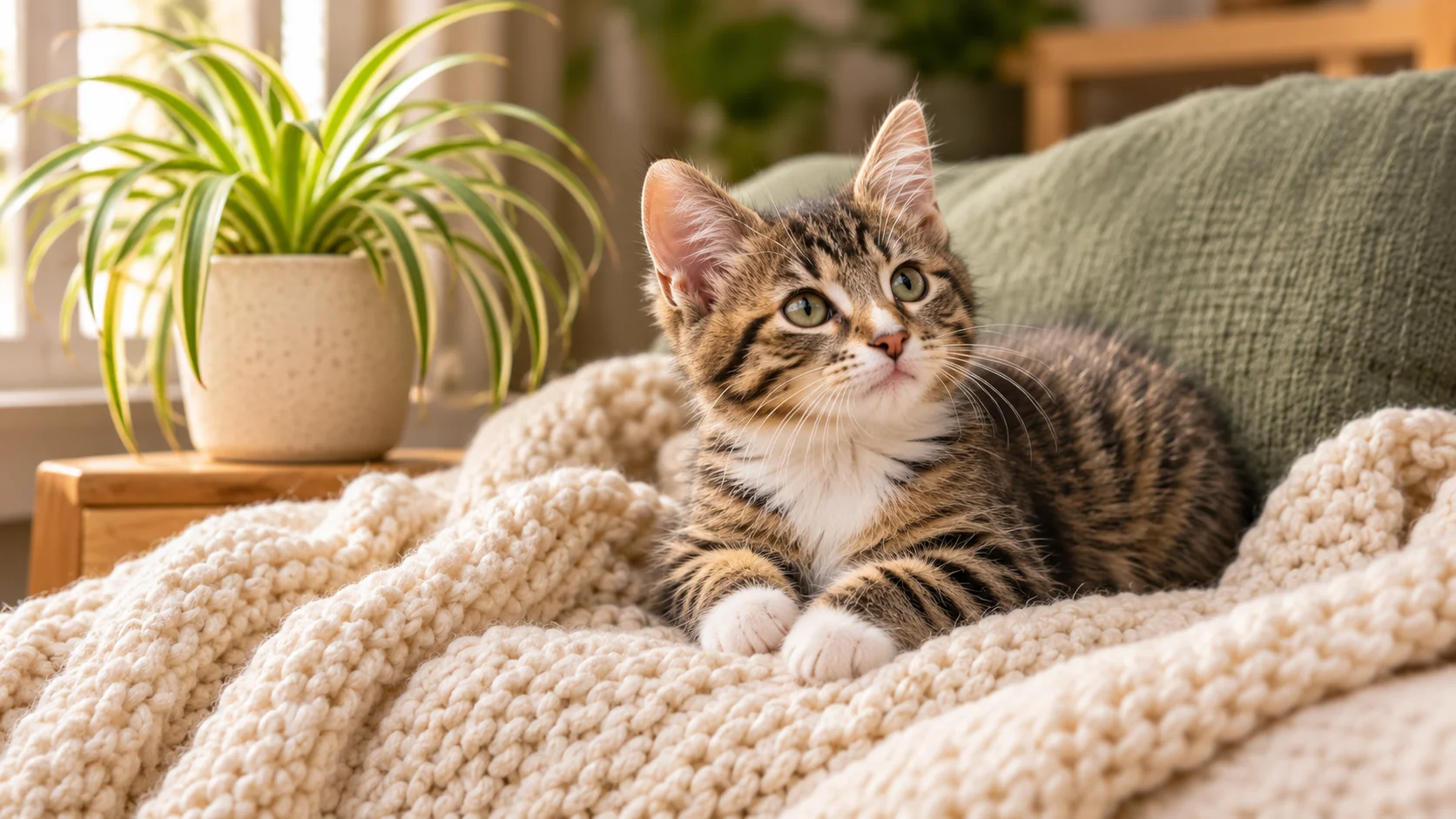
Cats can be wonderful family pets: affectionate, playful, and less work day to day than a dog. But not every cat enjoys a busy house full of children. The best family cat is one with a relaxed, people-loving personality, and you can find that in a purebred or in the shelter's mixed-breed "domestic shorthair" just as often.
The short version: look for a confident, social cat that comes up to people and tolerates gentle handling. For families with young children, a calm adult cat is often a better first choice than a tiny kitten. Plan for 15 years or more of care.
What matters more than breed
- Personality. Watch how the cat reacts to people. Does it walk up to you, accept a gentle stroke and stay relaxed? A cat that hides or swats at every visitor will probably struggle with kids.
- Age. Kittens are adorable, but they are fragile and have sharp little claws and teeth. An adult cat's personality is already known, and a good shelter can tell you whether it has lived with children.
- Energy. Some cats want to play for hours; others want a sunny window. Match the cat to how your family spends its evenings.
- Coat. Long-haired cats need regular brushing to prevent painful mats. Short-haired cats are less work.
- Allergies. No cat is truly allergy-free. If anyone in the family has allergies, spend time with the actual cat before you adopt.
- Who lives at home. The CDC advises caution when young children, a pregnant woman or someone with a weakened immune system lives in the house. That doesn't rule out a cat, but it shapes who cleans the litter box. See our kids and cat safety guide.
Not sure a cat is the right pet? Our free First Pet Finder compares cats with dogs, guinea pigs, birds and more for your family.
Cats families often consider
These are general breed tendencies, not guarantees. Every cat is an individual, and early handling makes a big difference.
Domestic shorthair (shelter cats)
The most common cat in America isn't a breed at all. Shelter and rescue cats come in every personality, and foster families can often tell you exactly how a cat behaves with kids. Adoption fees are low, and many cats are already spayed or neutered and vaccinated.
Ragdoll
Large, gentle and famously relaxed, Ragdolls often go limp when picked up, which is where the name comes from. Their easygoing nature suits families, but their size means kids should be taught to support the cat properly. Their semi-long coat needs weekly brushing.
Maine Coon
Big, friendly and playful, Maine Coons are often called "gentle giants." They tend to enjoy company and games. They need regular brushing and plenty of space to climb.
Birman
A quiet, affectionate cat that usually likes being around people without being demanding. Birmans tend to do well in calmer family homes.
American Shorthair and British Shorthair
Sturdy, easygoing and adaptable, with low-maintenance coats. They are often content to be near the family rather than on a lap, which suits kids who are still learning to be gentle.
Abyssinian
Active, curious and playful. A good match for older children who will play with wand toys every day. Less suited to families looking for a lap cat.
Cats that need extra thought for young families
- Very young kittens under about 12 weeks, which are fragile and still learning not to bite and scratch.
- Shy or fearful cats, which may be happier in a quiet home with adults.
- Long-haired breeds such as Persians if no one has time for daily grooming.
- Very vocal, high-energy breeds such as Siamese, if your household is already loud and busy. Many Siamese adore people; they just ask for a lot of attention.
Consider adopting two
Two kittens adopted together often keep each other busy, play-fight with each other instead of with your children's ankles, and cost little more to set up than one. Remember the CDC's guidance: each cat needs its own litter box plus one extra.
How to meet a cat before you commit
- Sit on the floor quietly and let the cat approach you.
- Bring the children on a visit and ask them to sit still and offer a finger to sniff.
- Ask the shelter or foster: has this cat lived with children? Other pets? How does it react to being picked up?
- Watch for a relaxed tail, slow blinks and a cat that stays near you.
Next steps
See what a cat costs your family in the cat cost calculator, then get everything ready with our first cat checklist. If you're comparing cats with other pets, start with best first pets for kids.
This guide is general information for families, not veterinary advice. Your veterinarian can help with any questions about a specific cat.
Sources
- CDC, Cats: Healthy Pets, Healthy People
- Rover, The Cost of Cat Parenthood in 2025
- ASPCA, Cats and Babies
A family of pet keepers in Olney, Maryland, writing practical guides for parents. We research and compare products ourselves; we're not vets, so health questions go to one.
More about us